
 Sarah Kim
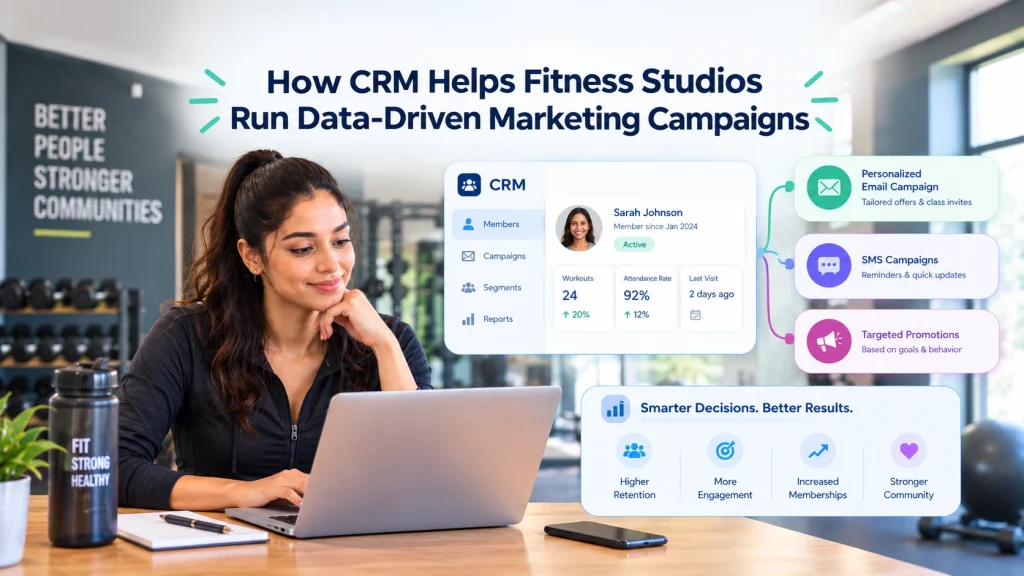
If you run CRM or lifecycle marketing at a B2C brand, you need a B2C CRM strategy that balances CRM personalization with automated customer journeys rather than relying on manual campaigns or blunt batch sends. This practical, vendor-agnostic guide gives measurable goals, a unified data foundation, two ready-to-run journey templates, and a 90 day implementation roadmap grounded in CRM Automation for B2C Brands, with concrete examples from fitness, wellness, retail, and family entertainment.
New to evaluating B2C platforms? Start with our complete guide: How to Choose the Right CRM for Your B2C Business.
1. Align business outcomes and customer lifecycles before building automation
Start with the business result you can measure, not the automation you want to build. If you cannot point to a single KPI that will change because of an automated journey, skip the build until you can.
Pick 3 to 5 outcomes that directly affect revenue, retention, or cost-to-serve. Typical, high-impact outcomes for B2C CRM strategy include reducing short-term churn, increasing visit frequency or repeat purchase rate, improving trial-to-paid conversion, raising average order value, and lowering support costs via self-service. Narrowing outcomes prevents scattered automation that creates noise instead of lift.
Translate outcomes into lifecycle-triggered automation
Map outcomes to lifecycle stages and concrete KPIs so every automated journey has a destination and a metric. Below is a compact mapping you can use as a checklist during planning. Two numeric example targets are shown for a hypothetical fitness club.
| Business outcome | Lifecycle stage(s) | Primary KPI | Example target (fitness club) |
| Reduce short-term churn | New joiner -> Active -> At-risk | 30-day churn rate | Reduce 30-day churn from 12% to 8% |
| Increase visit frequency | New joiner -> Active | Visits per member (first 30 days) | Increase first-month visits from 4 to 6 |
| Grow repeat purchase / AOV | Active -> VIP | Repeat purchase rate / AOV | Increase repeat purchase rate by 10% |
| Improve trial-to-paid conversion | Prospect -> Trial | Trial conversion % | Lift conversion by 15% vs baseline |
| Re-activate lapsed customers | Lapsed -> Reactivated | Reactivation rate within 30 days | Re-activate 20% of 60-90 day lapsed users |
Practical planning step: for each row pick the single trigger (event or state) that places a customer into the journey, the suppression windows to prevent message overlap, and the one metric that determines success. This keeps automation tied to outcomes instead of busywork.
- Checklist before you build: Define outcome, choose the lifecycle stage, select the KPI and data source (POS, booking, app), set an A/B holdout for measurement.
- Trade-off to accept: The more outcomes you chase simultaneously, the higher the risk of conflicting messages and increased opt-outs. Prioritize depth (one outcome well-measured) over breadth (many weakly measured).
- Governance callout: Embed consent and channel preference checks into the mapping step to avoid wasted sends and compliance issues with SMS rules.
Concrete example: A mid-size fitness chain mapped the reduce-churn outcome to a 5-message onboarding and visit-encouragement journey triggered by first class booking. They used last-visit and class-attendance events from the booking system as triggers and held back other promotional flows during the onboarding window. After six weeks the club saw the first-month visit frequency rise and early indicators of lower churn — the exact kind of measurable win you should aim for when applying CRM Automation for B2C Brands.
Key takeaway: Define measurable outcomes first, map them to lifecycle stages and a single KPI, then build automation only for the highest-priority outcome. If you cannot instrument the KPI, defer the automation.
Next consideration: After outcomes are fixed, the next step is to align data sources and identity so your triggers are reliable — a necessary condition for any credible B2C CRM strategy and for platforms like Gleantap or other CRM tools to deliver predictable lift. For deeper thinking on personalization economics see McKinsey.
2. Build a unified customer profile and data foundation
Fundamental point: a reliable unified customer profile is the plumbing that makes CRM personalization and automated customer journeys predictable instead of noisy. Without a single source of truth you will automate the wrong signals, increase opt-outs, and waste marketing spend — automation amplifies bad data faster than humans can catch it.
What the profile must actually contain
Think in three buckets, not an endless checklist. Identity signals (email, phone, membership ID), transactional signals (orders, payments, refunds, checkins), and behavioral signals (web events, app opens, booking attempts). Each bucket must be available at the latency required for the use case: real-time for session- or booking-triggered messages, near-real-time or daily for scoring and lifecycle features.
- Identity signals: email, phone, loyalty or membership ID, device IDs, and persistent cookies for web-to-app stitching
- Transactional signals: POS receipts, class bookings, membership status, refunds, and AOV to build LTV and recency features
- Behavioral signals: page views, search terms, cart actions, push opens, SMS and email engagement timestamps
Identity resolution trade-off: use deterministic matching when you can. If customers reliably provide email or membership IDs, merge on those and keep a single canonical identifier. Probabilistic matching helps with anonymous sessions and fragmented guest checkouts, but it increases false merges and creates privacy and audit risk — avoid probabilistic joins for anything involving financial or medical data, and log match confidence for every merge decision.
Practical schema example: include basic attributes and an events array so personalization rules and journey triggers read the same object. A minimal example looks like {customerid:12345,email:[email protected],phone:+12135551212,lastvisitdate:2026-02-10T14:32:00Z,membershipstatus:active,ltv:420.50,consentsms:true,events:[{eventname:class_booked,timestamp:2026-02-09T08:00:00Z}]} — keep that structure consistent across integrations so downstream rules and models behave predictably.
Data quality and governance you cannot skip: validate incoming identifiers, deduplicate records with a repeatable process, and persist consent metadata with timestamp and source. For SMS you must store opt-in source for carrier audits. For privacy compliance follow retention and deletion workflows that can be executed on command. These are not optional; carriers and regulators will treat inconsistent records as noncompliant operations.
Latency vs completeness decision: if your goal is time-sensitive reminders or abandoned-booking recovery, accept the engineering cost of streaming events. If your priority is stable AI-driven recommendations, weekly aggregates are sufficient and cheaper. Pick the minimal latency that supports the business use cases rather than trying to stream everything because you can.
Concrete example: a multi-club fitness operator consolidated booking, POS, and app events into a single profile and added a consent_sms flag and membership tier. That eliminated duplicate SMS sends caused by parallel booking and POS notifications and let their onboarding journey exclude customers who had already completed class check-in, reducing perceived message spam and improving first-month visit rates. The work required small ETL changes and a one-week audit of identifier consistency.
Building the profile is not a weekend project. Prioritize high-value identifiers and high-frequency events first, then expand the schema to support richer personalization.
Key implementation step: wire consent capture and a canonical identifier into your signup and POS flows, then validate with a 7-day reconciliation job before switching any automation to the unified profile. See Gleantap product for an example of a B2C-focused ingestion pipeline and Segment docs for CDP integration patterns.
Judgment call: prioritize correctness over completeness. A small, accurate unified profile that reliably prevents duplicate journeys and enforces consent will produce immediate lift in CRM personalization and automated customer journeys. Trying to unify every historic field before shipping automation is how projects stall — build the minimal profile for your highest-priority journey, then iterate.
3. Segment customers using behavior, value, and predictive scoring
Segmenting is the dial that converts automation into relevant experiences. Treat segments as operational controls, not just reporting buckets: they decide who sees a journey, what content they receive, and which channel is appropriate. Poor segmentation multiplies wasted sends; precise segmentation concentrates effort where CRM personalization and automated customer journeys create measurable lift.
Operational vs predictive segments
Operational segments are rule-driven groups you use for real-time decisions: recent signups, high-frequency visitors, coupon responders, and VIPs defined by clear thresholds. Predictive segments use scores from models – churn probability, purchase propensity, predicted LTV – and require monitoring for calibration and actionability. Both matter, but they serve different operational cadences and risk profiles.
- Cadence matters: update behavioral triggers in real time, RFM and score-based lists nightly, and experimental holdouts weekly.
- Operational trade-off: frequent, small segments increase targeting accuracy but create engineering and QA overhead; consolidate similar segments when automation scale is limited.
- Model limitation: predictive scores are only useful when you have concrete actions mapped to score bands and suppression rules to avoid over-contact.
Concrete example: A wellness studio tagged new members who attended fewer than two classes in 30 days and fed that list into an automated encouragement flow with a soft incentive on visit three. Separately, they used a churn score to prioritize one-to-one SMS for the top 10 percent at-risk cohort. The segmentation rules cut duplicate outreach and let them concentrate high-touch SMS on a smaller group.
Two segment definitions and sample queries
Wellness studio segments (concrete): 1) New signups with < 2 visits in first 30 days. 2) At-risk members with lastvisit between 45 and 90 days and churnprobability > 0.6. Implement these directly in your CDP or CRM to trigger journeys and control suppression windows.
Pseudocode / SQL examples:
— New signups under-engaged
SELECT customerid FROM profiles WHERE signupdate >= CURRENT_DATE – INTERVAL 30 days
AND visitscountfirst30days < 2 AND consent_marketing = true;
— At-risk segment using model output
SELECT customerid FROM profiles WHERE lastvisit BETWEEN CURRENTDATE – INTERVAL 90 days AND CURRENTDATE – INTERVAL 45 days
AND churnscore > 0.6 AND smsopt_in = true;
Operational judgment: Do not deploy predictive segments without an action map. A churn score without a tailored cadence, offer ladder, and suppression logic becomes noise. Also watch class imbalance: models will overpredict churn for fringe behaviors unless you validate with incremental holdouts.
Prioritize segments you can act on in the next 7 days. If a segment cannot be linked to a distinct journey and measurable KPI, archive it.
Implementation tip: wire segment outputs into both journey entry and suppression lists. Keep a single source of truth for eligibility to prevent duplicate journeys and ensure consent checks before any SMS send. See Gleantap product for B2C-focused orchestration patterns and Segment docs for CDP integration examples.
Final takeaway: Segmenting well is a mix of pragmatic rules and disciplined modeling. Use behavior and value segments to run reliable, low-risk automation, add predictive segments when you have enough events and a clear playbook, and always enforce suppression and consent. That discipline is how CRM Automation for B2C Brands turns personalization into measurable retention and revenue.
4. Design automated customer journeys with clear triggers and states
Design principle: automated customer journeys must be driven by precise triggers and explicit state so the system knows why a profile enters, what it should do while inside, and when to exit. If you treat journeys as one-off email sequences you will create overlapping sends, confused customers, and misleading performance signals.
Start with eligibility and state, not messages. Define the single event or combination of events that moves a profile into a journey (for example: first class booked AND consent_sms = true). Then model the journey as a small state machine (entered -> engaged -> suppressed -> completed) so decisions are deterministic and auditable.
Core building blocks for reliable automated journeys
- Trigger definition: the atomic event(s) and required attributes (e.g., membershipstatus = trial, lastvisit_date is null).
- State flags: a journey membership flag plus timestamps for entry, last message sent, and last customer action to prevent duplicates.
- Suppression controls: channel-level blacklists, inter-journey holdouts, and rolling rate caps to avoid fatigue.
- Exit conditions: explicit success signals (purchase, class check-in) and failure or timeout conditions that move profiles out of the flow.
Practical trade-off: aggressive triggers increase speed-to-reaction but raise false positives. In practice combine a behavioral event with a recency or frequency check (for example, classbooked AND not checkedin within 30 minutes) to reduce erroneous entries. Accept a small delay — 15 minutes to 2 hours — when it meaningfully improves signal quality.
Platform judgement: if you need deterministic, audited state transitions and complex suppression logic choose a tool with stateful orchestration (Gleantap, Braze, Iterable). Klaviyo handles creative flows well for ecommerce but is weaker on cross-system state enforcement. Use Gleantap or a CDP like Segment to centralize eligibility and prevent duplicate journeys.
Two concrete journey templates
Onboarding — Fitness club (goal: increase first-month visits)
Trigger: firstclassbooked OR membershipactivated with consentemail = true.
Cadence & timing: Day 0 welcome email (immediate), Day 2 visit encouragement SMS (48 hours), Day 7 class tips email, Day 14 personalized offer if visits < 3.
Sample copy: Subject: Welcome to your club — plan your first week. SMS: Ready for your 2nd visit? Reply YES to reserve a spot.
State rules: mark engaged once checkin_event recorded; suppress promotional campaigns while in onboarding; exit on visits >= 6 or 30 days elapsed.
KPIs: first-month visit frequency, onboarding completion rate, unsubscribe rate.
Reactivation — Family entertainment center (goal: re-activate weekend visits)
Trigger: lastvisitdate between 60 and 120 days ago AND ltv > threshold.
Cadence & timing: Week 0 targeted SMS with time-limited weekend offer (48-hour window), Day 3 reminder email, Week 2 follow-up SMS with social proof (photos/reviews).
Sample copy: SMS: We miss you — bring the family this weekend and get 20% off rides. Reply STOP to opt out.
State rules: hold other promotional flows for 14 days; record redemption event as success; if no action by 30 days move to long-term nurture.
KPIs: reactivation rate within 30 days, redemption rate, incremental revenue vs holdout.
Common mistake: teams let any single event trigger a high-touch journey. That inflates entry volume and costs. A better approach is to gate entries with secondary signals or soft thresholds so journeys target likely responders, conserving SMS credits and protecting deliverability.
Operational insight: keep journey membership visible in the profile and surface it in QA dashboards. When a customer reports receiving multiple conflicting messages you should be able to trace which journeys were active and why in under five minutes.
Key takeaway: design journeys as stateful, auditable workflows with clear triggers, suppression windows, and exit conditions. This discipline lets CRM Automation for B2C Brands scale without creating noise or compliance risk.
5. Personalization tactics that scale without manual work
Reality check: scalable personalization is not about writing dozens of bespoke emails — it is about building reusable decision rules, modular content, and automated decisioning that run off a reliable profile. If personalization requires a person to pick each recipient, it will never scale and will become a bottleneck for your B2C CRM strategy.
Why this matters: automation amplifies both good and bad personalization. Well-architected personalization increases relevance with almost no manual work; poorly governed personalization multiplies mistakes across the customer base and damages deliverability and trust. That tradeoff should shape every tactic you choose for CRM personalization and automated customer journeys.
- Modular content blocks: build message templates composed of header, hero, body, CTA, and footer modules so the system can mix and match without copy rewrites.
- Signal-driven timing: send based on individual engagement rhythms (local time, typical open hour) rather than one-size scheduling.
- Catalog recommendations: use lightweight recommenders for top-N suggestions and fall back to category-level picks when data is sparse.
- Channel-choice logic: let preference and recent engagement decide whether a message goes by email, SMS, or push.
- Dynamic offer ladders: apply rules that escalate incentives only for segments that meet criteria, preventing blanket discounts that erode margin.
Rule vs AI — a pragmatic split: start with high-confidence rule-based personalization for safety: welcome messages, location-based class reminders, and suppression logic. Move to AI-driven recommendations when you have stable event volume and can monitor model lift. In practice, the best outcome is a hybrid: rules enforce business constraints and consent; models supply candidate content and ranking. That keeps CRM personalization predictable while unlocking scale.
Simple pseudo-code you can ship quickly
Use small, auditable blocks. Example collaborative filter (very small sketch): for user in users: candidates = topitemssimilarto(user.recentitems) score = rankby(recency, similarity, inventory) sendtop(3); and a frequency guard: if user.sendslast30days > 5 or lastpurchase < 7days then suppressoffer.
Operational judgment: never let recommendations fire without a fallback. Token failures, empty candidate lists, or low-confidence model outputs must revert to a safe default message. That single guard prevents the common failure-mode where automation sends blank or irrelevant content at scale.
Real-world use case: a wellness studio uses automation to personalize push notifications. The system combines two signals — booked class type and instructor affinity — with a predicted attendance probability. If predicted attendance drops below a threshold, the platform sends a short incentive-based push mentioning the instructor and a one-click reservation link. This removes manual intervention and keeps messaging tightly relevant to the member’s preferences.
Limitations and trade-offs: AI-driven personalization needs monitoring: models drift, catalog changes, and seasonal behavior can flip what was once relevant into spam. Also, the higher the personalization sensitivity (health data, medical services), the stronger the governance you must apply. For SMS specifically, respect consent and carrier rules — automation should never override explicit opt-outs.
Practical takeaway: implement modular templates, a conservative ruleset for eligibility and suppression, and a measured rollout of AI recommendations with randomized holdouts to prove incremental lift. Integrate these tactics into your wider CRM Automation for B2C Brands playbook and instrument lift before scaling.
If you need a concrete platform pattern, use a CDP or engagement platform that supports modular content and rule + model decisioning. See how Gleantap handles content modules and orchestration and reference cross-channel decision patterns from Braze when evaluating vendor capabilities.
6. Channel orchestration, compliance, and frequency control
Channel coordination is the control plane that keeps CRM personalization from becoming customer fatigue. Treat orchestration as a decision service, not a messaging spreadsheet: it must pick channel, timing, and offer based on profile state, consent, and recent engagement signals.
How to make channel decisions deterministically
Design one deterministic rule set that runs before any send: 1) check consent and opt-out history, 2) evaluate the profile’s current journey membership, 3) calculate a short-term engagement score, then 4) choose channel and priority. Centralizing that logic in your orchestration layer prevents competing tools from sending redundant or conflicting messages.
- Orchestration gate: Ensure the orchestration service has the single source of truth for channel priority and suppression. If a downstream tool can bypass the gate, duplicate sends will follow.
- Consent record: Persist consent metadata (timestamp, capture source, language of opt-in) in the profile. Carriers and auditors will require this for SMS compliance.
- Dynamic throttle formula: Use a rolling-window cap that scales with engagement. Example: maxsends7d = baselimit * (1 + min(engagementrate, 1.0)). If baselimit = 3 and engagementrate = 0.4, cap = 4 sends in 7 days.
- Escalation rule: Reserve SMS for time-sensitive or high-value triggers and only after a positive engagement signal or failed email delivery; otherwise favor email or in-app messaging.
Practical trade-off: aggressive immediacy improves conversion for appointment reminders and flash sales but raises SMS costs and deliverability risk. In practice, you must balance speed with accuracy: add a brief validation delay (15-60 minutes) for event-driven sends that rely on external systems to avoid false positives.
Real-world example: For a retail flash sale, run this sequence: primary send via email to the eligible list at T=0, then an SMS to only those who opened the email or clicked within two hours, and a push notification for app users who have push enabled and visited in the last 14 days. Suppress customers who redeemed the offer or who have had 5+ sends in the previous 7 days. Track incremental revenue against a randomized holdout to measure true lift.
Compliance considerations that matter in practice: SMS requires explicit opt-in, clear opt-out wording, and stored proof of consent. Email still needs unsubscribe handling and timestamped consent where required. Failing to keep audit-ready consent records creates more than a nuisance — it exposes the business to carrier penalties and regulatory fines.
Important: Give the orchestration engine the authority to veto sends. Let downstream channels be executors, not decision-makers.
Compliance checklist for SMS: capture opt-in source and timestamp at point-of-sale or signup, save the exact consent language, log every opt-out immediately, and retain records for the period required by your local carriers and regulations. Link these fields to your suppression lists so opt-outs are enforced in real time.
Measurement and judgment: run small incremental tests to understand channel lift before reallocating budget. Many teams assume SMS always outperforms email; in my experience SMS outperforms only for urgent or narrowly targeted use cases. Use randomized holdouts and track revenue per recipient plus churn/opt-out impact to decide when escalation to SMS is justified.
Implement orchestration patterns as part of your CRM Automation for B2C Brands playbook and surface decisions in dashboards so product, legal, and marketing can inspect why a profile received a message. That transparency is what prevents repeated mistakes and makes frequency controls operational instead of theoretical.
7. Measurement, testing, and a 90 day implementation roadmap
Measurement is the governance that keeps automation purposeful. If you cannot point to a single experiment or holdout that proves a journey moved retention or revenue, you are operating on hope, not evidence. Build a compact measurement rig first: one north-star metric for the program, two supporting metrics that explain mechanism, and at least one guardrail metric that stops the program if it breaks (deliverability, opt-outs, or net churn).
Measurement framework and testing rules
Primary design: use randomized holdouts for incrementality, stratify by key covariates (channel preference, LTV band, geography), and run power calculations before you launch. Short windows teach quickly but are noisier; long windows show durable effects but slow iteration. Choose the shortest measurement window that captures the behavior you care about (visit within 30 days, revenue in 60 days, retention at 90 days) and commit to it.
Practical testing rules: enforce single-customer assignment (no overlapping test exposures), log raw events for reconciliation, and pre-register primary and guardrail metrics. Run sequential A/B tests for creative and timing, but always verify the journey itself with a separate holdout population to measure true lift versus attribution fallacy.
Trade-off to watch: larger holdouts give clearer incrementality but delay benefits for the business. For most B2C pilots I recommend a 10 20 percent holdout bracket that balances learning and impact. If your traffic or list is tiny, focus on paired comparisons and nonparametric tests rather than attempting underpowered randomized trials.
Concrete example: A regional fitness operator randomized a 15 percent holdout to validate a lapsed-member reactivation flow. The team measured conversions per eligible user over 30 days, verified no deliverability degradation, and observed an 18 percent uplift in reactivation conversions versus holdout — the result gave them the confidence to expand the journey and justify SMS spend.
90 day, week-by-week practical roadmap
- Weeks 1 2 — Discovery and goals (CRM manager 30%): lock the north-star metric, define success bands, catalog data sources, and pick the two quick-win journeys to automate.
- Weeks 3 5 — Integrations and profile (data engineer full-time, CRM manager 40%): connect POS, booking, and app events to the CDP/CDM, implement consent fields, and deploy a reconciliation job for the canonical identifier.
- Weeks 6 7 — Build journeys and creatives (content owner 60%, CRM manager 50%): implement the two automated journeys, create modular templates and fallbacks, and set suppression logic in the orchestration layer.
- Weeks 8 9 — QA and soft launch (analytics 40%): run dry-run QA with test profiles, fire to a small internal cohort, validate event fidelity and suppression behavior, and calculate sample sizes for the randomized holdout.
- Weeks 10 11 — Experimentation and measurement (analytics lead 60%, CRM manager 50%): flip the public pilot on with the pre-registered holdout, run sequential creative tests inside the exposed group, and monitor guardrail metrics daily.
- Week 12 — Review and scale decisions (leadership review): evaluate lift vs holdout, check opt-out and deliverability thresholds, tune throttles, and either broaden the audience or iterate on the journeys.
Critical acceptance criteria before full rollout: (1) end-to-end event reconciliation under 5% mismatch, (2) suppression lists enforce opt-outs in real time, (3) primary KPI shows statistically meaningful lift at pre-agreed confidence, and (4) monitoring alerts in place for deliverability and spam complaints.
Tool guidance and judgment: For B2C verticals that rely heavily on first-party signals and rapid orchestration, I prefer platforms built for those use cases — for example, Gleantap product for fitness and wellness chains because it prioritizes ingestion and journey controls. Use Braze when you need complex enterprise decisioning, Klaviyo for ecommerce email-first flows, and a dedicated CDP like Segment docs when identity stitching is the bottleneck. The right choice depends on your integrations, volume, and required orchestration fidelity.
Common misunderstanding: teams often equate A/B testing subject lines with program validation. That is tactical. Measuring an automated customer journey requires end-to-end incrementality experiments and operational controls that protect deliverability. Without that, you will misattribute seasonal or paid-media effects to your CRM personalization efforts.
Next consideration: before you expand the program, finalize holdout sizing and lock suppression lists. Those two operational controls prevent measurement contamination and protect long-term channel health.
8. Real-world examples and quick reference playbooks
Practical assertion: Playbooks are useful only when they are short, instrumented, and paired with a measurement gate. Complex flows that sit in a doc are a liability; compact, testable playbooks produce predictable wins for CRM Automation for B2C Brands.
Case study — regional fitness operator: The chain deployed a targeted reactivation sequence for members who had not visited in 45 90 days and who held mid-tier memberships. By tying eligibility to booking history and limiting SMS to the top propensity band, they increased reactivation conversions by roughly 30 percent for exposed members versus a randomized holdout and preserved deliverability by capping sends per member.
Case study — family entertainment center: A weekend-focused SMS offer was sent only to households with kids under 12 and a history of weekend visits. The team used a two-hour email-to-SMS escalation (SMS only if no email open) and tracked incremental visits against a 10 percent holdout; weekend foot traffic rose materially while opt-outs remained below the team threshold.
Playbook 1 — First 7 days: new member onboarding (execute in 7 days)
- Day 0 (immediate): create a welcome email using modular header + 3 content blocks (what to expect, quick-start tips, CTA to book first session). Assets: hero image, 1-minute orientation video, booking link.
- Day 2: conditional SMS to members who have not booked or checked in (1 line, clear CTA, store consent metadata). Suppress if member checked in.
- Day 4: push or email with a soft micro-incentive if visits < 2 (no blanket coupons). Track booking events and mark onboarding_complete if visits >= 3.
- Measurement: metric = percent of new members with >= 3 visits in 30 days; run a 15 percent randomized holdout for incrementality.
Playbook 2 — 30/60/90 lapsed-member winback (phased escalation)
- 30-day window: soft re-engagement email with relevant content and social proof; exclude customers who recently purchased or redeemed an offer.
- 60-day window: targeted SMS to high-propensity members with a time-limited offer; only for those who opened the email or have high LTV signal.
- 90-day window: segmented paid retargeting or personalized VIP outreach; move non-responders to long-term nurture and remove from high-frequency sends.
- Measurement: compare reactivation rate and revenue per eligible vs holdout; monitor opt-out and complaint rates as guardrails.
Playbook 3 — VIP cross-sell for retail (low-volume, high-touch)
- Identify VIPs: define by rolling revenue and visit recency; keep the cohort small enough for manual review (top 5 percent).
- Content: assemble dynamic recommendations plus a high-value, non-public offer; create a fallback message if recommender returns no candidates.
- Execution: email first; follow with one personalized SMS only if email opens exceed a threshold; route top opportunities to a CRM rep for one-to-one outreach.
- Measurement: uplift in AOV and repeat purchase frequency vs a matched holdout; set conversion-to-contact KPIs for the rep workflow.
Trade-off to note: aggressive escalation increases short-term revenue but strains deliverability and can drive opt-outs. In practice, start narrow, validate incrementality, and only broaden the audience once lift and guardrails are proven.
- Launch readiness checklist: canonical identifier present for 95% of targets, consent fields and timestamps stored and queryable, modular templates with fallbacks, suppression rules wired into orchestration, QA script for token substitution and event replay, rollback plan and monitoring dashboard with alerts.
Operational judgment: Prefer conservative ramps with randomized holdouts. Scaling an unvalidated playbook multiplies mistakes.
If you only build one thing from these playbooks: instrument a holdout for every automated flow. That single discipline separates marketing noise from demonstrable ROI.
For implementation patterns and examples of orchestration built for B2C, review the product approach at Gleantap and consider testing channel escalation using the experimental design principles in McKinsey.
Frequently Asked Questions
Direct answer approach: These FAQs focus on pragmatic decisions you will face when operationalizing a B2C CRM strategy that must reconcile automation with real personalization. Answers emphasize what works in practice, common failure modes, and immediate actions you can take.
How does a single customer record actually improve personalization accuracy?
Short answer: A canonical record stops contradictory signals from multiple systems driving concurrent decisions. In practice that means your orchestration layer sees one truth for consent, last interaction, and LTV instead of three conflicting versions that trigger duplicate or irrelevant sends.
What is the absolute minimum to run automated personalization?
Minimum dataset: contact identifier (email or phone), a recent activity timestamp, one transaction or booking indicator, and explicit consent flags. That lets you build straightforward, rule-driven journeys and avoids the paralysis of waiting for perfect data.
How should we handle SMS consent and carrier compliance without slowing launches?
Practical approach: capture opt-in at the source, log the capture timestamp and exact language, and wire those fields into suppression logic so the orchestration layer enforces them in real time. Treat the consent record as nonnegotiable plumbing; carriers audit it and your legal team will ask for it when problems appear.
When do we move from rule-based personalization to AI-driven recommendations?
Judgment call: keep rules for high-confidence, safety-critical decisions and adopt models when you have stable engagement events and a clear action map for model outputs. AI is helpful for ranking dozens of SKUs or surfacing subtle affinities; it is not a substitute for business rules that enforce consent, margin, or brand constraints.
How do we prove a journey actually moves the needle?
Measurement that matters: run a randomized holdout at the eligible-audience level and compare the key outcome you care about over the appropriate window. Log events end to end so you can reconcile attribution, and include guardrails for deliverability and opt-outs so you cut the program if harm appears.
Which channel should we invest in first for urgency versus scale?
Rule of thumb: use email for content-rich onboarding, SMS for urgent or timebound actions, and push for app-native micro-messages. But test escalation logic; do not assume SMS always outperforms email. The orchestration decision should be driven by recent engagement signals and consent, not by a vendor preference.
How long to stand up a baseline automation program?
Typical timeline: lock goals and two priority journeys, ensure canonical identifiers and consent fields are present, and run a constrained pilot with a small randomized holdout. Expect engineering and QA effort; small to mid-size teams can move to a measurable pilot in a few weeks if integrations are prioritized.
Concrete example: A retail operator tested an email-first flash sale with an email-to-SMS escalation that only targeted users who opened the email. They withheld a randomized holdout, observed clear engagement differences, and expanded the pattern to other stores while keeping opt-outs stable. The experiment required only modest engineering work because consent and suppression logic were already centralized in their engagement layer.
Limitations and trade-offs: Personalization at scale increases complexity and operational risk. Models drift, tokenization fails, and orchestration rules can conflict. The practical remedy is conservative rollouts, automated fallbacks for empty recommendations, and continuous monitoring that prioritizes channel health over short-term conversion spikes.
Quick governance rule: instrument a holdout for every automated flow, log consent provenance, and enforce a single orchestration gate that can veto sends. This is how CRM Automation for B2C Brands stays measurable and defensible.
Next actionable steps: pick one high-impact journey, add canonical identifier and consent fields to the signup path, implement suppression logic in the orchestration layer, and launch the journey to a randomized pilot group no larger than 20 percent. Measure the pre-registered KPI over the chosen window, validate deliverability guardrails daily, and iterate from there.

Ready to Run Successful Marketing Campaigns and Grow Your Business?
Gleantap helps you unify customer data, track behavior patterns, and automate personalized campaigns, so you can increase repeat purchases and grow your business.
Ready to Run Successful Marketing Campaigns and Grow Your Business?
Gleantap helps you unify customer data, track behavior patterns, and automate personalized campaigns, so you can increase repeat purchases and grow your business.