
 Divya Ghughatyal
Privacy shifts and the end of reliable third-party identifiers have turned first-party data into a business asset, and CDP first-party data workflows are now the operational backbone for identity, activation, and measurement. This guide shows marketing and product leaders how to choose and pilot a CDP, unify customer identity across POS, apps, and email, and run a 30/60/90 roadmap that proves incremental impact. Read on for a vendor checklist, high-impact use cases for membership and retail businesses, and the KPIs to measure lift.
1. Why first-party data is nonnegotiable in 2026
Reality: By 2026, owning reliable first-party signals is the only practical way to know who your customers are across devices and channels. Cookie loss, stricter platform policies, and privacy rules have removed the cheap, probabilistic glue marketers relied on. That means CDP first-party data is no longer optional infrastructure — it is the foundation for consistent personalization, measurement, and audience portability. See the CDP Institute for the basic framing of what a CDP solves: CDP Institute.
Consequence of inaction: If you keep relying on fragmented contact lists and analytics-only views, expect higher acquisition costs, weaker personalization, and blind spots in attribution. Practically, that looks like wasted ad spend because you cannot accurately suppress known customers from acquisition campaigns, and missed revenue because churn signals from POS or attendance systems never reach the channels that could re-engage members.
Trade-off to accept: Not every first-party datum is equally valuable. Deterministic identifiers — email, phone, membership ID — are hard currency for membership and retail businesses; behavioural streams and enrichment are helpful but secondary. Investing first in identity quality and consent capture delivers more immediate ROI than trying to ingest every telemetry stream at once. The trade-off is speed versus completeness: prioritize identity and a few high-value events before broad ingestion.
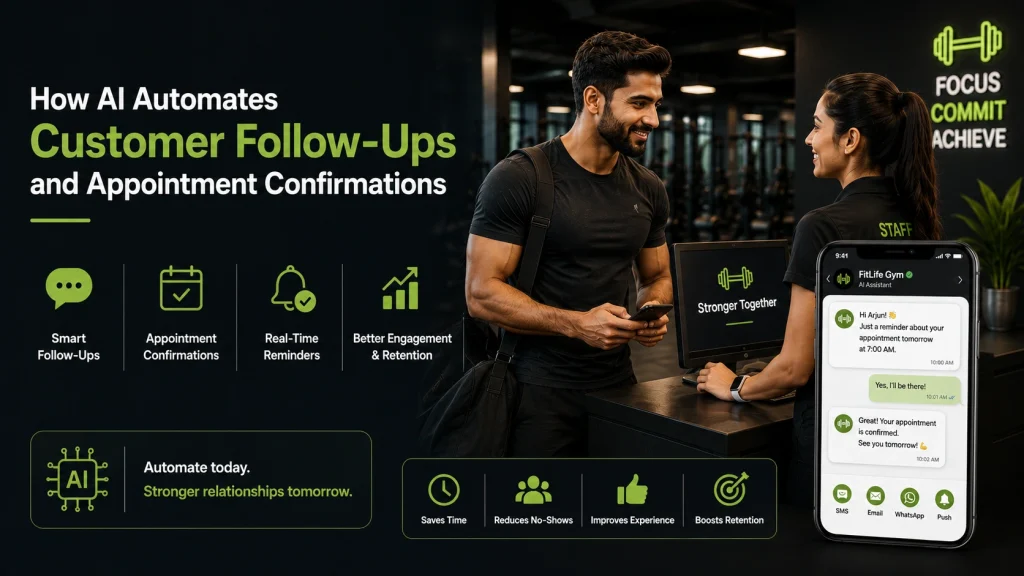
Concrete example: A boutique gym integrated its POS, check-in system, and email provider through a CDP to create a unified member profile. When a member misses three scheduled classes and has a recent declined payment, the CDP sends a real-time audience into the messaging platform to trigger a personalized SMS with a targeted offer. That single flow reduced manual churn outreach and recovered members who would otherwise have lapsed.
Practical limitation: Building a CDP or centralizing first-party data does not magically fix bad data governance. Expect duplicates, stale email addresses, and conflicting consent records. Plan for a data stewardship process, a small set of automated quality checks, and a cadence for resolving identity conflicts. Without that, unified profiles will degrade and undermine trust with both customers and trading partners.
Operational imperative: Real-time processing matters where timing changes outcomes — failed payments, last-minute cancellations, or in-store returns that should suppress ad targeting. But real-time pipelines cost more and require more rigorous monitoring. The pragmatic move: make a short list of 3 real-time events that are business-critical and run everything else as nightly batches until the team stabilizes the stack.
Action to take now: Run a 48-hour audit of all customer touchpoints and answer these three questions for each: which deterministic ID is emitted (email/phone/membership ID), is consent captured and stored, and which one immediate event would improve revenue or retention if activated in real time? Prioritize fixes that align with those answers.

Next consideration: After the audit, pick one deterministic identifier and one real-time event to operationalize in the next 30 days — that narrow focus separates pilots that deliver measurable results from projects that become perpetual data plumbing.
2. How a CDP operationalizes first-party data compared to CRM and data warehouse
Direct point: a Customer Data Platform makes first-party data operational by turning disparate signals into identity, persistent profiles, and immediate channel actions — in ways CRMs and data warehouses do not.
Where each system actually contributes
- CDP: resolves identity across devices, builds a single persistent profile, enriches fields from multiple sources, and exposes real-time audiences and APIs for activation to messaging, ad, and experimentation tools.
- CRM: holds canonical customer records and interaction history used by sales and support. Good for operational workflows and case management but poor at stitching anonymous signals or streaming audiences to ad networks.
- Data warehouse: centralizes raw event and transaction data for analysis and modeling. Excellent for long form analytics and predictive models but not built for low latency activation or honoring per interaction consent during activation.
Practical insight: reverse ETL from a warehouse plus the CRM is a viable pattern for analytics led teams, but it is slower, engineering dependent, and brittle for real-time personalization. If your use case needs sub minute triggers or channel level consent enforcement, a CDP is the pragmatic choice.
Tradeoffs and limitations to accept up front
- Cost and scope: CDP solutions add recurring cost and require governance. Small teams sometimes overbuy a full enterprise CDP for a single use case when a focused integration could suffice.
- Identity quality matters: deterministic matches using email and phone are reliable; probabilistic matching is convenience, not guaranteed. Evaluate identity graph quality and be prepared to surface confidence scores into downstream logic.
- Vendor lock and activation routes: some CDPs lock you into particular activation connectors or require middleware. Confirm connectors to your messaging provider and ad platforms before committing.
Judgment call: for membership businesses with limited engineering bandwidth and a priority on retention messaging, buy a CDP. For companies with large data teams and primarily exploratory analytics needs, a warehouse first approach with selective reverse ETL can be cost efficient but slower to produce revenue impact.
Concrete example: real-time churn intervention
Concrete Example: a boutique gym ingests POS transactions, class attendance, and app opens into a CDP. The CDP flags a member with three missed classes and a dropped membership payment attempt as high churn risk, resolves their phone number to the persistent profile, and sends that audience to Gleantap for an SMS reengagement sequence within seconds. The same audience is simultaneously pushed to Facebook via server side API for a complementary offer without relying on cookies.
What many teams miss: they assume the CRM is sufficient because it stores email and notes. In practice CRMs lack the streaming identity stitching and privacy aware activation controls that reduce false positives in automated campaigns. That failure mode costs reputation and opt outs.
Key takeaway: prioritize a CDP when your priority is real-time, privacy safe activation and cross channel identity resolution. If your primary need is retrospective analysis without immediate activation, a data warehouse alone is acceptable.
Next consideration: map one high value use case into responsibilities. List which system owns identity resolution, which stores the source event, and which executes the action. That mapping reveals whether you need a CDP to remove the operational gap.
3. High-impact use cases for first-party data powered by a CDP
Clear payoff: CDP first-party data unlocks operational activations that directly move revenue and retention metrics because unified profiles make messaging relevant and timely. The value is not theoretical; it is realized by closing gaps between identity, orchestration, and measurement.
Three high-return use cases to prioritize
Use case 1 – Personalized lifecycle messaging. Combine membership status, purchase history, and recent engagement to drive targeted SMS, email, and in-app flows. With a CDP you can trigger a sequence when a profile meets deterministic rules – for example, lapsed members who bought a class pack but missed three sessions in 30 days. The tradeoff: these flows require clean identity keys and explicit consent for messaging, otherwise activation fails or causes compliance risk.
Use case 2 – Cross-channel paid media activation without cookies. Translate first-party segments into server-side audiences for Facebook Conversions API and Google Ads using CDP connectors. This reduces reliance on fragile browser signals and improves match rates. Consideration: ad platform match is only as good as the customer identifiers you collect – email and phone are high value, but expect diminishing returns if you rely on hashed or incomplete records.
Use case 3 – Retention, reactivation, and loyalty analytics. Feed transaction, attendance, and NPS data into the CDP to build predictive churn scores and tailor offers for high-risk cohorts. Practical limitation: predictive models amplify garbage in, garbage out. If event instrumentation or POS data are noisy, the model will misprioritize members and waste spend.
Concrete example
Concrete Example: A boutique gym connects POS, membership database, and class attendance into a CDP to detect a 14-day inactivity window for premium members. When the unified profile hits the inactivity rule, the CDP pushes an audience to Gleantap for an automated SMS offering a free personal training session; CRM notes are updated and a holdout cohort is tracked for incrementality. Practical constraints included phone number verification, explicit SMS opt in, and a control group to measure true lift.
| Use case | Key data sources | Activation endpoints | Primary KPI |
| Personalized lifecycle messaging | Membership DB, email, app events | SMS, email, in-app | Retention rate, engagement rate |
| Paid media activation | Email, phone, purchase history | Google Ads, Facebook Conversions API | ROAS, incremental conversions |
| Predictive churn and loyalty analytics | POS, attendance, NPS, support logs | CRM flags, retention campaigns | Churn reduction, LTV uplift |
Practical insight and vendor judgement: Prioritize use cases that require two to three data sources and one activation channel for the pilot. Vendors with prebuilt connectors to your messaging provider and ad APIs shorten time to value. If a vendor leads with analytics and lacks activation endpoints, expect extra integration work or an additional tool for orchestration.
- Start small: Pick one use case and instrument a control group for incrementality.
- Guard the identity layer: Invest in deterministic matching before modeling or media activation.
- Respect consent: Ensure consent signals travel with profiles to prevent compliance failures.
Actionable next step: Choose one pilot use case, list required data sources and owners, and run a 30 to 60 day test with a holdout.

Final judgment: CDP first-party data pays off fastest when used to automate simple, high-frequency decisions – who to message, when, and with what incentive. Complex predictive projects can follow, but only after the identity layer and activation plumbing are proven.
4. 30/60/90 day CDP implementation roadmap for marketing leaders
Direct point: You can produce a measurable business outcome from a CDP-first party data plan inside 90 days — but only if you restrict scope, name owners, and commit to one activation that ties to revenue or retention. Start small, measure incrementally, and avoid the temptation to ingest every data source on day one.
Days 1–30: Audit, prioritize, and align
- Inventory: List the top 6 data sources (CRM, POS, web, app, email, attendance) and capture sample records to verify keys like email, phone, and membership ID.
- Success metric: Choose one measurable KPI (for membership businesses this is usually retention rate or reactivation conversion). Keep it single-minded.
- Identity rule: Define deterministic matching rules first — email + phone + membership ID — defer probabilistic merging until later.
- Stakeholders: Assign a marketing owner, an engineering/product contact, a data steward, and a legal/privacy reviewer.
- Quick privacy check: Capture existing consent flags now and map where they live; do not activate audiences until consent is honored.
Practical consideration: Scope limits velocity. If engineering bandwidth is a constraint, skip client-side tagging and start with server-side or batch connects for CRM and POS to show wins faster.
Days 31–60: Prototype identity and one activation
- Ingest samples: Connect 1–2 sources into the CDP and validate profile stitching on a sample cohort.
- Build profile: Configure identity graph rules and confirm a persistent profile schema that includes consent state, membership status, and last-attended date.
- Create activation: Build one end-to-end activation — for example, an SMS reengagement flow triggered by 14 days of missed classes.
- Measurement plan: Define holdout logic (5–20% holdout depending on volume), primary metric, and how you will capture attribution.
Concrete example: A boutique gym connects POS and attendance into the CDP, creates unified profiles with membership ID and phone number, and launches an SMS reengagement campaign through Gleantap for members who missed two weeks. Within 45 days they can measure open-to-conversion on the campaign and compare membership retention against a 10% randomized holdout.
Days 61–90: Scale activations, governance, and prove incrementality
- Expand sources: Add web events, email history, and one ad-platform connector for cross-channel activation.
- Run incrementality test: Execute the holdout experiment at scale, monitor cohort behaviour for 4–8 weeks, and compute lift on the chosen KPI.
- Governance: Put simple SLAs in place for data freshness, set automated quality checks, and lock down consent enforcement for all activations.
- Operationalize: Document playbooks, hand off daily operations to the marketing owner, and schedule a monthly review cadence with product and legal.
| Milestone | Marketing | Product/Engineering | Data Steward | Legal/Privacy |
| Day 1–30: Inventory & success metric | Owner | Support | Validate samples | Review consent map |
| Day 31–60: Prototype & activation | Build campaign | Connect sources | Monitor stitching | Approve activation rules |
| Day 61–90: Scale & measure | Run experiments | Ensure scale reliability | Automate checks | Confirm compliance |
Critical constraint: If your user base is small, classic A/B tests may be underpowered. Use larger holdout percentages, longer test windows, or sequential lift methods to detect meaningful impact rather than waiting for perfect statistical certainty.
Trade-off to accept: Speed versus completeness. Prioritize one clean activation and clean identity over a half-baked universal profile. You can always expand once the pilot proves value.
Next consideration: After 90 days, formalize your vendor scorecard for longer-term investments and prepare a three-metric weekly dashboard (activation volume, lift vs holdout, revenue per cohort) to justify scaling the CDP effort.
5. CDP vendor selection checklist with example vendors
Straight talk: pick a CDP that solves your activation bottleneck, not the one with the flashiest demo. Vendors differ most on identity quality, activation endpoints, and pricing model — those three determine whether a CDP will actually move metrics or just collect logs. For a quick primer on the category see CDP Institute.
Core technical checklist
- Real-time ingestion and activation: can the platform accept events and update profiles with <5s latency, and push audiences to messaging/ad endpoints in real time? If you rely on time-sensitive SMS or cart-abandon flows, this is non-negotiable.
- Identity resolution quality: look for deterministic matching (emails, phone, membership ID) first, with optional probabilistic graph only as fallback. Ask for sample match rates using your data patterns.
- Prebuilt connectors to your channels: Twilio/SMS, email providers, ad platforms, POS and membership systems. Fewer custom connectors means faster pilots.
- Privacy and consent controls: does the CDP ingest consent signals, honor suppression lists at activation time, and support deletion/residency that meet GDPR/CCPA needs?
- Data model and schema flexibility: can you store nested event data and enrich profiles without heavy engineering?
Commercial and operational checklist
- Pricing clarity and TCO: event-based, MAU, or seat pricing changes outcomes. Insist on a 12–24 month TCO estimate including expected event growth and integration services.
- Implementation support and SLAs: who does the mapping, connector work, and identity-rule tuning? Ask for a Kiln-style implementation timeline and success metrics.
- Vendor ecosystem: does the vendor have certified partners or a marketplace for membership/POS integrations? This reduces custom work.
- Data residency and security certifications: require SOC2 or equivalent, and verify residency options if that matters for your business.
Trade-offs, limitations, and practical judgments
- Trade-off – features vs complexity: enterprise CDPs like Amperity or Treasure Data deliver powerful identity graphs but need more engineering and budget. Lightweight choices like RudderStack or Segment get you running faster with simpler pricing but may cap identity sophistication.
- Limitation – pricing shock: many vendors bill on events; a successful activation can multiply events and raise costs. Model activation volume before committing.
- Practical judgment: small to mid-size membership businesses often win faster by pairing a CDP focused on identity with a specialist activation layer (for example, routing audiences into Gleantap for SMS orchestration) rather than expecting one product to excel at both.
| Vendor | Best fit | Notable limits |
| Segment (Twilio Segment) | Fast onboarding, broad connectors, strong for product/marketing teams | Event-based pricing can grow with volume |
| RudderStack | Developer-friendly, good for cloud-native stacks and reverse ETL | Smaller ecosystem of turnkey membership connectors |
| mParticle | Strong mobile event handling and enterprise integrations | Higher entry cost for smaller businesses |
| Tealium | Solid tag management plus CDP features; good for web-heavy operations | Identity graph less advanced than enterprise-only CDPs |
| Amperity | Enterprise-grade identity resolution and customer insights | Requires significant data engineering and budget |
| Treasure Data | Scalable for large event volumes and complex queries | Longer implementation; can be overkill for small pilots |
Concrete Example: a boutique gym shortlisted Segment and Amperity. Segment enabled a 30-day pilot connecting POS and web events to build simple reengagement audiences quickly; Amperity was chosen later for a year-two initiative focused on advanced identity and LTV modeling.
Run a one-week POC with two vendors using your data and one live activation (SMS or ad audience). Score results on match rate, activation latency, and estimated monthly cost. That scorecard will expose real differences faster than sales demos.

Next step: build a weighted vendor scorecard and run the one-week POC.
6. Measuring ROI and proving incremental impact
If you cannot demonstrate incremental impact, a CDP first-party data investment becomes a cost center, not a growth driver. Measurement is not optional — it is the governance mechanism that forces clean identity, reasonable activation scope, and disciplined experiment design.
A practical measurement framework
Define the business increment first. Pick one clear outcome you will optimize and measure: retention rate for memberships, reactivation visits in 60 days, or revenue per cohort. Tie that outcome to the activation you control (for example, SMS reengagement flows delivered through your messaging stack).
- Choose the right test method. Prefer randomized holdouts for owned-channel activations (email/SMS) and geo or audience holdouts for paid channels; use ad-platform incrementality where randomization is impossible.
- Instrument identity and events. Ensure your CDP first-party data feeds the same deterministic identifier to analytics and ad platforms so conversion joins are consistent across test and control.
- Set sample size and window. Estimate required sample sizes before launch and pick a measurement window that captures the behavior (30–90 days for visits/retention; shorter windows sometimes work for immediate conversions).
- Analyze both statistical and commercial significance. A tiny percentage lift may be statistically significant but not worth the campaign cost or operational complexity.
Practical trade-off: start with owned channels.** Testing in email and SMS is cheaper, easier to randomize, and avoids attribution leakage. If you can show a reliable lift in owned channels, you can justify the more complex and costly paid-channel incrementality tests.
Limitation to accept up front. Cross-channel contamination is real: customers see messages and ads across channels, which dilutes measured lift unless you design exclusion lists and coordinate schedules. Expect some friction between product, marketing, and analytics during this coordination.
Concrete example — membership reactivation
Concrete Example: A mid-size fitness studio uses the CDP first-party data profile to identify members with zero visits in 45 days. They randomize 20% of that audience into a holdout, send a targeted SMS offer to the treatment group, and measure visit rate and revenue over the next 60 days. Because the CDP pushes consistent identifiers into analytics and the messaging system, they can attribute incremental visits to the SMS flow without relying on last-click attribution.
Judgment: start small, document the test design, and treat the first pilot as learning rather than truth. A single pilot will rarely generalize across segments; you will need 2–3 pilots to understand variance by cohort and offer type.
- Key KPIs to track: activation volume, conversion lift vs holdout, revenue per cohort, retention rate, cost per incremental acquisition.
- Tools to use: your CDP for identity and audience export, Mixpanel/Amplitude for behavioral cohorts, GA4 for site events, and ad platform experiments for paid incrementality. See CDP Institute and Twilio Segment’s guide for measurement patterns.
Weekly pilot dashboard: Activation volume | Conversion lift vs holdout (percent and delta) | Revenue per treated cohort. Use these three numbers to decide whether to pause, iterate, or scale.
One operational pitfall to watch: data latency and inconsistent identity mapping will produce noisy results. If your CDP does not persist a deterministic customer ID across ingestion and activation sinks, your measured lift will underreport true impact and undermine stakeholder confidence.
Next consideration: after you prove owned-channel incrementality, expand to paid channels with geo or creative holdouts and ensure your CDP’s server-side integrations (or partner CDP connectors) feed conversion events to ad platforms for clean incrementality measurement.
Takeaway: Design tests that your organization can operate and trust: small, repeatable pilots on owned channels prove the logic; incrementality tests on paid channels justify scale. Always bake identity consistency and sample planning into the test before you spend budget.
7. Common pitfalls and how to avoid them
Most CDP failures are organizational, not technical. Teams buy a shiny CDP, wire up a few sources, then discover the hard work is keeping profiles accurate, activations lawful, and value measurable. The mistakes that sink pilots are predictable — and avoidable if you treat the CDP as an operational system, not a one-time project.
Where projects trip up — and what to do instead
- Identity overfitting: Relying on a single matching rule or complex heuristic that looks good in testing but breaks in production. Remedy: adopt a tiered matching strategy (deterministic first, fall back to conservative probabilistic), add a manual-review queue for ambiguous merges, and log link reasons for audits.
- Stale segments and activation churn: Segments that are built once and never refreshed cause wasted ad spend and bad customer experiences. Remedy: enforce refresh windows, tag segments with last-evaluated timestamps, and measure churn in audience size to catch runaway growth or shrinkage.
- Consent propagation failure: Consent stored in one system but not applied during activation creates legal and reputational risk. Remedy: model consent as a first-class piece of the profile, persist source, timestamp, and scope, and block activations unless consent checks pass at runtime.
- Underestimating maintenance load: Data schemas, POS exports, and membership feeds change constantly. Remedy: budget 10–20 percent of the initial implementation effort for ongoing ops work, create a lightweight runbook, and automate schema validation where possible.
- Vendor lock-in and export risk: Some CDP features look great until you need to migrate data out. Remedy: ensure raw profile exports, schema documentation, and an export SLA are in your contract before you build critical workflows.
- Measurement confusion: Running activations without a measurement plan leads to correlation illusions and wasted spend. Remedy: design experiments or holdouts up front and tie activations to a clear incrementality test in analytics tools like GA4 or Amplitude.
Concrete Example: A boutique gym merged POS transaction feeds with membership records and used a single email-match rule to unify profiles. Result: several family accounts merged into one profile and automated billing reminders were sent to the wrong person. Recovery took a manual rollback, audience recheck, and a new deterministic-first matching policy. In practice, staged rollouts and manual verification for the first 5,000 merges avoid these costly mistakes.
Practical trade-off: Conservative matching reduces false joins but increases profile fragmentation; aggressive matching reduces fragmentation but raises merger risk. Choose the safer side during pilot phases and iterate toward more permissive matching only after you have monitoring and rollback procedures.
Pre-mortem checklist (run before your first production activation): 1) Top 5 failure modes and owners, 2) Data sources with schema owners and cadence, 3) Consent sources and enforcement points, 4) Experiment/holdout definition and measurement owner, 5) Export path and rollback plan.
A common mistake I see is treating the CDP like a feature checklist item instead of a team change. Integrations, governance, and measurement require real roles and recurring processes. Assign a data steward, a marketing owner who controls activation rules, and a legal reviewer for consent. If you need a concrete starting point, map the minimal profile fields required for your pilot and connect only those sources for the first 30 days to limit blast radius.
Next step: run the pre-mortem above with stakeholders this week and publish the owners and rollback plan.

8. How Gleantap customers can leverage CDP capabilities today
Direct payoff today: Gleantap customers do not need to wait for a full enterprise CDP rollout to get value. Use Gleantap Customer Profile as the activation layer while a CDP handles heavy lifting around identity, enrichment, and consent propagation — or run Gleantap alone for fast, tactical wins when engineering bandwidth is limited.
Two practical integration patterns and when to pick each
Layered approach (recommended for scaling): Send raw events and membership records into a CDP for identity resolution, enrichment, and audience building; export target audiences into Gleantap for messaging orchestration, A/B workflows, and loyalty triggers. This splits responsibilities cleanly and keeps messaging logic in Gleantap where your marketers work.
Gleantap-first approach (fastest to launch): If you need an immediate retention or reactivation flow and lack engineering support, assemble profiles inside Gleantap from your POS, membership system, and email/SMS logs. Works well for single-location or small multi-site businesses but becomes fragile as channels and devices multiply.
- Trade-off: Layered approach reduces profile duplication and improves cross-device accuracy but adds vendor cost and a short integration layer to maintain.
- Limitation: Gleantap-first is quicker but risks fragmented identity across devices and limited deterministic matching when you need cross-device attribution or ad activation.
- Judgment: For groups with recurring contact volumes above low four figures and ambitions for paid reactivation ads, invest in a CDP for identity now; otherwise, start in Gleantap and document the migration path.
Concrete example — reactivation flow using attendance + POS data
Concrete Example: Combine membership status, last-attendance date, and a 90-day lapse flag to create a target audience in your CDP; enrich with lifetime spend from POS; push that audience to Gleantap to run a personalized SMS sequence offering a discounted class pack. Track redemptions and incremental revenue by holding out 20 percent of the audience for measurement.
- Quick wiring checklist: Map identity keys (email, phone, membership_id) and ensure they flow into the CDP and Gleantap consistently.
- Consent: Propagate consent signals from signup and web preferences from the CDP into Gleantap so messaging honors user choices.
- Enrichment: Attach lifetime spend and attendance recency in the CDP instead of computing them ad hoc in Gleantap for consistent segmentation.
- Activation endpoints: Configure CDP exports to Gleantap via API or webhooks and set up server-side ad sync for paid channels to avoid pixel loss in cookieless environments.
- Measurement owner: Assign a marketing owner, a data steward, and a legal reviewer for each flow; document expected metric lifts and the holdout methodology.
Pilot next step: Start a one-week pilot: connect membership and POS to Gleantap Customer Profile, create the lapsed-audience, and run a single SMS reactivation. If you plan to scale audiences to advertising or need cross-device joins, shortlist a CDP and run a 2-week proof of concept.
A final practical note: Many teams overestimate the difficulty of routing audiences between tools. The harder decision is ownership: treat the CDP as truth for identity and Gleantap as truth for messaging. That boundary keeps profiles accurate and workflows manageable while you scale.
Frequently Asked Questions
Practical answers only: below are the questions you will actually use when planning or buying for CDP first-party data — not marketing fluff. Each answer focuses on trade-offs, what usually goes wrong, and the one action you can take immediately.
What is a realistic time-to-value for a CDP first-party data pilot?
Short answer: you can validate an activation in 30 to 60 days if you scope tightly. Why it slips: connector gaps, poor source data, or unclear identity keys add weeks. Prioritize one high-value use case, two data sources, and a single activation endpoint to prove impact quickly.
Can a CDP handle consent and compliance on its own?
No — not alone. Modern CDPs ingest and honor consent signals and can enforce suppression during activation, but they are not a substitute for an organization-level consent policy, legal review, or a dedicated consent management platform when you need full auditability and UI for customers. Treat the CDP as part of the compliance stack, not the entire stack.
Which identity matching approach should membership businesses favor?
Prioritize deterministic matching using email, phone, and membership ID. For gyms and studios these keys are high quality and high value. Probabilistic linking adds complexity and little incremental value after cookies disappear — it also increases privacy risk and makes compliance harder.
How can I measure incremental impact without running a full-scale RCT?
Use pragmatic tests: a short randomized holdout for a pilot channel, a time-based cohort comparison, or geo splits when feasible. Holdouts are the cleanest; time-cohort tests are faster but vulnerable to calendar effects. Always choose one primary KPI and limit the window to avoid drift.
What hidden costs do teams underestimate?
Budget for people and ops, not just seats. Expect costs for mapping and cleanup, ongoing data quality monitoring, connector maintenance, data egress (if you move profiles out), and legal governance. Vendor pricing often hides the work required to keep profiles accurate.
If engineering bandwidth is limited, what is the fastest path to value?
Buy integrations, not promises. Choose CDP solutions with managed connectors or partner implementations and limit custom sources for phase one. Alternatively, use a layered approach where the CDP handles identity and unification and a specialist like Gleantap handles messaging orchestration and quick activation. See Gleantap Customer Profile for a practical activation layer you can plug into.
Concrete example: A mid-size gym ingested POS transactions and class attendance into a CDP, resolved members by phone and membership ID, then triggered an SMS offer after three missed classes. They deployed an 8-week randomized holdout; the activation group showed a measurable lift in attendance and rebookings within two months, and the CDP handled identity while the messaging platform executed the offers.
Key action: pick one pilot, pick two sources, and pick one activation channel. Run a 30–60 day test with a small holdout. Score vendors only against that pilot.
Tradeoff to accept: faster pilots mean narrower scope; broad unification projects rarely deliver quick ROI.
- Next step (30 days): Inventory the two data sources you will connect, record the identity keys, and assign a data steward.
- Next step (60 days): Run the pilot activation with a randomized holdout and capture activation volume, conversion lift, and revenue per cohort.
- Next step (90 days): Review results, document mapping and governance, and decide whether to scale connectors or switch to a vendor with stronger integration support.


Ready to Run Successful Marketing Campaigns and Grow Your Business?
Gleantap helps you unify customer data, track behavior patterns, and automate personalized campaigns, so you can increase repeat purchases and grow your business.
Ready to Run Successful Marketing Campaigns and Grow Your Business?
Gleantap helps you unify customer data, track behavior patterns, and automate personalized campaigns, so you can increase repeat purchases and grow your business.