
 Divya Ghughatyal
If your site drives traffic but struggles to turn visitors into leads or signups, this post is a prioritized, test-first playbook to increase website conversions with practical use cases you can run in the next 30 days. Each tactic shows why it works, a 3 to 6 step implementation plan, recommended tools and pricing tiers, and realistic KPI targets so you can pick 1 to 3 experiments and measure results fast.
1. Clarify and optimize your value proposition and above the fold headline
Concrete point: The above the fold headline and value proposition are the fastest way to reduce bounce and increase CTA clicks. Nielsen Norman Group research shows clarity beats cleverness — visitors decide in seconds whether a page is worth their time, so a single clear sentence that explains what you do and who it is for is high leverage.
How to audit, rewrite, and validate quickly
Short checklist: Audit your top traffic pages first – home, main landing pages, and paid campaign landing pages. Focus edits where traffic and value per visitor are highest.
- Collect the baseline: Record current bounce rate, CTA click-through rate, and conversion rate for each page segment in Google Analytics. Use heatmaps to see where attention drops with Hotjar or Hotjar.
- Write three variants: Keep the structure simple – one line value proposition, one supporting line, one clear CTA. Lead with benefit, then the qualifier (who, how).
- Five second test: Run a quick comprehension test with UsabilityHub or an internal team. If people cannot state the offer in five seconds, iterate.
- Run an A/B test: Use Google Optimize or VWO to test the best performing headline. Run for a full traffic cycle and aim for statistical significance before shipping changes.
- Measure downstream impact: Track both micro conversions (CTA clicks, form starts) and macro conversions (trial signups, appointments) to avoid false positives.
Tradeoffs to watch: A shorter, clearer headline will often lift clicks but can conflict with brand voice or SEO keywords. Do not sacrifice clarity for cleverness or keyword stuffing. Also remember above the fold differs by device – what reads well on desktop may bury the CTA on mobile.
Practical limitation: Headlines alone do not fix broken funnels. If your form or pricing page has heavy friction, improved headline CTR will only move a leaky bucket faster. Pair headline optimization with a plan to measure and reduce the next bottleneck.
Concrete Example: A local fitness studio replaced a vague headline, Get Fit With Us, with Get Two Free Classes This Week – Limited Spots and changed the CTA to Claim Free Classes. They validated comprehension with a 5 second test, A/B tested the new headline, and paired it with a streamlined signup form. Result: CTA clicks rose 18 percent and trial signups rose 12 percent in four weeks.
- Tools to use: UsabilityHub for quick tests, Hotjar heatmaps for attention, Google Analytics and Google Optimize for measurement and experiments.
- Gleantap note: If your headline promotes a time sensitive offer, pair it with an immediate SMS follow up for visitors who start but do not finish signup.
Key takeaway: Expect a 5 to 20 percent lift in CTA clicks and a 10 to 25 percent reduction in bounce on pages where headline clarity was the primary blocker. Test, measure downstream conversions, and adjust for mobile placement.
Start by rewriting one headline on your highest traffic landing page this week, run a five second test, then A/B test the winner for a full traffic cycle.

2. Reduce friction in forms and checkout flows
Every extra field is a conversion tax. Cut the nonessential questions and the math on lost conversions becomes obvious: fewer fields mean fewer reasons to drop off.
What to change first
- Remove nonessential fields. Ask only what you absolutely need to complete the next action.
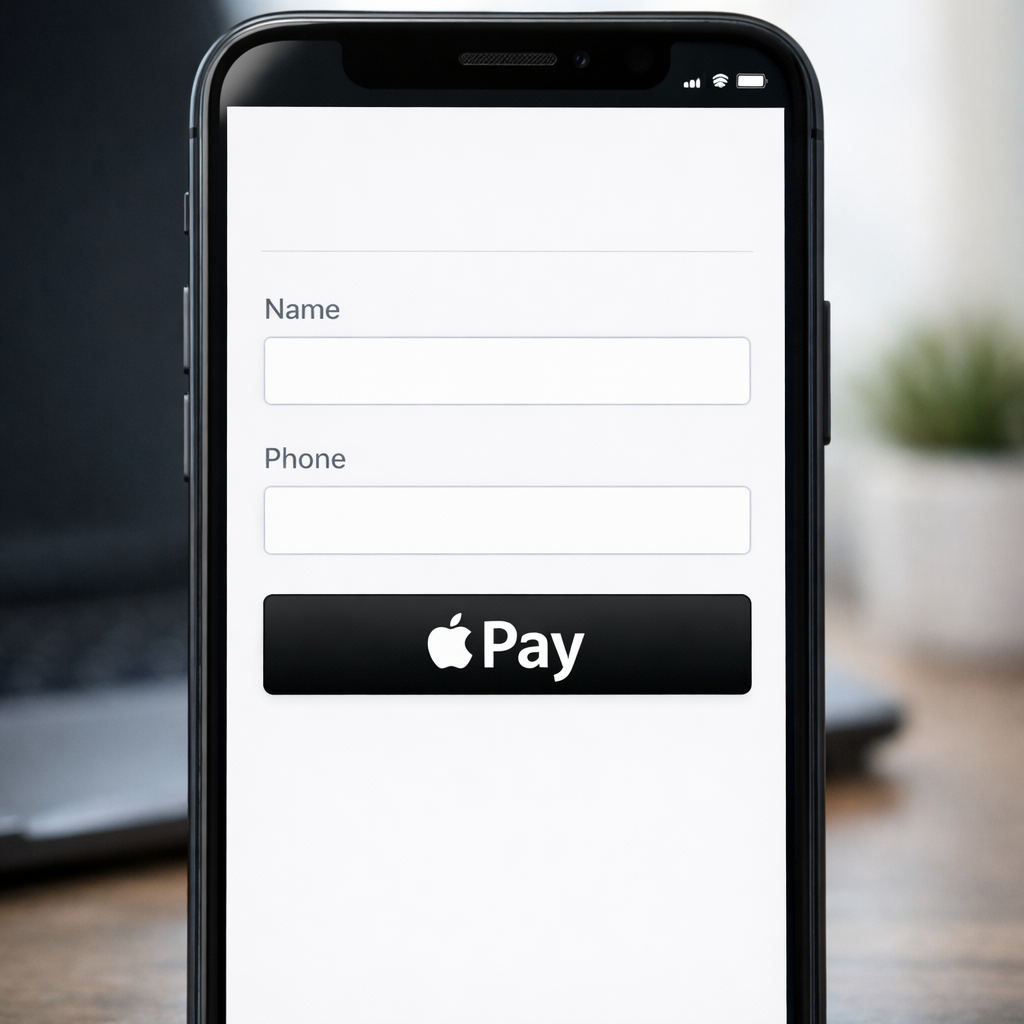
- Offer guest or express checkout. Provide Apple Pay, Google Pay, and PayPal so visitors can skip account creation.
- Use progressive profiling. Collect minimal info up front and capture additional attributes later in the customer journey.
- Enable autofill and input masks. Save time and reduce errors on mobile with proper input types and masked card/phone fields.
- Show total cost early. Surface taxes, shipping, or fees before the final step to avoid late-stage abandonment.
Practical insight: Reducing fields improves volume but can reduce lead qualification. The trade-off is deliberate: if your analytics show many qualified leads being lost at the form, remove fields; if you get low-quality leads after trimming, add a fast secondary qualification step (SMS or brief callback) that costs less than losing the conversion.
Implementation steps (30-day playbook)
- Map the conversion funnel and tag every form field as must-have, nice-to-have, or unnecessary using form analytics.
- Run a quick A/B test: original form vs stripped form (name + email or phone) and measure completion rate and lead quality for two weeks.
- Add autofill, correct mobile input types, and inline validation to reduce error retries.
- Introduce an express payment option using Stripe Checkout or PayPal and offer guest checkout as default.
- If qualification is essential, add an automated follow-up (email or SMS) to collect missing details after the initial conversion.
Tracking and KPIs: Track form completion rate, form abandonment rate, median time to complete, and lead-to-trial (or lead-to-sale) conversion. Use Google Analytics events for form steps and session recordings or heatmaps to see where people hesitate.
Real-world application: A local fitness studio switched their online trial signup from eight fields to three: first name, phone, preferred time. They added autofill and an option to pay for a paid trial via Apple Pay. Instead of insisting on full profiles upfront, staff used the phone number to confirm the trial slot and collect preferences during the call — turning friction reduction into faster bookings without sacrificing quality.
Important limitation: Express wallets and one-click payments reduce friction but also reduce the chance to capture marketing permissions and emails. If email capture matters, add a minimal pre-checkout email field or follow up immediately after purchase to request marketing opt-in.
Test the smallest change first: remove one field and measure. Large rewrites hide the signal; incremental removals expose what actually moves metrics.
Quick stat: Baymard Institute documents many common checkout usability issues — reducing form friction and early cost surprises typically improves completions dramatically. Measure both speed and completion to see the real effect.
3. Add social proof and trust signals targeted to conversion intent
Key point: Social proof only works when it answers the specific hesitation a visitor has at that point in the funnel. Visitors converting on a free trial need different proof than visitors committing to a paid membership.
Match the signal to the intent
Why this matters: Surface-level star widgets are cheap wins but they rarely remove doubt for high commitment actions. Outcome-focused proof – short results, real photos, and quick stats – is what persuades someone to trade money or time. For low-commit CTAs, use broad popularity cues like number of signups or live counters.
- Low commitment actions: use X people tried this this month, micro testimonials, and recent activity notifications to increase clickthroughs.
- Mid commitment actions: show short 1-2 sentence reviews tied to outcomes, verified badges, and two or three logos of local partners or clients.
- High commitment actions: use a brief case study, before and after metrics, and a short video or customer quote that addresses common objections.
How to implement – quick plan: 1) Identify the target action and primary hesitation, 2) Pick one signal type that addresses that hesitation, 3) Create an A B test with control and proof variant, 4) Run heatmap analysis to confirm visibility, 5) Measure conversion lift by traffic source and device.
Practical tradeoff: Too many trust badges or generic review carousels create visual noise and reduce clarity. Use one strong, relevant proof element above the fold and deeper proof in the page body. If you only have star ratings, pick the most credible display – verified purchase or location tagged reviews – rather than an auto-rotating list of anonymous comments.
Concrete Example: On a fitness studio trial signup page, replace a generic 5 star widget with a 20 word outcome quote plus a stat line: Joined 320 members last month – average 6 week weight loss 8 lbs. Put that next to the signup form and run an A B test. In practice this converts better than stars because it speaks to a visitor concern – will I get results – rather than general popularity.
Measure by cohort: track conversion lift separately for paid traffic, organic, and direct. Social proof that works for organic visitors often underperforms for paid search because intent differs.
Tools and checks: Use Trustpilot or Yotpo widgets for verified reviews, Fomo or Proof for live activity notifications, and Hotjar heatmaps to validate placement. Run experiments with Google Optimize or Optimizely and analyze results in Google Analytics. For landing page benchmarks and how proof affects clickthroughs see HubSpot.
Common mistake: Marketers assume more proof always helps. In reality proof must be specific, recent, and relevant. Old, generic testimonials or repeated broad claims reduce trust and can lower conversions.
Quick test you can run in 7 days: Add one outcome-focused testimonial and a single verified badge above the fold on a trial signup page. Run a 2 week A B test. Target KPI: 5 to 15 percent uplift in trial signups for mid funnel traffic.

Next consideration: If a proof variant wins, do not spray it everywhere. Re-run tests when you change price, offer, or traffic source because the right proof is tied to the visitor intent and the offer context.
4. Run structured A B tests and prioritize experiments using impact versus effort
Start with discipline. A discipline of small, prioritized A B tests is the most reliable way to increase website conversions over time – not one big redesign. Tests separate what actually moves metrics from what feels right in the meeting room.
What structured testing looks like. Build a short roadmap of hypotheses, score each by expected impact and required effort, run the highest priority test, learn, and repeat. Keep tests focused to one variable where possible, name them clearly, and lock the success metric before you launch.
Prioritization – the impact versus effort framework
- Collect hypotheses: Pull ideas from analytics, heatmaps, customer feedback, and support tickets.
- Score impact 1 to 5: Use revenue per visitor, conversion funnel bottlenecks, or past lift as a guide.
- Score effort 1 to 5: Include design, engineering time, QA, and tracking complexity.
- Calculate priority: Use a simple ratio impact divided by effort or a weighted score to rank experiments.
- Guardrails: Require a minimum sample or run micro conversion tests if full sample is impossible.
Practical tradeoffs that matter. Small sites and local businesses face low traffic, so running many parallel tests is unrealistic. In that case prioritize low effort, high expected impact items such as CTA copy, headline variants, or removing a form field. If you need larger samples, pool tests across multiple locations or test cross-channel flows that include post-click messaging.
Statistical caution. Do not stop tests early because a variant looks better after a few days. False positives are common. Predefine your minimum detectable effect and run-length, or use Bayesian methods with proper priors if your tool supports them.
Concrete example
Concrete Example: A boutique gym tested two CTA variations on their trial signup landing page – Book Free Trial versus Reserve Your Spot Today. The team scored the CTA copy as low effort, high impact and prioritized it. They ran the test for three weeks and found a 9 percent lift in trial bookings from the Reserve variant. In a follow-up experiment they paired the winning page with a short Gleantap SMS flow for visitors who abandoned the form to measure combined onsite plus post-click impact. Results showed an additional lift in booked trials when SMS was added.
Tools and where to use them. Choose a tool that matches your velocity and privacy needs. Optimizely fits enterprise teams, VWO is mid-market friendly, Convert is good for privacy conscious setups, and use analytics measurement from Google Analytics or server side experiments when tests are critical to revenue. For process guidance see the CXL A B testing process.
Focus on tests you can run cleanly and learn from. One reliable 5 to 10 percent lift per quarter compounds faster than occasional big changes.
Key tradeoff – speed versus certainty. Faster tests increase learning velocity but raise false positive risk. If you are low traffic, bias toward bigger, low effort changes and validate with secondary metrics or pooled samples.

5. Personalize the onsite experience using behavioral targeting
Clear fact: personalization that changes the offer and CTA for a visitor segment moves the needle far more than superficial touches like inserting a name. Behavioral targeting works because it aligns the page to what a visitor already signaled — source, recent clicks, time on site, or stage in the conversion funnel — so their decision path shortens.
How to implement this without blowing time or budget
- Start with pragmatic segments: prioritize three segments you can detect reliably and that imply different intent: paid search visitors, returning visitors who viewed pricing, and mobile users. These require no fancy models and give clear hypotheses.
- Change the primary offer, not just copy: for paid search show the trial-signup CTA and a single-step form; for returning visitors show comparison tables or urgency around membership upgrades.
- Use server-side or client-side rules via a personalization tool: configure simple rules in Dynamic Yield, VWO Personalization, or your tag manager to swap headlines, CTAs, or banners based on referrer, UTM, or cookie flags.
- Measure segment-level lift: create separate conversion goals in Google Analytics for each personalized variant and track conversion rate, micro-conversions, and revenue per visitor by segment.
- Keep experiments isolated: avoid overlapping personalization rules across the same page — run one targeted change per segment and monitor for cross-contamination.
Trade-off to accept: true one-to-one personalization requires significant data, engineering, and governance. If you try to personalize too granularly without volume, you create noise and false positives. Start broad, scale what gives repeatable lifts, and avoid real-time recommendations unless you can measure them reliably.
Practical limitation: privacy and performance are real constraints — client-side personalization can slow pages and tracking changes must respect consent. If consent is limited, rely on deterministic signals like UTM, landing page, and device type.
KPI target: pilot personalization on one high-traffic landing page. Expect a 10 to 30 percent lift in CTRs or conversions on the targeted segment; treat anything under 5 percent as a sign your segmenting or offer needs rework.
Concrete example: a local fitness studio routes paid Google ads for free trial classes to a landing page that displays a bold one-step trial form and time-limited morning-class slots. Organic visitors arriving from blog content land on a page showing class schedules, instructor bios, and a soft CTA to join a mailing list. After four weeks the studio saw higher trial signups from the paid cohort and increased email signups from organic traffic, confirming the segment-to-offer match.
What most teams get wrong: they over-index on personalization technology rather than the offer. Swapping images or using visitors names looks neat but rarely moves revenue. The smarter play is to map behavioral signals to different offers in your conversion funnel — that is where you actually boost conversions and improve sales.
Next consideration: pick one landing page and two segments, run targeted changes for 30 days, and measure segment-level conversion and revenue per visitor. If you see repeatable lift, expand the same rule set to similar pages rather than multiplying micro-segments that are hard to sustain.
6. Use urgency, scarcity, and pricing framing experiments to increase conversions
Straight talk: urgency and scarcity move people when they are credible and relevant; when they are fake or overused they reduce long term trust and raise support costs. Use experiments, not gut instincts, and measure downstream effects as well as the immediate conversion lift.
Three experiment types and what they test
- Time limited offers: test short deadlines on enroll now, trial start, or waived fees to accelerate decisions and capture time sensitive buyers. Measures: conversion rate in the test window and cancellations in the following 30 days.
- Inventory or capacity scarcity: show remaining spots for classes or limited seats on a program. This is high impact for appointment and local service businesses where capacity is real. Measures: bookings per session and no show rate changes.
- Pricing framing and decoys: present an anchor price, a decoy mid option, and the target plan to nudge choice and raise average order value. Measures: plan mix, average revenue per user, and churn after 30 to 90 days.
How to run a clean experiment: start with one variable, run for a full business cycle, and include post purchase KPIs. Use an impact versus risk filter: if the message could increase refunds or complaints, run a smaller pilot or limit it to one channel.
Implementation checklist (3 to 5 steps)
- Define the hypothesis: state expected lift and the secondary risks such as increased support contacts or higher returns.
- Pick a narrow audience: target new visitors from paid search or first time site visitors to avoid overexposure for returning users.
- Create credible triggers: use real inventory, real deadlines, or time windows linked to scheduled classes so scarcity is verifiable.
- Run the test and collect full-funnel data: track conversion rate, average order value, cancellations, support tickets, and lifetime value where possible.
- Decide next step: roll out, iterate on messaging, or pause if you see increased returns or complaints.
Tool recommendations: use your A B testing tool for messaging swaps (Optimizely, VWO, or Google Optimize), a scarcity widget for dynamic counters (Fomo, Proof), and subscription pricing platforms for experiments with billing tiers (Chargebee or Stripe). Reference conversion test best practices at CXL when designing sample sizes and run lengths.
Concrete example: a 12 location gym ran a three week test where new visitor landing pages showed an enrollment fee waiver valid for 72 hours versus a control with no deadline. The waiver page increased trial signups 14 percent and average first-month revenue 9 percent. However the gym tracked a 6 percent uptick in cancellations in month one, which led them to add a short onboarding call before the waiver expired to reduce churn.
Tradeoff to accept: pricing framing often raises short term conversions at the cost of increased customer acquisition cost distortion and potential lifetime value erosion if discounts become expected. Do not treat urgency as a permanent channel tactic. Use it to accelerate acquisition for cohorts you can onboard and retain.
Important: always tie urgency and scarcity tests to verifiable signals. False scarcity yields quick wins and long term damage.
Benchmarks: expect a 5 to 20 percent uplift for credible scarcity or pricing-framing wins. If you see lifts larger than 30 percent, verify tracking and check for unintended audience shifts or promotional leakage.
| Experiment | Primary metric | Secondary risk |
| 72 hour enrollment deadline | Trial signups | Short term cancellations |
| Low spots counter for classes | Booking rate per session | No shows and support queries |
| Three-tier pricing with decoy | Average revenue per user | Discount-driven churn |
Next consideration: pick one small, credible scarcity test this week targeted at a single traffic source, run it for a full cycle, and monitor post conversion signals before expanding.
7. Recover abandoning visitors and convert more leads with Gleantap SMS automation
Immediate win: use SMS to catch warm intent the moment it slips away. Visitors who start a trial sign up, book a class, or begin a checkout but abandon within minutes are the easiest wins you are not capturing with email alone. SMS has open rates and response speeds that make it the right channel for time sensitive nudges, quick qualification, and appointment recovery.
Three-step abandonment SMS flow that works for fitness studios
- Immediate reminder (within 5 minutes): short friendly message confirming the action they started and a one tap CTA to continue. Keep copy under 160 characters and avoid friction. Example copy structure: Started your free trial? Complete in one tap at [link].
- Second message with social proof (30 minutes to 2 hours): include a brief testimonial or number of members and an easy reply option such as Reply YES to confirm a spot or Reply HELP for questions. Two way messaging increases qualification speed and reduces no shows.
- Final limited incentive (6 to 24 hours): a modest, credible incentive tied to urgency such as a waived enrollment fee valid for 24 hours. Only use scarcity when it is true to avoid trust erosion.
How to implement in 4 practical steps – minimal dev required. 1) Capture phone and opt-in on the form or booking widget. 2) Send web events or webhook to Gleantap when an abandonment trigger fires. 3) Create the three-step flow in Gleantap using templates and segmentation rules. 4) Route replies to staff for fast two way qualification or to automated intents for common questions.
Important tradeoff and limitation: SMS works fast but is also intrusive and has cost per message. Expect higher opt-out rates than email if cadence is aggressive. Balance conversion lift against lifetime value impact and support workload from inbound replies. If your front desk cannot respond quickly, reduce two way expectations or automate intent routing.
Concrete example: A 45 location boutique gym implemented Gleantap abandonment flows for trial signups. They sent an immediate reminder, a 60 minute social proof nudge, and a 12 hour incentive. Within 30 days trial completions rose 22 percent and booked intro appointments rose 30 percent while no shows fell 28 percent thanks to confirmation replies.
Measurement and attribution you must track. Tag SMS links with UTM parameters and mark session source so conversions in Google Analytics attribute correctly. Track micro conversions (resume sign up, booked intro, reply rate), final conversion, opt-out rate, and cost per converted lead. Expect initial signals in the first two weeks and stable lift by week four.
Key takeaway: Properly segmented SMS abandonment flows usually lift trial conversions 10 to 35 percent and cut no shows 20 to 50 percent. Ensure consent capture, reasonable cadence, and staffed reply handling before scaling.
Final judgment: SMS automation is not a silver bullet but it is the fastest lever for rescuing near conversions. Use targeted abandonment flows first for high value actions like trial start or appointment booking, monitor opt-outs and reply volume, and scale only after confirming support capacity and ROI.
Frequently Asked Questions
Straight answer first: you will not double conversions overnight. Expect incremental wins that compound when you pair measurement, follow up, and better post click experience.
Practical FAQ for operators and growth leads
- How quickly will I see results after a change: Small changes like headline edits or adding a testimonial produce signals in 1 to 4 weeks. Larger experiments such as personalization or pricing tests need 4 to 8 weeks to reach useful significance. Use each test window as an information gathering exercise, not a final verdict.
- Which tactic should I try first with limited resources: Start with the highest impact, lowest effort items – headline + CTA clarity, then simplify forms and reduce friction. Those moves buy time and improved signal for deeper experiments.
- How do I prioritize A B tests: Score ideas on impact versus effort, but adjust for traffic volume. A high impact test that needs large sample size is not useful if you do not have the visitors to reach significance within a month.
- Is SMS appropriate for all businesses and when to use Gleantap: SMS works best for time sensitive offers, appointment businesses, and local services where immediacy and two way qualification matter. Use Gleantap when you need automated, segmented SMS flows and rapid two way follow up tailored to gyms and fitness studios.
- What metrics should I track: Focus on the primary conversion rate for the goal, plus micro conversions that feed it – CTA clicks, form starts, form completions, appointment show rate, and revenue per visitor. Tie those to traffic source to avoid celebrating irrelevant wins.
- How to avoid damaging trust with urgency or scarcity: Use truthful, verifiable scarcity. If you display low inventory counters or tight deadlines, have the backend to support them. Test language and monitor returns, complaints, and support volume as part of the experiment.
- Can I run personalization and A B tests at the same time: You can, but segment experiments to avoid interference. Assign clear ownership and naming conventions so results remain interpretable and you can roll winners forward safely.
Tradeoff to accept: speed versus certainty. Faster decisions mean more false positives. Waiting for long tests means slower improvement. The right balance depends on traffic volume and business urgency.
Concrete Example: A 30 location fitness studio ran a three week campaign where they removed two form fields on trial signup pages and replaced the hero with a clear value statement aimed at paid search traffic. New leads per day rose 26 percent and trial conversions improved 18 percent. They then implemented a two step SMS confirmation flow using segmented messaging to protect those gains and reduce no shows.
Important: always measure business outcome not vanity metrics. An increase in clicks without lift in trials or bookings is a failed experiment.
Core metrics to track now: conversion rate for the target action, form abandonment rate, appointment show rate, average order value, and conversions by traffic source. Quick KPI targets: aim for a 10 to 25 percent lift on small UI changes, 3 to 10 percent per winning A B test, and 10 to 35 percent lift from targeted SMS flows when properly executed.
Where to read more or validate methods: use the CXL conversion optimization resources for testing framework basics and Google Analytics for experiment tracking. For checkout usability research consult Baymard Institute.
Next actions you can take in the next 30 days: 1) Run a 14 day headline plus CTA test on your highest traffic landing page. 2) Reduce form fields on your most valuable signup by at least one and measure form completion time. 3) Set up a two step SMS confirmation for new leads or appointments and track show rate. Execute these in that order to protect upstream traffic while improving downstream conversion.

Ready to Run Successful Marketing Campaigns and Grow Your Business?
Gleantap helps you unify customer data, track behavior patterns, and automate personalized campaigns, so you can increase repeat purchases and grow your business.
Ready to Run Successful Marketing Campaigns and Grow Your Business?
Gleantap helps you unify customer data, track behavior patterns, and automate personalized campaigns, so you can increase repeat purchases and grow your business.