
 Divya Ghughatyal
If your website traffic isn’t turning into paying customers, you need a playbook that fixes both the front-end experience and the back-end handoff. This guide shows how to improve conversions, sales pipelines, and Conversion Rate with practical, testable tactics, the right tools, and measurement you can implement in weeks. You will get step-by-step checklists, experiment templates, and two real playbooks you can replicate for a gym-style business and a high-impact landing page test.
1. Map the conversion funnel and choose the right KPIs
If you cannot draw your funnel in one page you do not have a conversion problem you can fix. Map every handoff and micro conversion that moves a prospect toward paid: first touch, landing page visit, lead capture, qualification, trial or demo, paid conversion, and renewal.
Sketch stages and the data you need
Concrete map: draw stages as rows and add columns for metric, event name, owner, and SLA.** This forces decisions: who owns a lead at each stage, what event marks the stage, and what response time is acceptable.
- Typical funnel stages: awareness > landing page visit > lead capture > lead qualified > booked trial/demo > trial attended > paid conversion
- Columns to include: event name, tracking method (client or server), CRM field, responsible team, SLA in minutes/hours
- Segment dimensions: source/campaign, landing page, device, audience, first touch date
Pick KPIs that connect to revenue
Primary metrics should be funnel conversion rates and pipeline velocity, not just clicks. Track conversion rate at each stage, time-to-conversion, lead-to-opportunity rate, opportunity-to-close rate, and revenue per visitor or lead. Micro metrics like CTR or bounce rate are diagnostic, not goals.
Tradeoff to accept: optimizing a high-volume stage with low revenue impact wastes time. Focus first on stages with both traffic and meaningful revenue impact – a 10 percent lift on a primary landing page is better than 50 percent on a rarely visited thank you page.
GA4 implementation checklist
- Events to capture: ___CODE0, CODE1, CODE2, CODE3, CODE_4___, and custom pipeline stage events that mirror CRM stages
- Naming: use consistent, lowercase event names and one taxonomy for pipeline stages across GA4 and CRM
- Funnel reporting: build both exploratory funnels in GA4 and weekly funnel cohorts; see GA4 funnel docs for event setup
Concrete example: A midmarket gym tracks an ad click to landing page, ___CODE0 for class signups, CODE1 when a calendar event is created, and CODE_2___ in the CRM. After instrumenting these events they discovered the largest dropoff was between trialbooked and trialattended; shifting to an automated SMS reminder plus a one tap reschedule link moved trial-attended conversion up 18 percent.
Key takeaway: Start with one north star KPI – revenue per visitor or paid conversion rate – plus 3 stage conversion rates. Instrument those first, then expand segmentation and secondary metrics.
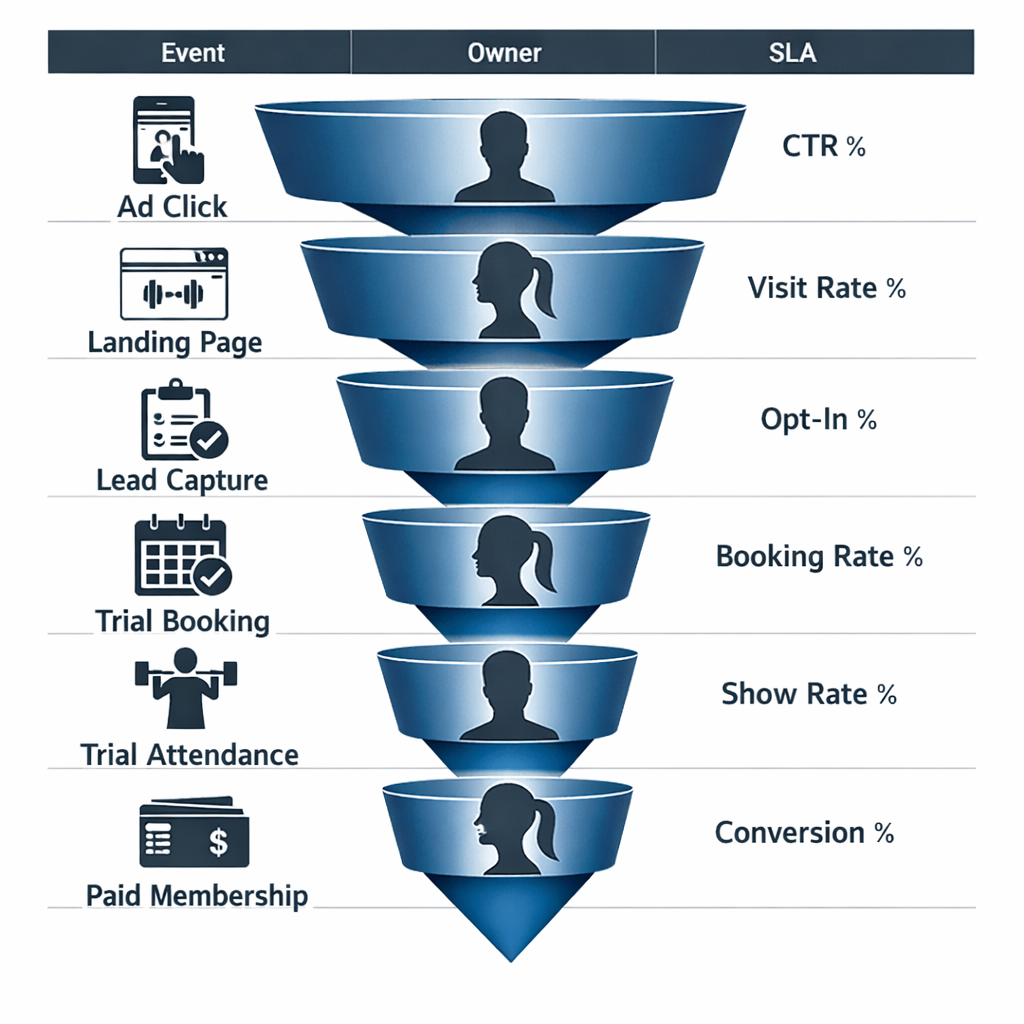
Next consideration: once the funnel is mapped and KPIs defined, prioritize tests and automations against the stages that leak the most value – use lift times traffic to rank opportunities and avoid chasing vanity metrics.
2. Quick wins to improve on-page conversion rate
Immediate priority: remove friction where visitors make a decision. Small, focused changes to the page that cut cognitive load or make the next step obvious will move the needle faster than a redesign.
High-impact page changes to prioritize this week
- Headline clarity: replace clever or vague headlines with one sentence that states the offer and benefit. Visitors decide in seconds; headline mismatch kills intent.
- Single primary CTA: make one action visually dominant and use explicit language (Book Free Class, Start Trial, Reserve Spot). Avoid multiple CTAs above the fold.
- Shorten forms: cut fields to essential data only. If you need qualification data, collect it after the initial conversion using a progressive capture flow.
- Remove distractions: hide non-essential navigation, auto-play media, and competing links on landing pages and checkout screens.
- Speed and mobile: prioritize page weight and touch targets. A fast, responsive page converts more on mobile—optimize images and defer third-party scripts.
Practical trade-off: fewer form fields usually increases conversion but reduces lead information and can raise cost per qualified lead. If you shorten forms, pair the change with a scoring or nurture sequence so sales still gets high-quality leads.
Simple A/B test template you can run in one sprint
| Variation | Change | Primary metric | Minimum duration guidance |
| Control | Existing page | Landing page Conversion Rate | Run until sample size reached (typically 2–4 weeks) |
| Treatment A | Clear benefit headline + single CTA | Landing page Conversion Rate | Same duration as control |
| Treatment B | Short form (remove 3 fields) + trust badge | Lead Submit Rate; Lead Quality (qualified leads / total leads) | Same duration; track downstream pipeline metrics |
Note on measurement: don’t stop at the micro-conversion. Tie the test back to pipeline metrics like lead-to-opportunity rate and time-to-contact so you avoid optimizing for low-quality volume.
Concrete example: a local gym swapped a generic Join Now headline for Book a Free Class and reduced the sign-up form from six fields to three. The test showed the new page increased qualified trials and shortened time-to-show for first sessions.
Quick win checklist: headline, single CTA, shortest possible form, trust signals above the fold, and page speed under 3 seconds.
Benchmark context: average landing page conversion rates commonly sit around 2–5% but focused on-page improvements often produce double-digit relative lifts for the tested cohort. See the CXL guide to CRO and HubSpot landing page benchmarks for reference.

3. Optimize the sales pipeline: lead routing, cadence, and SLA
Direct action beats theoretical funnel maps. If leads sit in unassigned queues or wait hours for contact, conversion rate and pipeline velocity collapse. Focus first on routing rules, enforceable SLAs, and a simple multi-channel cadence you can A/B test.
Routing matrix: keep it simple and testable
- Primary rule by lead signal: route based on ___CODE0 then CODE1___ – e.g., paid search leads with score >= 60 go to senior reps; organic inbound leads go to inside sales queue.
- Geo and capacity controls: send local leads to local reps, but include overflow rules if rep capacity is exceeded to avoid dead leads.
- Skill matching for high intent: route demo or enterprise queries to reps with relevant experience, but do not build dozens of micro-routes that increase maintenance cost.
- Implementation tip: codify rules in the CRM (HubSpot or Salesforce) and mirror them in automation tools; use Zapier or native connectors to push to Gleantap when routing changes.
Tradeoff to accept: finer routing raises conversion marginally but increases technical debt. Start with three to five rules that cover 80 percent of leads, measure lift, then expand.
SLA and measurement you can enforce
Define a strict SLA: target time-to-first-contact under 5 minutes for high-intent inbound leads and under 1 hour for warm marketing-qualified leads. Track SLA breaches as a revenue risk metric, not just an operational KPI.
Measure the right things: instrument time_to_first_contact, contact rate within SLA, show-rate to demo or trial, and lead-to-paid conversion. Use GA4 for funnel attribution and complement it with CRM cohorts to measure pipeline velocity and revenue impact.
Practical cadence: a testable 7-day sequence
- T0 (immediate): send an SMS with simple next step – Sample: Hi Jane, thanks for signing up. Reply YES to book your free trial or tap this link to choose a slot: [booking link].
- T+15 minutes: send a confirmation email with details and a calendar link – Subject: Your trial slot – quick next steps.
- T+24 hours: call attempt 1 and leave a short voicemail if no answer.
- T+48 hours: SMS reminder with social proof – Sample: Only a few trial spots left this week. See class schedule and reserve: [link].
- T+5 days: targeted email with FAQ and testimonial video.
- T+7 days: final SMS with urgency offer – Sample: Last call to upgrade with 20 percent off for new members. Ends tomorrow.
Limitation: aggressive cadences lift short-term response but increase opt-outs and rep workload. Run the sequence as an experiment against a control and monitor opt-out and complaint rates alongside conversion metrics.
Concrete Example: A mid-size gym routed paid-search trial signups to a senior sales rep queue and used Gleantap to trigger an immediate welcome SMS and create a task for a same-day call. The workflow sent Day 1 and Day 3 nurture SMS, created a Day 5 upgrade task, and logged events to the CRM so GA4 could attribute conversions to the workflow. The implementation required cleaning phone number formats and adding a single routing rule to avoid split assignments.
Key metric to watch: track percentage of leads contacted within SLA plus conversion after contact. Aim to improve contact-within-SLA by 20 percent before adding routing complexity.
Judgment: invest first in enforceable rules and measurement, not in perfect personalization. Clear routing and fast contact will yield reliably higher Conversion Rate and pipeline velocity; personalized flows are worth building only after SLAs and baseline cadences prove effective.

Next step: instrument time-to-first-contact and run a controlled A/B test that compares immediate SMS plus task routing versus email-only follow-up to measure real lift in Conversion Rate and pipeline velocity.
4. Use messaging channels strategically: email, SMS, and retargeting
Channel choice should match intent and timing. Use SMS for time-sensitive nudges and confirmations, email for multi-step education and longer sequences, and retargeting ads to re-catch people who dropped off before conversion.
Channel orchestration patterns that actually move the needle
Orchestration pattern matters more than single-channel optimization. Sequence channels to match the customer moment: immediate – SMS, short-term reengage – retargeting, longer-term nurture – email. When channels overlap without coordination you create message fatigue and wasted spend.
- Immediate conversion push: Send an SMS within 10 minutes of a high-intent action (booking flow start or lead form submission) with a one-click CTA. Follow with a single confirmation email for record keeping.
- Abandon recovery stack: Email one hour after drop, SMS four hours after drop if no response, and retargeting ads beginning 24 hours after with a different creative (social proof vs discount).
- Nurture + retargeting: Use email for education and sequenced value content; use retargeting to reinforce social proof and urgency when readers open but do not act.
Practical limitation to plan for. SMS gives fast lift but scales poorly if your contact data is low quality or consent is incomplete. Retargeting needs sufficient audience size to be cost-effective – small lists will drive high CPMs and poor frequency control.
Measurement and experiment approach. Do not rely solely on last-touch. Use a 3-week holdout test: expose a cohort to your multi-channel stack and compare pipeline conversion and time-to-purchase against a control cohort that gets email only. Tie results to GA4 funnel events and revenue recorded in the CRM.
Concrete Example: A local gym captures a trial signup but the user drops off at booking. The gym sends an SMS within 8 minutes: Book your free class now – one tap to confirm. If no response, an email with class schedule and instructor social proof goes out the same day. Retargeting ads showing class photos run for three days to users who visited the booking page but did not convert. This sequence improved trial show rate in practice because SMS closed the immediacy gap and ads reinforced trust later.
Important: Always implement suppression lists and frequency caps across channels to avoid messaging the same person with conflicting creatives or excessive cadence.
Use utm tagging on every email and ad link, track events in GA4, and run a holdout lift test to measure true impact across channels. See Google Analytics 4 and Twilio SMS best practices for setup and compliance.
Judgment call most teams miss. Marketers chase open rates for email and immediacy for SMS without coordinating creatives or measuring cross-channel assists. The better play is a small, instrumented stack – send fewer, clearer messages across channels and measure lift with a holdout cohort.
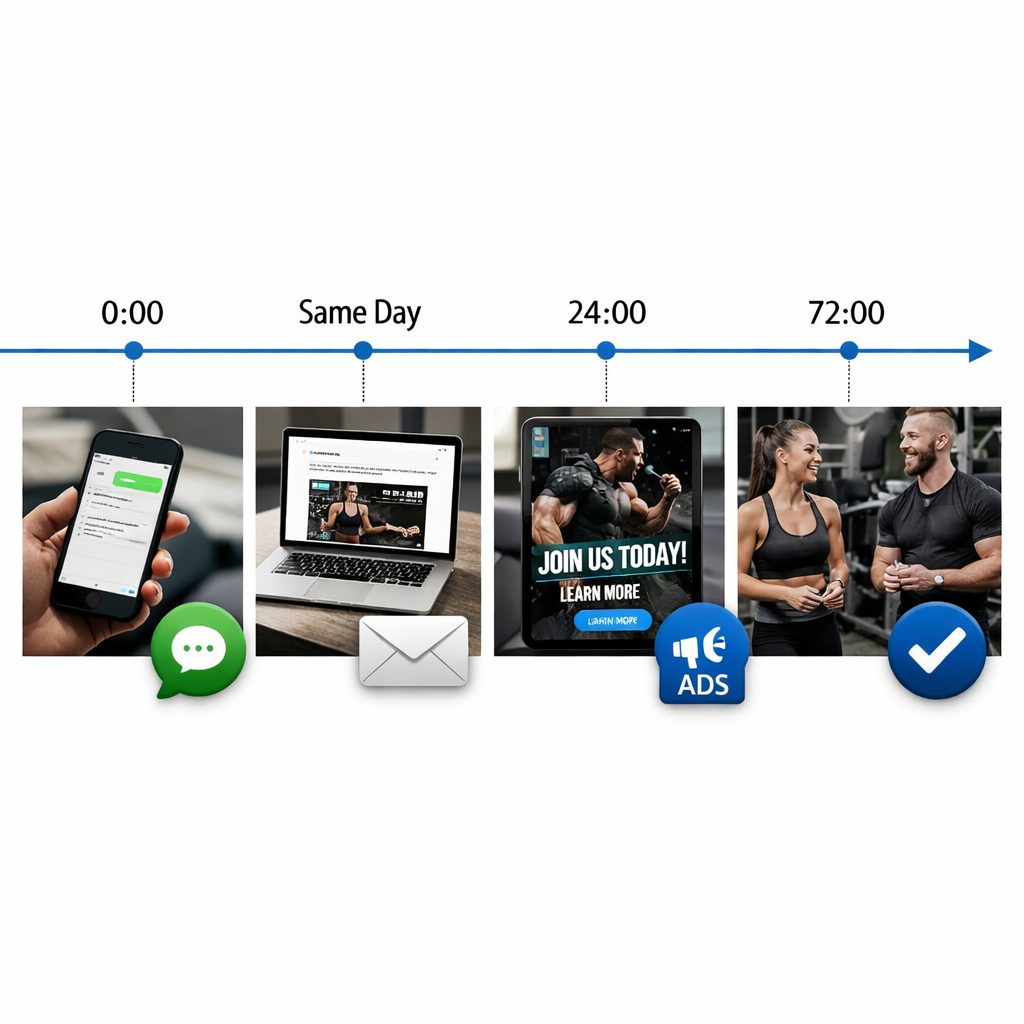
Next consideration: Build the simplest cross-channel experiment you can run in two weeks – a treated cohort that gets SMS + email + retargeting versus email only – and measure conversion rate lift and pipeline velocity before expanding.
5. Experimentation and data-driven testing program
A disciplined experimentation program is how you stop guessing and start making consistent, measurable gains in Conversion Rate across your funnels. Small one-off tweaks can help, but a repeatable process that connects tests to pipeline revenue changes decision-making from opinion to evidence.
A compact experimentation workflow you can run every sprint
Set a test backlog and prioritize. Capture hypotheses in a shared spreadsheet: page, hypothesis, primary metric, expected impact, required effort, owner. Use ICE or PIE to rank tests so you work on high-impact, low-effort items first.
- Design: write a clear hypothesis (if X change, then Y metric will move by Z) and pick one primary metric tied to revenue or pipeline (e.g., lead-to-opportunity rate).
- Implement: use client-side A/B tools or, for reliable attribution and fewer instrumentation errors, server-side flags. Integrate with GA4 and your CRM so experiment cohorts map to revenue events.
- Run & monitor: calculate sample size up front with a calculator, run to completion, and avoid early peeking. For low-traffic pages, prefer sequential tests or qualitative research instead of underpowered A/Bs.
- Analyze: report primary + secondary metrics and cohort revenue impact; log learnings to the backlog.
- Rollout: promote winning variants and convert lessons into standard templates or automation (for example, automate a winning follow-up cadence in your CRM).
Practical trade-off: speed versus statistical confidence.** Fast iterations matter, but pushing underpowered tests produces noise and false positives. If you need speed, run high-frequency micro-tests on modular elements (CTA copy, button color) on your highest-traffic pages and reserve big structural changes for full-powered tests.
Concrete Example: A gym landing page test.** Hypothesis: reducing lead form fields from six to three will increase trial signups and reduce time-to-first-class. Primary metric: conversion to 14-day trial. Secondary metrics: lead quality (lead-to-opportunity rate) and demo show rate. Implement A/B on the page, tag GA4 events for trial_signup and pipeline_stage in your CRM, and compare 30-day cohort revenue between variants to validate business impact.
Another real-world test you should run in parallel: an inbound-lead SMS experiment. Send an SMS within 5 minutes to half your inbound leads and keep the other half as control. Measure lead-to-opportunity, opportunity-to-close, and time-to-first-contact. In practice, SMS often speeds pipeline velocity; the judgment call is to balance higher contact rates against potential opt-outs and frequency fatigue.
Common mistake people make: treating lifted micro conversions as wins without checking downstream effects. A headline that increases form fills can still worsen revenue if it attracts low-intent leads. Always validate experiments with at least one downstream pipeline metric.
Key takeaway: Prioritize tests that can be tied back to pipeline revenue, instrument cohorts end-to-end (page -> GA4 -> CRM), and avoid underpowered tests.
6. Tools stack and integration playbook
Most conversion problems are integration problems. You can have best-in-class tools for A/B testing, CRM, analytics, and messaging but conversions stall when those tools do not share clean events, identifiers, and handoff logic.
Integration patterns that actually move the needle
Pattern 1 – Capture to CRM to workflow engine. Lead captured on a landing page (___CODE0 or CODE1) -> push to CODE2 or CODE3___ -> trigger Gleantap SMS/email workflow and create sales task. This is the simplest reliable flow for SMBs.
Pattern 2 – Event-first attribution with server-side capture. Send form submits and checkout events server-side to GA4 and your CRM to avoid lost conversions from ad blockers and browser tracking limits. Use this when revenue attribution matters and you need consistent pipeline velocity metrics.
Pattern 3 – Experiment-control loop. Run A/B tests in ___CODE0 or CODE1, record experiment ids as events to CODE_2___ and your CRM, then let Gleantap trigger follow-ups only for winners. This prevents messaging noise from corrupting test results.
- Pattern 4 – Lightweight glue for fast wins. Use Zapier only for early validation; move to native connectors or APIs for scale because zaps are rate limited and fragile.
- Practical tradeoff. Native integrations reduce latency and failure rates but require more engineering time; server-side tracking improves accuracy but increases complexity and cost.
| Role | Tool example | Why it matters |
| CRM and pipeline | HubSpot or Salesforce | Single source of truth for lead status and SLA enforcement |
| Messaging automation | Gleantap / Twilio | High-read channels for immediate follow-up and pipeline nudges |
| Analytics and funnels | Google Analytics 4 | Funnel metrics, cohort analysis, and experiment tagging |
| Qualitative insights | Hotjar | Heatmaps and session recordings to inform test hypotheses |
| A/B testing | Optimizely or VWO | Statistically controlled changes to landing pages and funnels |
| Glue | Zapier | Rapid integrations for proof of concept |
Concrete example: A local gym runs an Unbounce landing page that posts leads to HubSpot. HubSpot triggers a Gleantap workflow: immediate SMS with class availability, an automated 24-hour reminder, and a task for a sales rep if no booking. GA4 receives server-side events so the team can attribute paid conversions to the landing page and measure pipeline velocity accurately.
Common mistake to avoid. Adding another tool rarely increases Conversion Rate by itself. The real lift comes from clear event contracts, normalized identifiers (email, phone), deduplication rules, and a short reliable path from capture to human or automated follow-up.
Governance checklist before you flip the switch
- Event taxonomy. Define ___CODE0, CODE1, CODE2, CODE3___ and experiment ids across systems and document naming conventions.
- Phone and email normalization. Enforce E.164 phone format server-side to prevent SMS failures and duplicate records.
- Consent and retention. Capture opt-in timestamps and tie them to messaging workflows to stay compliant with local rules and carrier requirements.
- Deduplication and source priority. Decide which system wins when the same lead arrives from multiple channels and implement merge rules.
- Monitoring and alerting. Track integration failures, SMS delivery errors, and experiment tag mismatches.
Key takeaway: Start with a small, reliable stack (landing page -> CRM -> Gleantap -> GA4). Use server-side events for attribution when revenue accountability matters, and replace zaps with native connectors once a flow proves its business value.
Further reading: For experimentation and proper funnel measurement see CXL conversion optimization guide and the GA4 measurement docs at Google Analytics Help. For SMS best practices review Twilio guidance at Twilio SMS resources.
7. Real examples and reproducible playbooks
Practical premise: ready-made playbooks are the fastest route to improve conversions because they force measurement at the pipeline level and give a repeatable experiment you can run this week. Below are two reproducible plays you can copy, run a holdout test against, and measure in GA4 and your CRM.
Gleantap playbook — convert 14-day trial to paid
- Trigger: when a 14-day trial is created push an event to the CRM and start the automation in Gleantap.
- Immediate touch: send an SMS within 30 minutes: Hey {firstName}, welcome. Book your intro session: [booking link].
- Nurture cadence: Day 3 educational email, Day 7 targeted class invite with social proof, Day 12 scarcity SMS offering a discounted first month, Day 14 outbound call task for reps.
- Lead scoring and routing: add +10 score for booking a session, +5 for attending; when score > 15 assign to local rep and move opportunity to demo_scheduled.
- Measurement: create cohorts for automated vs holdout (suggest 20 percent holdout). Primary metric: trial-to-paid Conversion Rate tracked in GA4 and CRM. Secondary: time-to-conversion and average revenue per converted trial.
Tradeoff and limitation: using a 20 percent holdout reduces short-term conversions but gives a clean business-level lift measurement. If you skip a holdout you will never know whether the automation cannibalized sales or actually improved pipeline velocity.
Concrete Example: a regional gym implemented this exact Gleantap flow and ran a 20 percent holdout. The team measured faster time-to-paid in the automated cohort and used the cohort result to justify expanding SMS touches into their broader sales pipelines.
Landing page A/B playbook — increase Conversion Rate for trial signups
- Hypothesis: shortening the form to name + phone and adding one-click booking will increase Conversion Rate and improve lead quality.
- Variant setup: Control = current page. Variation A = 2-field form + booking widget. Variation B = control copy + social proof strip + urgency line above CTA.
- Tech and tracking: run the test in Optimizely or VWO, fire lead_submit event to GA4 and send lead to CRM with a source tag. Ensure server-side capture if you use client-side blockers.
- Metrics and stop rules: primary metric = Conversion Rate (lead_submit). Secondary = lead-to-opportunity rate, demo show rate. Stop when sample size meets power calculation or after 4 weeks.
Practical insight: A/B tests commonly improve micro metrics but not revenue unless you tie the test to pipeline outcomes. Always back an on-page win with a short controlled pipeline test so you measure whether new leads convert downstream.
- Sample SMS copy: Hey {firstName}, we saved a spot for your intro class tomorrow at {time}. Reply YES to confirm.
- Sample email subject: Save your spot for a free intro class this week
- Sample CTA text to test: Book my intro vs Get started
Key metric to watch: measure Conversion Rate at the funnel stage that maps to revenue. Track trial-to-paid over 30 days and pipeline velocity so you validate real business impact, not just higher form fills.
Final consideration: pick one playbook, implement a holdout, and instrument the pipeline events before you judge success. If you skip pipeline-level measurement you will chase micro wins that do not move revenue.
Frequently Asked Questions
Direct answers for implementers. Below are the concrete, operational questions teams ask when trying to improve conversions, run tests, and connect messaging to pipeline outcomes.
Short, actionable answers
- Which single change moves the needle fastest? Tighten the end-to-end handoff between marketing and sales so leads are qualified and contacted predictably; this is about process and automation more than creative tweaks.
- How do I pick tests when traffic is limited? Prioritize changes that affect the most valuable visitors (paid channels, high-intent landing pages) and run sequential small experiments rather than many simultaneous low-power tests.
- How long should tests run and when are results reliable? Run until you hit the pre-calculated sample size for your minimum detectable effect and avoid peeking. If traffic is small, use directional pilots plus qualitative signals rather than pretending you have conclusive stats.
- Can SMS be used without annoying people or risking compliance issues? Yes, if you only message opted-in numbers, limit frequency, and send clear opt-out language; use SMS for immediacy (reminders, booking confirmations), not for heavy-handed promotions.
- Which metrics actually prove business impact? Move beyond clicks and micro-conversions — measure lead-to-opportunity, opportunity-to-close, time-to-close, and revenue per visitor or per campaign.
- How do I measure the effect of an automation like an SMS sequence? Use cohort and funnel comparisons: create matched cohorts (exposed vs unexposed), track identical GA4 events or CRM stage changes, and measure conversion rate and time-to-convert differences.
Practical trade-off: Speed versus statistical certainty.** Quick pilots give fast directional answers and let you iterate, but they can deceive you if you treat a small lift as definitive. When resource-constrained, run short pilots to validate an idea, then scale with a properly powered A/B test.
Concrete example: A local gym tested a booked-trial workflow where inbound leads received an immediate SMS confirmation plus a one-hour reminder. The team measured show-rate and trial-to-paid movement using a GA4 funnel and CRM cohort test; they used the SMS campaign only for half of new leads to create a clean comparison and routed conversions back to the sales pipeline for revenue attribution.
Common mistake to avoid. Teams obsess over lifting landing page conversion rate in isolation while ignoring pipeline friction: long lead-response times, manual handoffs, and unclear ownership kill downstream conversions even when on-page metrics improve. Tie experiments to revenue or pipeline velocity early.
Key takeaway: Focus tests and automation on high-leverage choke points where messages or process changes move leads into paid stages faster. For measurement, use matched cohorts and funnel events in GA4 and track outcomes in your CRM.
- Action 1: Run one 2–4 week pilot that compares existing follow-up to an automated SMS + email sequence; instrument both groups in GA4 and your CRM.
- Action 2: Pre-calculate sample size or set a pilot acceptance rule (directional lift + qualitative confirmation) before launching.
- Action 3: If the pilot is positive, convert it to a powered A/B test and configure revenue attribution so pipeline revenue maps back to the test cohorts.
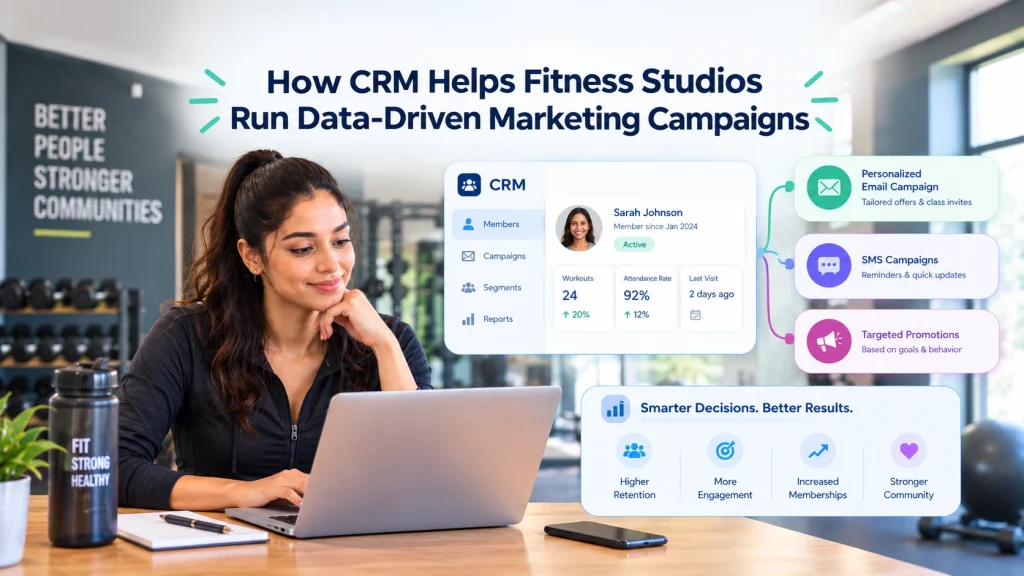

Ready to Run Successful Marketing Campaigns and Grow Your Business?
Gleantap helps you unify customer data, track behavior patterns, and automate personalized campaigns, so you can increase repeat purchases and grow your business.
Ready to Run Successful Marketing Campaigns and Grow Your Business?
Gleantap helps you unify customer data, track behavior patterns, and automate personalized campaigns, so you can increase repeat purchases and grow your business.