
Athletic Club CRM: Add CRM, AI Follow-Up and Retention Without Replacing ABC, Daxco, Jonas or Mindbody
 Divya Ghughatyal

Athletic club CRM software tracks leads, tours and members across departments and automates follow-up and retention. Most clubs should keep their club management system (ABC, Daxco, Jonas, Mindbody) for billing and check-ins and add a CRM layer that syncs both ways, replies to leads in under a minute and flags at-risk members from visit data.
What is athletic club CRM software?
Athletic club CRM software is a sales and engagement platform built for the fitness and sports clubs environment. It sits alongside your club management system and handles the work your billing platform was never designed to do: capturing and tracking leads, automating tour follow-up, running separate pipelines for membership, personal training, aquatics, and spa, and surfacing which members are quietly on their way out the door. The best fitness CRM software does all of this in real time, without asking staff to live in a second database.
The key phrase here is “alongside.” For sports clubs, the CRM question is rarely “which system should we run everything in?” It is “which layer do we add on top?”
Keep your club management system: why replacing it is rarely the first move
Your club management system – whether that’s ABC Ignite, Club Automation (Daxco), Jonas, Health Club Systems or Mindbody – is the system of record for contracts, billing, check-ins and member accounts. That is exactly what it was built for. The expensive, risky part of any software migration is moving that data: recurring billing relationships, contract terms, stored payment methods, and years of visit history. Get any of that wrong and members get double-billed or locked out.
Marketing and sales workflows are a completely different story. Moving lead pipelines, email templates, and follow-up sequences from one system to another takes days, not months. There is no contract migration risk, no billing disruption, and no member ever notices.
Every athletic-club prospect in a recent week of demos arrived at the same conclusion: keep the core system, evaluate a CRM and engagement layer on top. That is the right sequence. Ripping out the core to fix a sales and retention problem is like replacing a building’s plumbing because you don’t like the lobby furniture. A 9,000-member, 100,000 sq ft single-site club with aquatics, spa and youth programs; a four-location regional club on ABC Ignite; a fitness-and-spa operator using Jonas alongside a Mindbody POS – all three kept their core system and added a layer on top.
What your club system does well, and what it doesn’t
| Your club management system does well… | A CRM / engagement layer adds… |
| Billing and recurring payments | Lead capture and instant AI follow-up (under 60 seconds, 24/7) |
| Member contracts and agreements | Tour tracking: booked → showed → joined, by source and rep |
| Check-in and access control | Separate pipelines per department (membership, PT, aquatics, spa) |
| Class scheduling and bookings | Behaviour-based retention: flags members with no visit in 14–21 days |
| Point-of-sale and inventory | Review and referral requests triggered by visit milestones |
| Revenue and usage reporting | Lead-source attribution down to the individual member who joined |
| Member account history | Deduplication across your club system and old CRM lists |
8 things an athletic club CRM layer must do
1. Two-way sync with your club system
Every member record, prospect profile, check-in event and purchase should flow both ways in near real time. If a prospect books a tour in the CRM, it should be visible inside ABC or Club Automation the same day. If a member buys a ten-session PT package at the desk, the CRM should know immediately so it can start the right onboarding sequence. Without two-way sync, you’re managing two truths and one of them is always wrong.
2. Lead follow-up in under 60 seconds, 24/7
Speed-to-lead is the single biggest driver of tour conversion in sports clubs. A lead that fills out a form at 10 p.m. on a Saturday and gets a response Monday morning has already toured your competitor. Gleantap’s AI agent replies in under 60 seconds around the clock, qualifies the prospect, and answers common questions before handing off to a staff member with a full transcript of what the AI already said. Staff see the conversation; the AI never goes rogue.
3. Tour tracking from inquiry to joined member
A tour pipeline should track every stage – booked, confirmed, shown, offer made, joined, lost – and slice that data by source (web form, referral, walk-in, social ad) and by salesperson. Without that visibility, the sports club CRM is just a fancier inbox. With it, your membership director can see which sources convert and which reps close.
4. Separate pipelines per department
A 100,000 sq ft athletic club is not one business. The membership team, PT department, aquatics, spa and youth programming each have distinct buyers, distinct offers and distinct sales cycles. The gym CRM you evaluate must support separate pipelines, separate automations, and – critically – separate phone numbers so a spa prospect isn’t texted from the same number as a membership lead.
5. Behaviour-based retention from visit data
The leading indicator of cancellation is not a cancellation request – it’s a visit gap. A member who hasn’t checked in for 14 to 21 days is at risk. A member hitting their 30-, 60- or 90-day membership anniversary is a retention opportunity. A freeze ending is a churn risk if nobody reaches out. The CRM layer should pull check-in data from the club system automatically and trigger the right outreach at each of these moments, without staff manually building lists every week.
6. Review and referral requests at the right moment
Google reviews and referrals are most likely within hours of a genuinely good experience. The health club CRM should detect those moments – a completed first PT session, a 30-visit milestone, a positive NPS response – and send the task automatically, while the member’s goodwill is at its peak.
7. Lead-source reporting down to the joined member
Knowing that Google ads drove 40 leads last month is useful. Knowing they drove 11 tours, 6 joins and $22,000 in first-year value is what your marketing budget decisions actually need. The best fitness CRM software closes the loop from first touch to joining members. If the system can’t do that, you’re optimising marketing on incomplete data.
8. Deduplication across systems
Years of imported lists, old CRM exports and manual data entry create duplicates. When a prospect who toured 18 months ago inquires again, the CRM should recognise them, surface their history, and assign them to the right pipeline – not create a third record. Deduplication is unglamorous work, but without it the sports club CRM becomes a mess inside two years.
Running membership, PT, aquatics and spa from one CRM
Multi-department clubs live and die by the one-member view. A member who drops PT but upgrades their membership, books swim lessons for their child, and uses the spa monthly should have one record – not four – with every interaction visible to every department head. The best fitness CRM software creates that unified record by pulling data from the club management system and mapping it to departmental activity in real time.
Membership directors stop calling over to the PT desk to find out if a member is active. They see it on screen. Department heads get their own pipeline views and their own automations, while the member-facing experience feels like a single club – not four departments that happen to share a building.
Gleantap works as an agent-powered platform across ABC, Club Automation (Daxco), Jonas, ClubReady, Mindbody and more, with verified results: 2.1x more conversions, 30% more inquiries converted, and $158K in added revenue per location. Plans from $299/mo. G2: 4.5/5 (19 reviews). Capterra: 5.0/5 (7 reviews).
Measuring churn honestly: cancellations vs expiring passes
One of the most common mis-readings in fitness and sports clubs is confusing pass expirations with real cancellations. A member whose 10-class pass runs out is not churning – they’re a re-purchase opportunity. A month-to-month member who requests to cancel is a different problem entirely.
The Gleantap Mindbody CRM integration, and similar connections with other club systems, lets the CRM distinguish between these two categories automatically. Your retention effort targets the members who actually need intervention, not the ones who just need a prompt to buy another pass.
Once you can measure real churn, you can benchmark it, track trends over time, and hold department heads accountable for their own retention numbers – not a combined figure that blurs everything together.
Questions to ask before you buy
- Which specific fields and events come over from my club management system, and how quickly does the sync run?
- How does the AI agent hand off to staff, and can my team see exactly what the AI said before they pick up the conversation?
- Can each department have its own pipeline, its own automations, and its own dedicated phone number?
- How do you distinguish a real cancellation from an expiring pass in my check-in and billing data?
- How do you avoid over-messaging members who are already active and engaged?
- Can you show me lead-source attribution all the way through to a joined member, not just to a lead?
FAQ
Do I need to replace ABC, Daxco or Jonas to get a real CRM?
No. Your club management system handles billing, contracts and check-ins – that data should stay where it is. A CRM layer like Gleantap syncs with ABC, Club Automation (Daxco), Jonas, ClubReady, Mindbody and others via two-way integration, so you get a full CRM and AI engagement platform without touching your system of record.
How long does setup take?
Most clubs go live with lead follow-up and tour pipelines within a few weeks. The actual migration risk – the part that takes months when you replace a club management system – does not apply here, because billing and contracts stay in your existing platform.
Does the AI talk to members without staff knowing?
No. Every AI conversation is visible to your team in real time. Staff see exactly what the AI said, can jump in at any point, and receive a handoff notification when a prospect is ready to book a tour or speak with someone. The AI follows your scripts; it does not go off on its own.
How is a CRM different from my club software’s sales module?
Your club software’s sales module tracks members once they’re in the system. A dedicated gym CRM tracks the whole journey before that – web leads, tours, follow-ups, lost prospects – across every department, with automation and AI that your club system’s built-in tools are not designed to provide. Think of it as adding the layer that sells and retains, while your club system keeps doing what it does best.
Ready to see it in action? Schedule a demo – see your club’s members, tours and at-risk list in Gleantap, synced from the system you already use.
Recent blog posts
Back to blog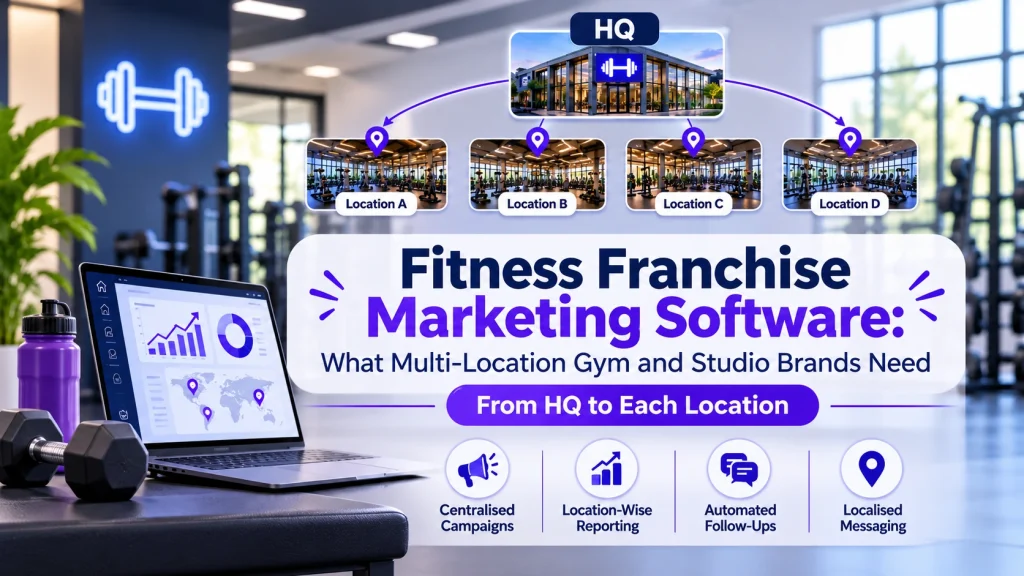
Fitness Franchise Marketing Software: What Multi-Location Gym and Studio Brands Need From HQ to Each Location
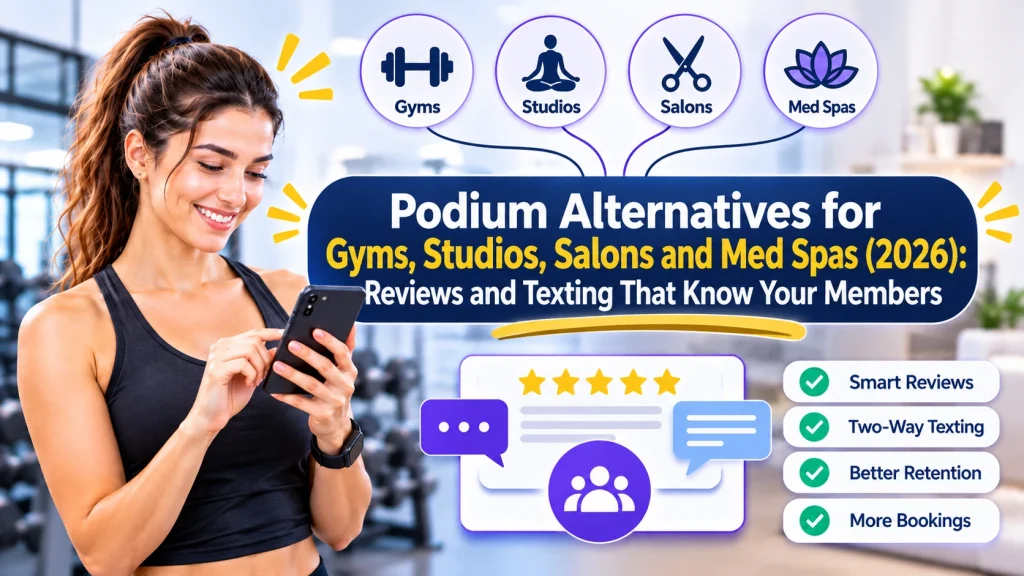
Podium Alternatives for Gyms, Studios, Salons and Med Spas (2026): Reviews and Texting That Know Your Members

Salon Marketing Software: What to Automate When You Already Have a Booking System
Ready to Run Successful Marketing Campaigns and Grow Your Business?
Gleantap helps you unify customer data, track behavior patterns, and automate personalized campaigns, so you can increase repeat purchases and grow your business.
Ready to Run Successful Marketing Campaigns and Grow Your Business?
Gleantap helps you unify customer data, track behavior patterns, and automate personalized campaigns, so you can increase repeat purchases and grow your business.