
 Divya Ghughatyal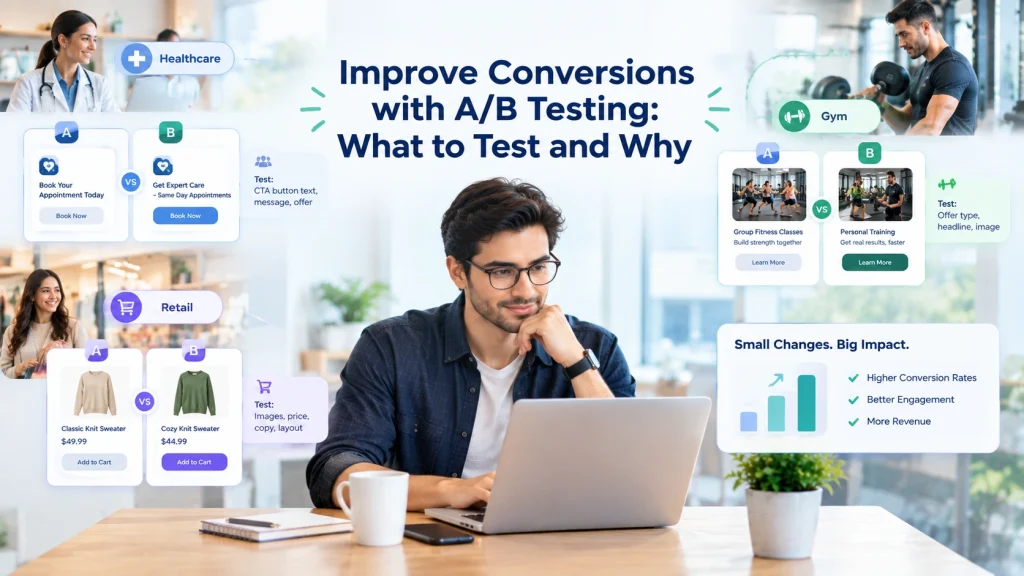
If your website traffic is steady but sales or sign-ups are flat, getting more visitors isn’t always the answer. The bigger opportunity may be improving what happens after they arrive. A/B testing for conversions gives you a simple way to find out what is holding people back. You show two versions of a page or message to similar groups of visitors and see which one leads more people to act.
This guide covers what to test, why each area matters, and how to choose where to begin. It is written for marketers, so the focus stays on practical decisions instead of statistics. By the end, you will have a clear list of areas to test and a simple way to decide which one deserves your attention first.
Start with one clear goal
Every test needs one main goal. Before you change anything, decide which single result tells you the test worked. For an online store, this is usually a completed purchase. For a healthcare practice, it could be a completed appointment or a new patient booking. Choose the outcome that matters most to the practice and keep it fixed until the test ends.
Changing the goal halfway through is one of the most common reasons a test looks like a success but does nothing for revenue. If you start by measuring purchases and end by celebrating clicks, you have not learned whether the change helped.
Main goals and smaller steps
Some goals do not happen often enough to measure quickly. A business with modest traffic may only see a handful of purchases a day, which makes it slow to compare two versions. In that case, you can measure a smaller step that happens earlier and more often, such as a click on the main button, an item added to the cart, or a completed form.
Use these smaller steps with care. A change that gets more people to click is only useful if those people also go on to buy or sign up. Before you rely on a smaller step, check that it has led to your main goal in the past. If it has not, treat the result as a hint and not as proof.
Three questions to ask before you test
- Does this goal matter to the business? If the result would not affect revenue, repeat visits or the cost of winning a customer, choose a different goal.
- Can we measure it in a reasonable time? Look at how often the action happens today. If it is rare, plan for a longer test or measure an earlier step.
- Will the change really affect this goal? The part of the page you change should have a clear link to the action you are measuring.

Turn what you notice into a test idea
Most wasted tests begin with a vague idea. A statement like “let us try a new headline” is not enough. A good test idea says what you will change, who will see it, what result you expect, and why you expect it. If you cannot fill in all four parts, the idea is not ready.
Use your data to find where people leave
Your analytics will show you where visitors stop. Look for the page or step where the largest share of people drop out, and make sure that step gets enough visits to be worth testing. That is where a change is most likely to pay off.
Data tells you where people leave. It does not tell you why. Treat every drop as a question to answer, not as a fix you already know.
Use customer feedback to understand why
To learn the reason behind a drop, watch how real visitors behave and ask them directly. Three sources are especially helpful:
- Session recordings. Watch visitors at the step where they leave. Look for pauses, repeated attempts and signs of confusion.
- Short on-page surveys. Ask people who are leaving one simple question about what stopped them.
- Heatmaps. See which parts of the page get attention and which parts are ignored.
Once you understand the likely reason, write the idea down in one sentence: when we change this part of the page for this group of visitors, this result will go up because of this reason. Writing it this way keeps the team honest and makes the result easier to explain later.
What to test on landing pages and product pages
Meaningful changes beat cosmetic ones. On landing pages and product pages, the biggest gains come from making the offer clearer, making it easier to act, and removing doubt about price and returns. Button colors and tiny wording changes rarely do much on their own.
The elements below are listed roughly in order of how much they tend to matter.
- Headline and main message. Visitors decide within seconds whether a page is for them. Test a specific, benefit-led headline against a general one. A clear promise helps people understand what you sell and why it is worth their time.
- Main call-to-action button. Test the wording, size and position of the button. The words should match what the visitor is ready to do. Placement matters most on phones, where the button can easily fall out of view.
- How the price is shown. Test monthly against yearly pricing, single prices against bundles, and whether a comparison price is shown beside the offer. How a price is presented shapes how fair it feels.
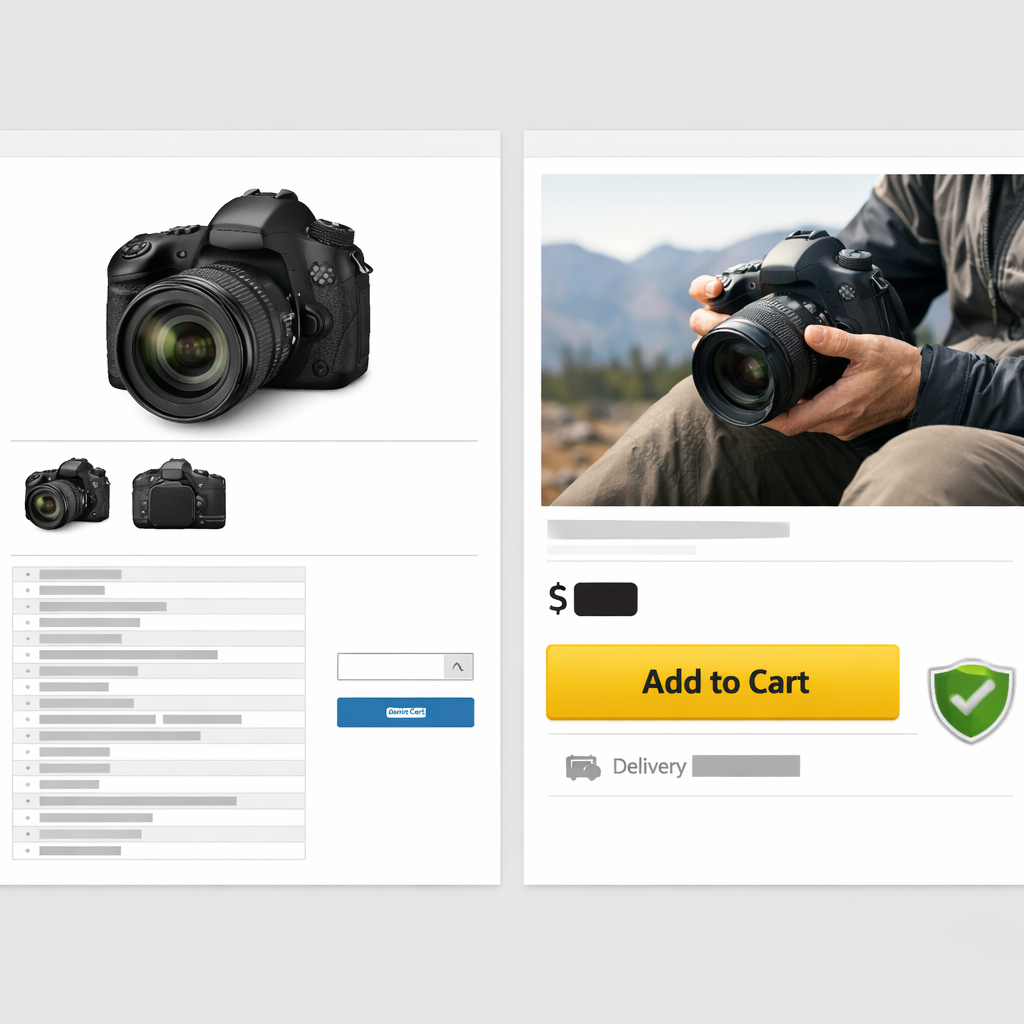
- Images and video. Test pictures that show the product in use against plain product shots. Visuals that help people picture themselves using the product reduce hesitation.
- Trust details near the button. Test a short line about returns, a guarantee or a star rating placed beside the button. Reassurance works best at the moment someone is deciding.
- Shipping and fees. Test showing delivery costs and delivery times early. Unexpected costs late in the process are a leading reason people leave.
- Page length and layout. Test a short page against a longer, more detailed one. Considered purchases often need more information, while simple purchases are helped by a shorter path.
When you change several of these elements at once, you may see a bigger lift, but you will not know which change caused it. If you need a quick win, a combined change is reasonable. Once it wins, follow it with narrower tests to learn what made the difference.
The common thread is belief. The tests that work best on these pages change what the visitor believes about your offer: what it is worth, what it costs, and how risky it is to say yes.
What to test in forms and checkout
Forms and checkout are where interested visitors become customers, and where many of them give up. Small improvements here can have a large effect on revenue, because the people who reach this stage have already shown they want what you offer.
Changes worth testing
- Number of form fields. Test a shorter form against your current one. Every extra field is one more reason to stop. Ask only for what you need now.
- Asking for details in stages. Test collecting the essentials first and the rest later, after the person has signed up. This keeps the first step light while still giving you the information you need.
- Guest checkout. Test letting people buy without creating an account. Being forced to register is a common reason first-time buyers leave.
- Payment options. Test adding digital wallets and saved payment details alongside standard card entry. Faster payment means fewer people drop out at the final step.
- Clear error messages. Test showing helpful messages as people type, and filling in details such as addresses automatically. This reduces mistakes and frustration, especially on phones.
- Costs shown early. Test showing shipping and tax before the payment step. People are more likely to finish when the total holds no surprises.
- An order summary that stays visible. Test keeping the summary and the buy button on screen as people scroll, so they never have to search for the next step.
- One page or several steps. Test a single-page checkout against a step-by-step one. Some audiences prefer to see everything at once, and others find shorter steps easier.
Look beyond the first number
A shorter form will usually bring in more sign-ups. That does not always mean better results. If the new sign-ups are less serious, you may end up with more leads but fewer paying customers. Alongside the completion rate, keep an eye on the quality of what comes through: how many leads become customers, how much people spend, and whether they stay.
What to test in social proof and trust signals
Social proof only helps when it removes doubt at the moment of decision. A row of logos or a general compliment is decoration unless it answers the question in the visitor’s mind: can I trust this purchase right now?
Visitors hesitate because they see risk. They are unsure about quality, worried about hidden fees, or concerned that returning the product will be difficult. The answer is to place believable proof and clear reassurance exactly where people decide.
Elements worth testing
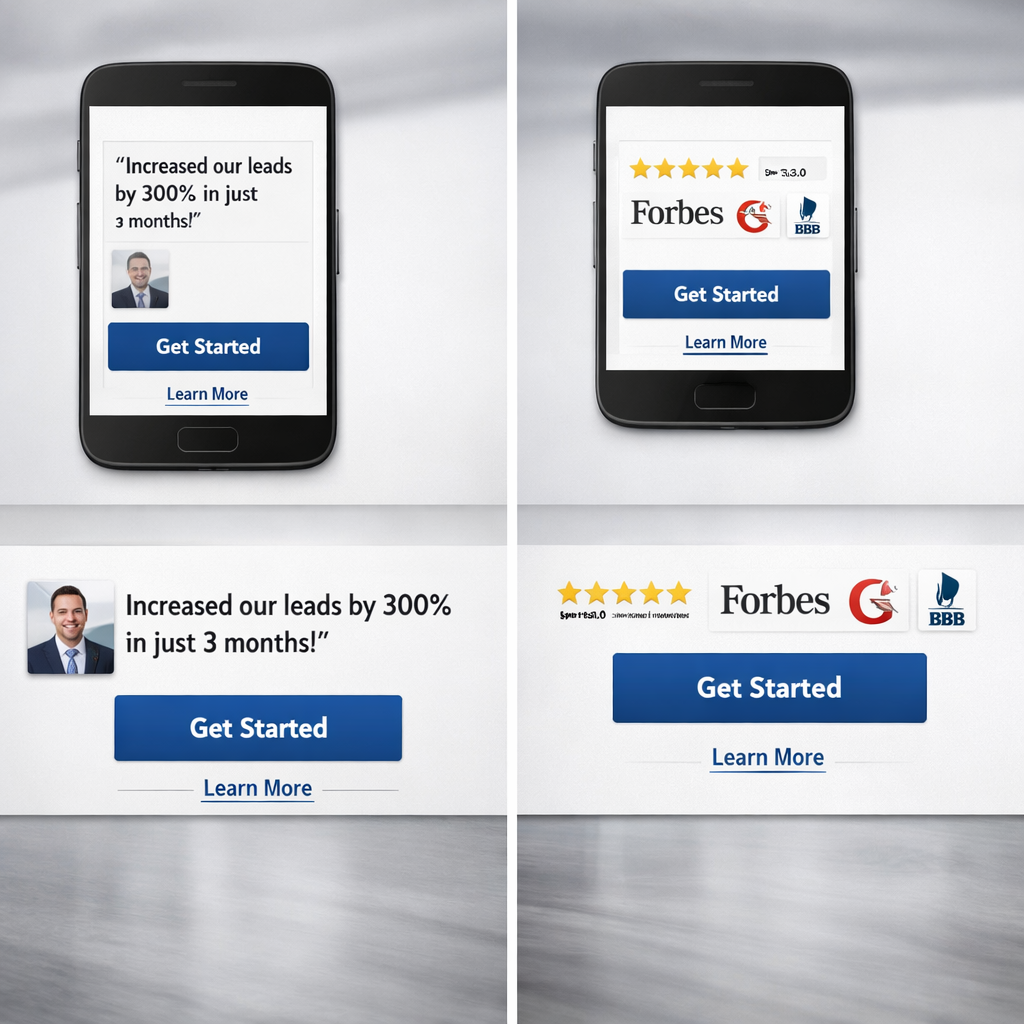
- Specific testimonials against general ones. Test customer quotes that mention a clear result against quotes that offer only broad praise. Specific statements are easier to believe.
- Ratings and short reviews near the button. Test placing a star rating and a recent review beside the button instead of on a separate reviews page.
- Customer photos against professional photos. Test real customer images against studio images. Customer photos can feel more honest, though they may not suit a premium brand.
- Security badges against plain policy statements. Test a badge against a simple sentence that explains your return period and how to reach support. Plain reassurance often does more for higher-priced items.
Where to place trust signals
Start beside the main button, since that is where the decision happens. Next, test reassurance inside the checkout, particularly at the payment step. Finally, test a shorter version for phones, where space is tight and one strong line works better than a block of badges.
More proof is not always better. Too many badges, logos and quotes crowd the page and can make a brand look as if it is trying too hard. Choose the single most believable signal for each stage and test from there. Remember, too, that different visitors need different reassurance. New visitors tend to care about security, while returning customers care more about delivery and returns.
What to test in SMS and email follow-ups
Testing only on the website misses a large part of the picture. Many visitors do not act on their first visit. Follow-up messages by SMS and email decide who comes back, when they return, and whether they complete the action. These messages deserve the same care as your pages.
Elements worth testing
- Timing. Test sending a reminder soon after someone leaves against sending it the next day. When a message arrives can matter as much as what it says.
- Frequency. Test one reminder against a short series. More messages can bring more people back, but too many will lead people to unsubscribe.
- Message content. Test a plain reminder against one that includes an image of the product, a direct link back to the cart, or an offer.
- Incentives. Test a message with a discount against one without. A discount can lift responses, but it also reduces what you earn on each sale, so it should prove its worth.
- Audience. Test the same message with different groups, such as new visitors and past customers. Each group may respond to a different approach.
Measure what the message added
To know whether a message truly made a difference, keep a small group that does not receive it. Then compare how many people in each group went on to buy or sign up. Without this comparison, you may give the message credit for actions that would have happened anyway.
Decide in advance how long after a message you will count a response, and keep that period the same for both groups. If you run SMS and email at the same time, test one channel at a time. Otherwise, you will not know which one did the work.
A customer engagement platform such as Gleantap brings SMS, email and customer data together in one place, which makes it easier to send different versions of a message to different groups and compare the responses. Whichever tool you use, respect consent and keep the number of messages reasonable. A short-term lift is not worth losing a customer’s goodwill.
How to decide what to test first
You will always have more ideas than time. A simple way to choose is to rate each idea on three questions:
- How much could this change help? Changes that affect what people believe about your offer, or that remove a major obstacle, usually score highest.
- How confident are we that it will work? Ideas supported by data and customer feedback deserve more confidence than hunches.
- How much effort will it take? Consider the time needed from design, development and marketing.
Give each idea a score for each question, and start with the ideas that promise the most for the least effort. This keeps conversion rate optimization focused on what matters and stops the team from chasing whichever idea was raised most recently.
If your traffic is limited, lean toward bigger changes on your busiest pages. They are more likely to produce a result you can see. Avoid running many tests on the same page at once, since overlapping tests can blur each other’s results.

What to do with the results
A winning result is the start of the work, not the end. Before you make the change permanent, take a careful look at what happened.
- Confirm the main goal improved. Check that your chosen goal went up, not just a smaller step along the way.
- Check that nothing else got worse. Look at order value, refunds, cancellations and complaints. A change that lifts sign-ups but brings in poor-quality customers is not a real win.
- Check that the result held steady. Make sure the improvement lasted across the whole test and was not caused by a single unusual day or promotion.
- Check your numbers against a second source. Compare the figures in your testing tool with your sales or booking records to be sure they agree.
When you are satisfied, introduce the change gradually. Show it to a portion of visitors first, watch the results, and then expand. This limits the damage if something unexpected appears.
Finally, keep a record of every test: what you changed, why, what happened and what you learned. Tests that did not win are just as useful as those that did, because they tell you what your customers do not respond to. Over time, this record becomes one of the most valuable resources your marketing team has. Good conversion rate optimization depends on this habit of learning from each test and building on it.
Frequently Asked Questions
How do I avoid being misled by a result?
Decide on your goal, the number of visitors you need and the length of the test before you begin, and then keep to that plan. If a result is close, run the test again to confirm it before you act.
Can I test if my site has low traffic?
Yes, but adjust your approach. Test bigger changes, focus on your busiest pages, measure earlier steps that happen more often, and allow more time. Spend more effort on customer research so that each test is well chosen.
What if a test shows no clear winner?
That is still useful. A test with no clear winner doesn’t mean the change made no difference. You may simply need more data to see whether it worked. Record what you learned, then decide whether to keep testing or focus on an idea that addresses a bigger obstacle. Final thoughts
A/B testing for conversions works best as a steady habit, not as a one-time project. Start with a single clear goal, use data and customer feedback to shape your ideas, and give priority to changes that make your offer clearer, easier to act on and easier to trust.
The businesses that improve conversions year after year are not the ones with the cleverest ideas. They are the ones that test patiently, measure honestly and keep learning. Pick one area from this guide, set up a careful test, and let your customers show you what works.
If follow-up messaging is part of your plan, Gleantap can help you test and refine SMS and email campaigns alongside your on-site changes, so every stage of the customer journey works together to improve conversions.


Ready to Run Successful Marketing Campaigns and Grow Your Business?
Gleantap helps you unify customer data, track behavior patterns, and automate personalized campaigns, so you can increase repeat purchases and grow your business.
Ready to Run Successful Marketing Campaigns and Grow Your Business?
Gleantap helps you unify customer data, track behavior patterns, and automate personalized campaigns, so you can increase repeat purchases and grow your business.