
 Divya Ghughatyal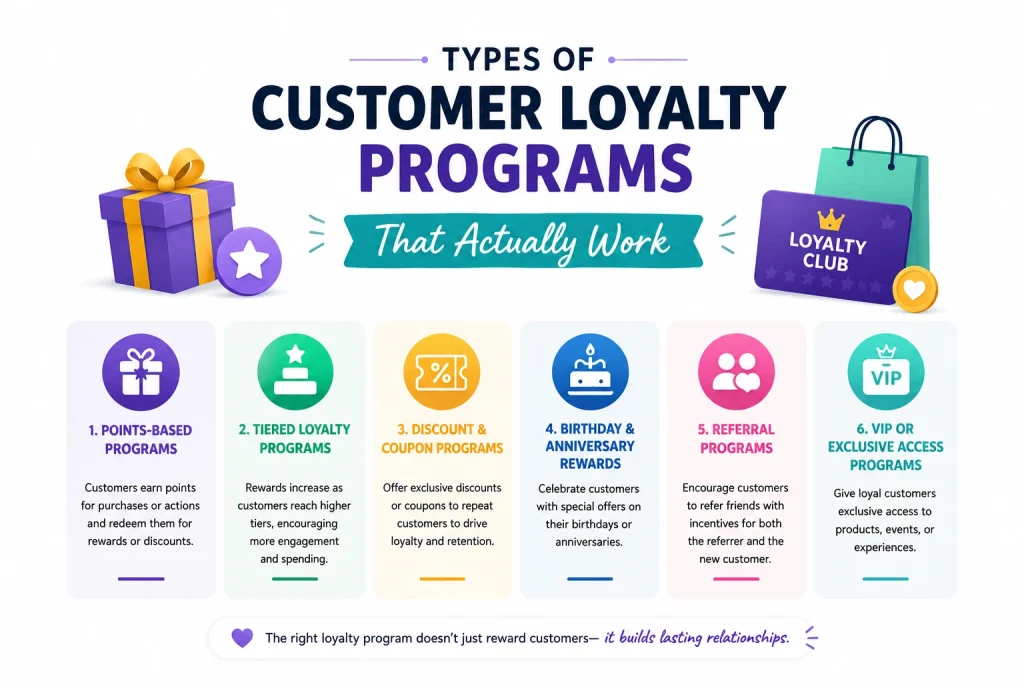
Customer loyalty programs, Loyalty Program structures, Loyalty & Gamification tactics, and real-world Use Cases are compared here so you can choose and run the model that actually increases retention, average order value, and customer lifetime value. You’ll also learn about Customer Loyalty: What It Is, Strategies, Tools & Real Business Impact, including how brands build stronger relationships, improve repeat purchases, and turn loyal customers into long-term revenue drivers. For each type you get a clear mechanic description, a brand example, a technical and marketing implementation checklist, the KPIs to measure, and the common pitfalls to avoid, plus signals for when a model will or will not fit your business.
1. Points-based rewards programs
Direct impact: Points programs convert occasional buyers into repeat customers when points are simple to earn, visible in real time, and redeemable for meaningful rewards within a few months.
Why this works in practice: Customers like measurable progress. A points ledger and a progress bar turn abstract loyalty into an attainable target. That psychological nudge increases visit frequency and average order value when you tie earn rates to behaviors you actually want to change.
Concrete example: Starbucks Rewards maps stars to free items and order upgrades, and sends timely balance and double-star promotions that drive repeat visits. See how they present earning and burn rules on the Starbucks Rewards page for a practical template you can adapt.
Implementation checklist
- Define earning rules: decide points-per-rupee/dollar and special multipliers for high-margin SKUs or off-peak hours.
- Set a redemption catalog: create 3–6 clear reward tiers (small, medium, aspirational) so members see short- and mid-term goals.
- Real-time ledger: integrate POS, e-commerce, and mobile so members see accurate balances and you avoid disputes.
- Enrollment and comms: build quick signup at checkout and automated balance and redemption nudges via SMS/WhatsApp/email — use resources for messaging workflows.
- Financial modeling: map liabilities and anticipated breakage into finance reports before launch.
- Pilot and iterate: A/B test earn rates, reward prices, and notifications for 8–12 weeks before wider rollout.
Trade-offs and limitations: Points programs are easy to copy and expensive if unchecked. The trade-off is clarity versus control: the simpler the rules, the higher the adoption, but you lose levers to protect margin. Complex earning tiers can capture high-value behavior but will lower uptake if customers find them confusing.
Operational consideration: You must treat points as a real liability. Unreconciled ledgers create customer service friction and financial headaches. If your tech stack cannot support real-time updates and identity resolution across channels, postpone generous earn rates until you fix data flows.
KPIs to track and common fixes
| KPI | What to watch and action |
| Active members | Segment by recent activity; re-engage dormant members with limited-time points boosters. |
| Redemption rate | Low redemption may mean rewards feel unattainable; add a low-cost, high-visibility reward to improve perceived value. |
| Purchase frequency lift vs non-members | If lift is small, increase targeted multipliers on category you want to shift. |
| Points liability and breakage | Monitor monthly; adjust earn/redemption to keep liability within finance-approved range. |
Key takeaway: keep the earning and redemption path simple, make progress visible, and only scale generosity after your tech and reconciliation work reliably.

Practical rule: design at least one low-cost reward customers can reach within 4–8 purchases. That early win prevents churn and validates your program mechanics before you invest in premium rewards.
2. Tiered loyalty programs
Status drives behavior. Tiered programs convert occasional buyers into higher-value customers by offering a visible ladder of benefits — not just coupons. The psychology is simple: people respond to progress and exclusivity, so well-designed tiers increase spend and frequency by creating goals and perceived membership value.
Practical trade-off: tiers raise lifetime value but add operational complexity.** If you cannot evaluate membership status reliably across POS, web, and mobile, tiers will create customer confusion and financial reconciliation headaches. The commercial upside is real, but only when technical plumbing and communications are tight.
Concrete example: Sephora Beauty Insider uses clear spend thresholds to move customers from Insider to VIB to Rouge, and layers exclusive experiences (events, early product access) on top of transactional rewards. That mix of tangible perks and experiential benefits is why high-value customers shift more of their annual spend to Sephora — they perceive non-price value as much as discounts. See Sephora’s program details here.
Implementation checklist
- Define clear, measurable thresholds: tie tiers to revenue or a small set of actions (spend, visits, referrals) and limit the number of thresholds to 2–4.
- Differentiate benefits intentionally: mix low-cost exclusives (early access, priority support) with one high-perceived, higher-cost perk for top tiers.
- Automate monthly requalification: run a scheduled job that evaluates status and sends progress nudges via email, SMS, and WhatsApp — integrate with your messaging platform (consider your platform’s partner options like the Gleantap content=null&utmsource=null&utmcampaign=null&utmmedium=null target=_blank>partner program).
- Show progress everywhere: app, receipt, and email should display points-to-next-tier and days-to-requalify to avoid surprises.
- Plan financial reconciliation: model the cost of perks by cohort and set caps or redemption controls to protect margin.
KPIs to watch and common pitfalls
- KPIs: tier migration rate, ARPU by tier, time-to-upgrade, churn rate for downgraded members, and incremental revenue attributable to tier-driven campaigns.
- Pitfall — thresholds too easy: you create dilution and no perceived exclusivity; fix by tightening thresholds or adding experiential perks.
- Pitfall — thresholds too hard: frustrates customers and depresses engagement; fix by adding intermediate behavioral triggers (visits, referrals) that accelerate progress.
- Pitfall — discount-heavy top tiers: top-tier discounts can erode margin; replace some discounts with access, recognition, or partner perks.
When to choose tiers: use a tiered program if you have a broad base of repeat customers and enough margin to fund differentiated perks. Avoid tiers if your buying frequency is low and you cannot reliably track cross-channel behavior.
Operational judgment: keep the design simple, communicate progress relentlessly, and treat status as a product feature that needs measurement. Tiers are not a silver bullet — they amplify good retention infrastructure and fail fast if data and messaging gaps remain.
3. Paid subscription loyalty programs
Direct revenue and commitment come first. Paid subscriptions work when customers are already buying often enough that an upfront fee makes sense and the business can deliver perceived recurring value without destroying margin.
Key trade-off: you get predictable revenue and stronger member behavior, but you also inherit churn management, refund risk, and higher expectations about service continuity and fulfilment. If your purchase cadence is irregular, a subscription will feel like a toll, not a convenience.
Implementation checklist
- Model price vs incremental CLV: run a cohort simulation — price, expected increase in frequency, and average order value must cover benefit cost within an acceptable payback window.
- Pilot and A/B test: start with a small, value-aligned cohort; test price, trial length, and benefit bundles before a wide rollout.
- Choose benefits that are cheap to deliver but high in perceived value: examples — free standard shipping, early access, members-only SKUs, or waived fees rather than deep discounts.
- Billing and legal hygiene: automated recurring billing, clear cancellation flow, tax/accounting treatment, and transparent auto-renewal messaging to avoid chargebacks.
- Integration and UX: connect subscription status to POS, order management, and messaging channels so benefits apply everywhere and communications (email, SMS, WhatsApp) are automated.
- Retention playbook: set up onboarding nudges, milestone rewards, and re-engagement sequences; treat membership like a SaaS product with retention experiments.
- Protect margins: cap certain benefits, throttle premium fulfilment, or use partner discounts rather than fully absorbing costs.
KPIs to watch (and why they matter)
- Membership conversion rate: measures how well the proposition converts free customers into paid members.
- Churn rate / monthly retention: subscription math is unforgiving; small churn improvements compound revenue materially.
- Incremental revenue per member: separate organic spend from membership-driven lift using cohort analysis.
- Payback period on member acquisition cost: ensures the business isn’t subsidizing customers forever.
- Benefit utilization and cost per redeemed benefit: tracks whether members are overusing expensive perks.
Concrete example: Amazon Prime turns an annual fee into predictable revenue and higher purchase frequency by bundling free shipping, Prime Video, and exclusive deals. For many retailers a simpler version — free delivery plus members-only coupons — achieves most of the behavioral lift without matching Amazons heavy content investments. See Amazon Prime for the archetype.
Practical judgment: subscriptions are not a universal growth hack. They work best when you can reliably reduce friction or add recurring value at low incremental cost. Don’t launch on the promise of someday-delivered perks; structure the offer so a typical member sees benefit within the first 30 days or you will pay high churn and negative unit economics.
Key takeaway: Use a focused pilot, price against incremental CLV, and design benefits that are low-cost but high-perceived-value. Plan your billing, integration, and retention playbook before you scale.
4. Coalition and partner loyalty programs
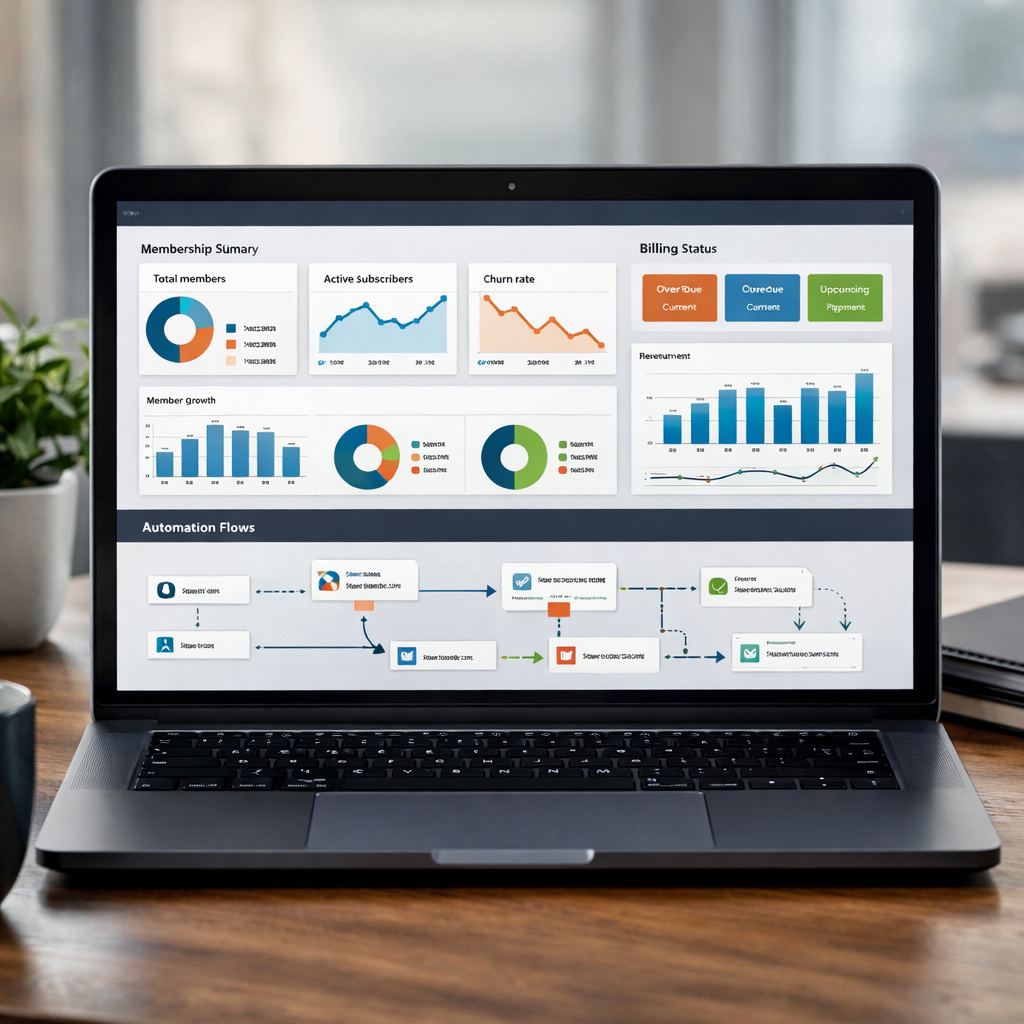
Coalition programs expand reach quickly but they fail without strong operational controls. Shared loyalty currencies let customers earn and burn across brands, which increases perceived value and acquisition at lower direct cost — however the complexity shifts to reconciliation, identity matching, and joint marketing governance.
Why you would choose a coalition program
When to consider this: use a coalition when your customers naturally touch complementary businesses (fuel and convenience, hotels and local attractions, retail and payment networks) and when partners accept variable economics for broader reach. Do not attempt this if your team lacks finance and engineering capacity to manage cross‑partner settlement and fraud controls.
Implementation checklist
- Negotiate economics: agree on revenue share, point valuation, and breakage assumptions in writing.
- Design a central ledger: build or select a ledger that records accruals, redemptions, expiries, and supports reconciliation reports.
- Standardize identity: implement a cross‑partner identity strategy using email, phone, or tokenized IDs to avoid duplicate accounts and points arbitrage.
- API and events: require ___CODE0 endpoints and CODE1___ events for real‑time accruals and redemptions; batch only as fallback.
- Legal and privacy: create data sharing agreements that cover consent, PII handling, and marketing rights.
- Marketing playbook: coordinate campaign calendars and one joint KPI owner to prevent cannibalization.
Tradeoff to accept: coalitions dilute brand control. Customers value the network, not individual partners, so you surrender some exclusivity. In practice this means your own loyalty offers must be differentiated by experience or premium benefits rather than just points.
Concrete example: Air miles style coalitions show the model in action: a regional coalition where grocery, fuel, and a pharmacy allow customers to earn a single currency. Operational reality: one partner often becomes the clearinghouse for points settlement, and smaller partners accept lower margins in exchange for higher foot traffic. These programs drive enrollment fast but require monthly reconciliation and straightening out edge cases like returns and fraud.
| KPI | Why it matters | Typical owner |
| Cross‑partner redemptions | Shows network value and lift in partner traffic | Growth or Partnership lead |
| Net settlement variance | Measures reconciliation friction and cash exposure | Finance |
| Identity match rate | Low matches cause lost points or duplicate liability | Engineering / Data |
| Partner NPS | Reflects partner satisfaction and long‑term viability | Partnerships |
Start small. Pilot with two partners, validate accounting flows and identity matching, then add partners once monthly settlement and dispute resolution work reliably.
Key operational risk: unresolved point arbitrage and slow reconciliation erode margins faster than poor enrollment. Make settlement SLAs and dispute playbooks the first deliverable.
Next consideration: if you lack in‑house systems, pick a partner or platform that supports API-level integrations and has experience with multi‑brand reconciliation.
5. Cashback and discount-centered programs
Clear point: Cashback and consistent discounts buy rapid behavior change but they are a blunt instrument — effective for short-term frequency increases, risky for margin and brand positioning if used without guardrails.
Instant discount versus delayed cashback: two different behaviors
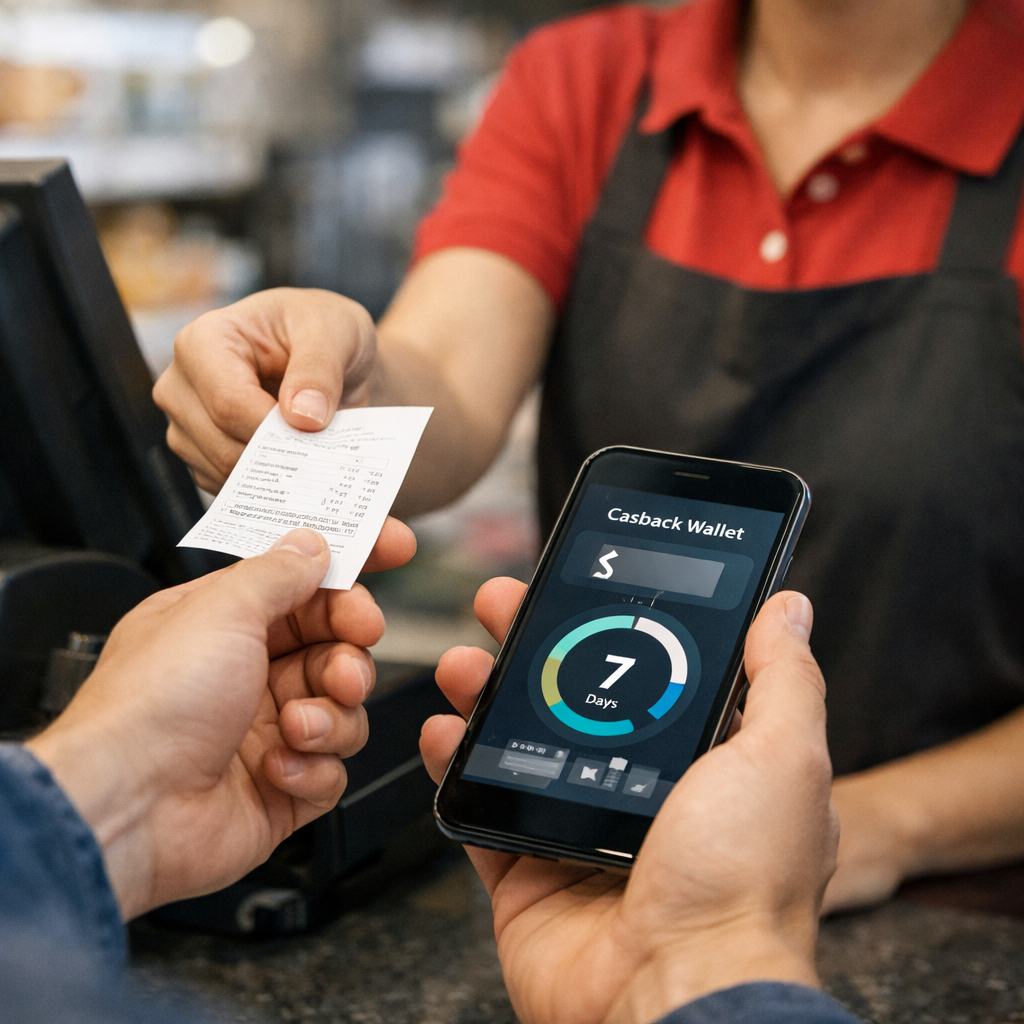
Instant discounts convert at the point of sale and remove friction; they raise conversion but reduce perceived value of full price. Delayed cashback (store credit, wallet balance, or third-party payout) nudges repeat visits because customers must come back to redeem — but it adds operational complexity and reconciliation overhead.
- Trade-off: Instant discount = higher immediate conversion, lower follow-up visits; delayed cashback = weaker immediate lift, stronger repeat potential when paired with expiry or spend thresholds.
- Cost control: Use cashback caps, minimum spend requirements, or tiered cashback rates to protect margin while still signaling value.
- Operational risk: Delayed cashback requires a reliable ledger and payout flow; mismatches between POS and wallet are common and kill trust quickly.
Implementation checklist: Decide between point-of-sale discount, in-app wallet, or third-party payout; build an immutable cashback ledger tied to customer IDs; integrate ledger events with POS and CRM; set clear expiry and redemption rules; automate customer notifications across SMS/WhatsApp/email; put fraud and reconciliation controls in place; and model margin impact per cohort before scaling.
Concrete example: Rakuten demonstrates external cashback working as a performance channel — partners pay into Rakuten, Rakuten credits users and pays out periodically, which drives acquisition and cross-retailer activity. A supermarket chain that offers 1.5% wallet cashback credited weekly saw higher return visits when the cashback required a minimum additional spend to redeem, because customers came back to use the balance rather than treating it as immediate discounting.
Measurement & experiment design: Run an A/B test that isolates cashback from discounts and promotions. Track incremental revenue per customer, redemption-induced trips, and contribution margin after cashback. Cohort analysis is non-negotiable — simple enrollment counts hide cannibalization (customers who would have bought anyway but now get rewarded).
Common misunderstanding: Teams assume cashback is easier to implement than points. It is not. People fixate on the customer-facing number (2% back) and underinvest in the ledger, reconciliation, tax treatment, and messaging required to keep customers confident and finance sane.
Key takeaway: Use cashback when price sensitivity drives churn or when you can control payout flow (wallets, in-store credit). Prefer delayed, conditional cashback to nudge repeat visits and protect margins. If you need orchestration or WhatsApp/SMS reminders for redemptions, consider a platform that handles messaging and ledger events.
6. Gamified loyalty programs and challenges
Gamification lifts short-term engagement but only becomes durable when mechanics align with purchase behavior. Superficial badges and leaderboards create vanity metrics; meaningful gains come from challenges that nudge the exact actions you want customers to repeat.
Key levers: use streaks to increase visit frequency, missions to drive specific SKUs or timeslots, progress bars to make advancement visible, and social features (sharing, leaderboards) to recruit unpaid promotion from members.
Why gamification fails in practice (and how to avoid it)
Common failure mode: programs reward low-value actions or hand out cosmetic badges that don’t change revenue. The result is high participation but negligible lift in AOV or retention. Fix: tie every challenge to a measurable commercial outcome and cap the cost of rewards.
Trade-off to plan for: short, frequent challenges drive spikes but train users to act only during campaigns. Longer milestone-based mechanics improve lifetime value but require better onboarding and ongoing comms to keep players engaged between peaks.
Implementation checklist
- Define the target action: repeat purchase, weekday visits, referral, or app opens — be specific.
- Design reward economics: set probability and value so expected cost < incremental margin uplift.
- Start with one short mission: 7-day streak or 3-purchase micro-mission to validate before scaling.
- Integrate triggers: wire POS, e-commerce events, and CRM so progress updates are real-time.
- Omnichannel nudges: set up push, SMS, and WhatsApp reminders for stalled progress.
- A B test challenge variants: length, reward type (discount vs experiential), and social options.
- Monitor rollback rules: prevent gaming or fraudulent completions and reconcile with finance.
Concrete example: a quick-service chain runs a 14-day morning-streak challenge: customers check in via the mobile app each weekday morning; completing 10 check-ins earns a free item or double-points day. The campaign raised morning footfall by 12% during the trial and was profitable because the reward drove add-on purchases.
Real-world application: Nike Run Club uses time-limited challenges to keep users active and tied to the brand; translate that into commerce by making missions SKU-specific (try a new product), time-specific (dead-hour visits), or social (bring a friend) so rewards lead to measurable sales.
Important: gamification without a clear incremental revenue target is tactical noise. Measure cohorts for 30–90 days after challenges to see whether behaviors stick.
Start small. Run a single 2-week mission that maps to a known margin-positive behavior, instrument cohort measurement, then iterate—don’t deploy a full gamified catalog at launch.
Final consideration: gamified programs reward psychology, not just transactions. If you lean on scarcity, social status, or streaks, keep reward value predictable and operations simple. Otherwise you get engagement headlines and zero bottom-line impact.
Further reading: Use cohort analysis and retention frameworks from Bain when evaluating whether your challenge designs produce sustained lift rather than temporary spikes.
7. Community and membership programs focused on experience
Community-first programs drive loyalty by creating identity, not discounts. When members buy into a group or lifestyle, their behavior changes: they attend more events, refer friends, and choose your brand in moments of friction. That shift is the product you’re selling, not a percentage off.
How these programs actually move business metrics
Why it works: community programs convert occasional buyers into habitual customers through social proof, shared rituals, and repeated touchpoints. Experience-led benefits (workshops, early-access product drops, member-only content) increase willingness to pay and improve retention more reliably than small discounts.
- Business outcomes: higher lifetime value from engaged members, stronger referral velocity, and premium pricing power for the brand experience.
- Operational needs: event logistics, community moderation, capacity controls, and a dedicated cadence of content and activations.
- Technology: tools for RSVP and ticketing, real-time member status in CRM, and omnichannel reminders via WhatsApp, SMS, and email to maintain attendance rates.
Implementation checklist (practical): define member tiers with access-based benefits, schedule recurring events (digital and in-person) tied to purchase triggers, set up RSVPs and waitlists, create a private community channel (Slack, Discord, or a gated Facebook/WhatsApp group), assign community managers, and instrument event-to-purchase attribution in your analytics.
Trade-off to plan for: experiences cost money and rarely scale linearly. Small brands should prioritize digital experiences and quarterly in-person meetups; premium brands can justify frequent, high-cost events. If you try to make an experience free and ubiquitous, you lose the exclusivity that makes it valuable.
Concrete example: REI Co-op uses membership to create a sense of ownership and runs classes, trips, and local events that keep members engaged beyond gear purchases. Peloton turns group workouts and leaderboards into a daily habit that reduces churn and powers referrals. Both examples tie membership activity to measurable purchase behavior and community-led acquisition.
Common mistake: treating events as marketing stunts instead of retention drivers. Events need an explicit follow-up plan – an offer, content series, or referral ask – otherwise engagement spikes and then evaporates. Map each activation to a revenue signal or retention metric up front.
Focus on repeatable rituals and clear follow-ups. A monthly webinar or local meet-up with a standard post-event conversion path beats one-off headline events.
Key takeaway: design experiences that are meaningful to members and instrument them. Use community activations to generate referrals and repeat purchases—not just goodwill. Integrate RSVP, messaging, and CRM so attendance becomes a measurable input into cohort LTV.

8. Platform-driven omnichannel loyalty and partner ecosystem (including Gleantap)
Core point: If your loyalty program touches more than one channel or partner, you are not building a feature, you are building an integration problem. A platform that orchestrates identity, events, rewards ledgers, and messaging is the practical foundation for omnichannel loyalty.
Why this matters in practice
Operational reality: Brands that try to bolt SMS, email, WhatsApp, POS and partner redemptions together manually end up with delayed rewards, mismatched balances, and angry customers. A platform centralizes the event stream – purchases, redemptions, referrals – and turns those events into channel-specific actions and accounting entries in near real time.
- Identity resolution: map the same customer across POS, web, mobile app and partner systems or you will double-enroll and misattribute rewards.
- Real-time ledger: consistency matters – delayed reconciliation kills trust when customers see different balances across channels.
- Channel mapping: not every reward reads the same on WhatsApp, email, or in-app – templates and CTAs must be channel-aware.
- Partner APIs and settlement: design from day one for revenue share, tax treatment, and joint redemptions to avoid manual reconciliation later.
Tradeoff to accept: Platforms speed launch and keep campaigns consistent, but they introduce vendor lock-in and require upfront data modeling work. If you have unique promotions that need heavy custom logic, expect either higher platform cost or a parallel custom service.
Concrete example: A regional quick-service restaurant integrated its POS and CRM with a platform to run a lunchtime streak challenge and send WhatsApp confirmations for redeemed rewards. The advantage was not a single campaign result but the ability to iterate offers weekly – templates, segment logic, and partner redemptions were edited centrally and deployed across channels without a developer sprint.
- Map data flows – list every event the program needs (purchase, refund, referral, account update).
- Choose a platform with prebuilt WhatsApp and SMS connectors and an auditable points ledger.
- Define identity matching rules and a fallback merge process.
- Pilot with one partner integration and one channel automation before scaling to full ecosystem.
- Build partner settlement and reporting templates into finance workflows from day one.
Key takeaway: A platform is the only scalable way to run omnichannel and partner-driven loyalty. Prioritize identity resolution, a real-time ledger, and partner settlement capabilities when evaluating vendors. If you want to explore partner options.
Final consideration: If measurement matters, add KPIs beyond open rates – track identity match rate, ledger reconciliation errors, event latency, partner settlement accuracy, and incremental revenue attributable to platform-driven campaigns. Those operational KPIs predict long-term program health more reliably than vanity metrics.
Frequently Asked Questions
Straight answer up front: enrollment numbers are vanity unless members are activated and transacting. Focus on activation within the first 30 days and the change in purchase frequency for the first three cohorts.
Short FAQs with direct, practical answers
- Which model gives the fastest lift for small retailers: Points-based programs with simple earn and redeem rules because they create immediate perceived value and are easy to push via messaging.
- Tiered versus paid subscription: Choose tiers when you want behavioral nudges without upfront friction; choose paid subscription when your purchase frequency and margins justify recurring revenue and you can deliver exclusive value reliably.
- Can gamification work for big-ticket items: Yes. Use engagement tasks tied to high-value outcomes such as referrals, product education, or milestone rewards rather than micro-transactions.
- Essential KPIs for the first 6 months: Enrollment rate, activation rate (first redeem or second purchase), member versus non-member purchase frequency lift, redemption rate, and incremental revenue per enrolled customer.
- How critical is omnichannel messaging: Critical. In practice brands that run synchronized WhatsApp, SMS, email, and in-app flows see materially higher redemption rates than single-channel approaches.
- Common technical pitfalls: Identity resolution across POS, web, and mobile; real-time points ledger accuracy; reconciliation with finance; and underestimating message throttling and consent requirements.
Practical tradeoff to accept: aggressive rewards accelerate behavior change but compress margin and condition customers to expect incentives. If you reduce reward generosity later you will see churn unless you replaced value with a non-monetary benefit such as community access or exclusive experiences.
Concrete Example: a three-location cafe implemented a points program and used event-driven SMS from their loyalty platform to nudge members with low balances. Within eight weeks the cafe measured a 12 percent lift in weekly visits from activated members; the win required cleaning duplicate POS accounts and adding simple balance alerts to avoid disputes.
Quick rule: measure activation within 30 days, then use cohort analysis to track retention at 90 days. See Bain insights for why cohort-level measurement beats headline enrollments: Bain.
Most teams underestimate the operational cost of promises. If a benefit is hard to deliver reliably it will damage trust faster than no benefit at all.
Next practical steps you can take this week:
- Run a 30-day activation audit: identify percent enrolled who made a second purchase and their communication touchpoints.
- Fix identity gaps: reconcile email, phone, and POS IDs for your top 1,000 customers to avoid balance disputes.
- Pilot one targeted automation: send a progress-bar message via WhatsApp or SMS for members 75 percent to the next reward and measure lift.
- Set a hedge on generosity: model reward cost at 3 scenarios and choose the one where payback on incremental margin occurs within 12 months.


Ready to Run Successful Marketing Campaigns and Grow Your Business?
Gleantap helps you unify customer data, track behavior patterns, and automate personalized campaigns, so you can increase repeat purchases and grow your business.
Ready to Run Successful Marketing Campaigns and Grow Your Business?
Gleantap helps you unify customer data, track behavior patterns, and automate personalized campaigns, so you can increase repeat purchases and grow your business.