
 Divya Ghughatyal
If you need automations that move metrics, not just send messages, this post lays out the highest-impact marketing automation use cases growth teams implement to lift acquisition, activation, retention, revenue, and referrals. It also covers Business Automation Use Cases: Where Automation Delivers the Most ROI — from lead nurturing and onboarding to retention, win-back, review generation, and upsell flows. For each use case you get triggers and data requirements, a step-by-step implementation checklist, sample email and SMS templates, KPIs to track, and a real-world example, including SMS-first flows gyms run with Gleantap. No fluff — just actionable templates, channel mixes, and the A/B tests to run first so you can prove and scale results.
1. Automated Lead Capture and Qualification
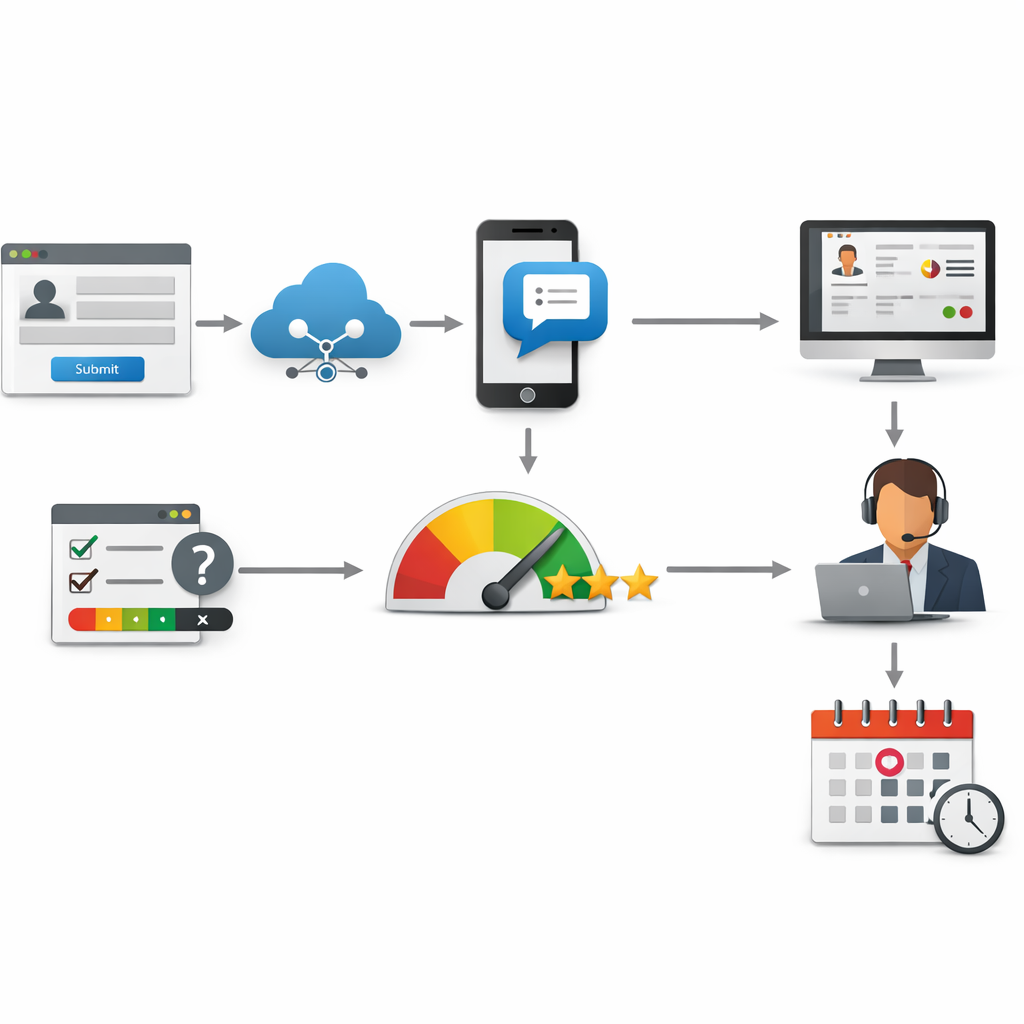
Speed beats perfection in early lead moments. Capture plus immediate qualification separates sales ready leads from noise; the difference is usually a matter of minutes, not days. Implemented well, a 1-minute inbound SMS plus behavior scoring converts far more leads into meaningful conversations than delayed email-only workflows.
Triggers and required data
Essential triggers: website form submission, Facebook lead ad webhook, live chat handoff, booking request. Required data points: contact phone, source UTM, page visited, time stamp, initial answer to 1-2 qualification fields, consent flag for SMS. Enrich with company_size or lead_type where B2B is relevant.
- Immediate ack (0-1 minute): send an SMS and fallback email acknowledging the inquiry and asking one short qualification question. Keep SMS under 160 characters and include clear opt-out handling.
- 3-step qualification sequence (0-24 hours): 1) quick SMS question for intent or availability, 2) conditional email with more details if no reply, 3) final SMS asking to book a call or confirm interest.
- Scoring rules: +30 for reply with intent, +20 for phone verified, +10 per high-value page visited, -15 for invalid contact or opt-outs. Route to SDR when score exceeds threshold.
- Routing and escalation: push qualified leads into CRM via webhook or native integration, assign based on territory or availability, trigger an SLA timer for human follow-up when score is high and no booking occurs within 15 minutes.
- Fallbacks and hygiene: if SMS fails, send email and create a low-priority task. Deduplicate leads by normalized phone and email. Store consent records for compliance.
Practical tradeoff: prioritize immediate contact for speed, but do not sacrifice consent or relevance. Fast SMS wins responses, but over-messaging increases opt-outs and harms deliverability. Calibrate scoring to avoid escalating marginal leads to high-touch SDR resources.
Concrete example: A gym running Facebook leads ads forwards webhooks to Gleantap. Within 30 seconds the prospect gets an SMS: Are you available for a free tour on Saturday or would you prefer a weekday evening? If the prospect replies within a day, the flow auto-books a slot and adds +30 score. Non-responders enter a 24-hour nurture sequence that includes a follow-up call from an assigned rep when the score crosses the threshold.
- KPIs to track: lead-to-SQL rate, average time-to-first-contact, reply rate within 15 minutes, SDR conversion rate.
- A/B test: immediate SMS plus email versus email only. Measure lead-to-SQL uplift and cost per SQL.
Most implementations fail because teams automate a form back then do nothing. Automate qualification logic, scoring, and routing or you will simply move manual lag from inbox to automation logs.
Quick checklist: phone and consent captured, webhook from lead source, SMS gateway or Gleantap connected, scoring rules defined, CRM mapping for routing, SLA for human follow-up, suppression and opt-out handling in place.
2. Personalized Onboarding and Activation
Core point: Personalized, event-triggered onboarding shortens time-to-first-value more reliably than longer generic drips—but only if your events and segments are accurate. Automation without clean signals creates noise, not activation.
Implementation checklist
- Required triggers: account_created, first_login, feature_used:<feature>, trial_expiry, plan_changed.
- Minimum data: first name, persona or plan, acquisition channel, device type, consent and channel preferences.
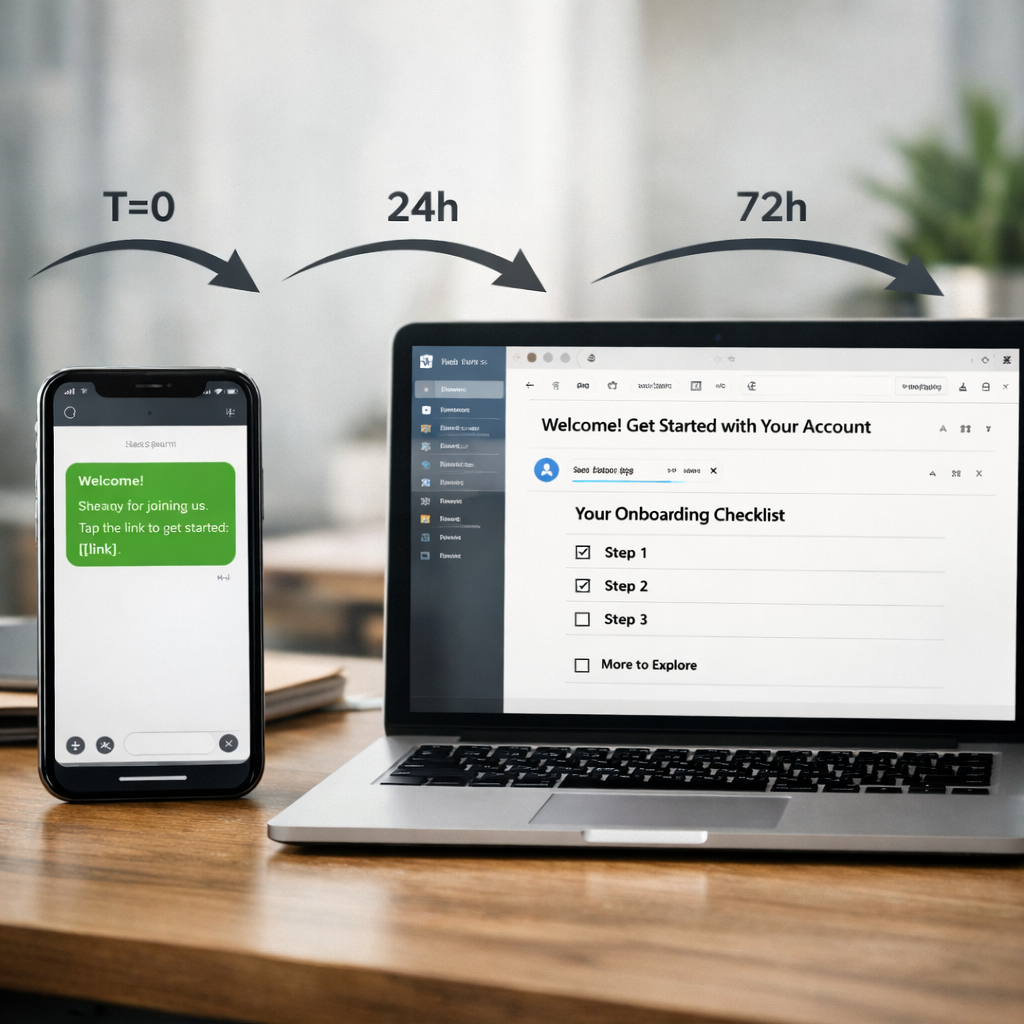
- Segmentation rules: new user (0–3 days), early adopter (used core feature in 24 hours), stalled (no meaningful event in 72 hours).
- Channels and fallbacks: SMS for urgent nudges, email for step-by-step guides, in-app or push for contextually timed tips; fallback to email if SMS consent is missing.
- Instrumentation: map events to a canonical taxonomy in your CDP or CRM (user_id unified), expose webhook endpoints for real-time triggers.
- SLA & escalation: escalate to success rep when a high-value user remains stalled after 3 automated touches.
Recommended flow (practical steps)
- T=0 (signup): send welcome SMS with one simple CTA to complete setup and an email with a 2-step setup checklist. Keep SMS copy under 160 characters.
- T=24 hours: if first_login not fired, send behavior-specific tip by email showing the exact button or feature to click; include a short video or GIF.
- T=72 hours: if no feature events, send an SMS offering help or a 15-minute setup call; route responses to your success team with lead_score bump.
- Day 7: if still inactive, present an incentive (discount, extended trial) via email and follow with a single SMS reminder for high-value cohorts.
- Ongoing: trigger contextual tips when users hit product milestones; remove users from activation flows after activated=true to avoid redundancy.
Sample messaging: Day 0 SMS: Hey {first_name}, welcome to Product. Tap to finish setup: https://your.app/welcome/{id} — reply HELP for support. Day 3 email subject: Get your first win with Feature X (2-minute setup). Day 7 SMS (if stalled): Still stuck? Book a 15-min setup call: cal.link/{id} — 1-click scheduled.
Trade-off to accept: heavy personalization increases lift but raises ops complexity. If engineering bandwidth is limited, prioritize a small set of high-signal events (first_login, core_feature_used) and iterate. Over-indexing on micro-segmentation delays delivery and creates maintenance debt.
Practical limitation: inaccurate event instrumentation is the single biggest failure mode. If your feature_used events are noisy, the flow will mis-target users and reduce trust. Run event validation and a short QA cohort before turning flows fully on.
Concrete example: A mid-market SaaS replaced a generic seven-email drip with an event-driven sequence using first_login and project_created events. They routed stalled high-value signups to a human setup call after three automated nudges and saw a clear uptick in 7-day activation compared with the cohort that only received the old drip.
Judgment: Start with 2–3 high-impact triggers and one urgent channel (SMS for time-sensitive nudges). Add finer personalization only after your event quality is proven.
KPIs to track: activation rate at day 7, trial-to-paid conversion, time-to-first-value, response rate to SMS. A/B test: SMS + email sequence versus email-only for high-value cohorts to measure marginal lift. For product integration patterns, see Intercom and consider integrating with your CDP or CRM for reliable identity.
Next consideration: if you serve local businesses like gyms, consider SMS-first onboarding patterns tied to bookings and class check-ins.
3. Re-engagement and Churn Prevention
Most churn is detectable before cancellation — if you track the right signals. Instead of waiting for a cancellation event, build automations that respond to behavior downticks (decline in visits, missed payments, falling engagement) and escalate by risk tier. This is where marketing automation use cases deliver the highest ROI: small, timely nudges prevent expensive human interventions later.
Key signals and risk tiers
Key signals: days since last login/visit, booking or class no-shows, payment declines, negative NPS, drop in feature usage, and support ticket opens.** Combine these into a simple score (low / medium / high risk) and map each tier to a different automation path.
- Implementation checklist: Instrument events in your product or booking system; unify identity in CRM or CDP; build scoring rules; design 2–3 tiered workflows (educate → incentive → human outreach); set suppression rules for recent touches or opt-outs.
- Channel decision: Use SMS for urgent, behavior-triggered nudges; email for content-rich re-engagement and follow-up; push/app notifications for in-product contexts. For local businesses, prioritize SMS-first sequences and fall back to email when consent is missing.
- Escalation policy: After N automated touches (usually 3–5 over 10–14 days) escalate medium/high-value customers to a support or sales rep with context and suggested next steps.
Trade-off to accept: Aggressive offers reduce short-term churn but train users to wait for discounts.** Use experience-based interventions (helpful tips, onboarding refreshers) first; reserve discounts for high-value or high-risk segments where retention value exceeds cost.
Concrete Example: A 35-location fitness chain instruments class attendance and booking no-shows. When a member misses two classes in 14 days they receive a brief SMS: Hey [Name], noticed you missed classes — free 1:1 session to get back on track? Reply YES to book. If no reply, an email with tips and a 10% membership credit follows on day 7, and a local manager calls on day 10 for members flagged high-risk. This sequence raised 30-day retention by 12% in the pilot and cost less than hiring another retention rep.
Practical limitation: These automations only work with reliable event data and unified IDs.** If your tracking misses visits or payments, the flow will trigger false positives and annoy customers. Invest in a basic CDP or clean webhook plumbing before you build elaborate retention sequences — the workflow is only as good as the signals.
- Sample messages: 1) SMS (short): Hey [Name], we missed you — free coaching session if you book this week. Reply BOOK. 2) Email (longer): Personalized tips based on last activities + link to schedule. 3) High-touch SMS from rep: [Rep name] here — saw you paused visits; can we help with schedule or childcare?
- KPIs and test: Track churn rate, retention at 30/90 days, reactivation rate, cost-per-retained-customer. A/B test sequence timing (3 days vs 7 days after signal) and message type (offer vs value-first outreach).
Metric to watch: Lift in 30-day retention per dollar spent on retention interventions — this ties automations directly to unit economics and prevents over-reliance on discounts.
Where tools fit: Use Klaviyo or Braze for cross-channel orchestration and personalization; Gleantap is a practical SMS-first option for gyms and local businesses and integrates with booking systems to trigger no-show and trial loss flows.

Takeaway: Build simple risk tiers, prioritize SMS for quick recovery, protect against incentive dependency, and verify your event data before scaling — that order prevents wasted sends and preserves margins.
4. Cross-sell and Upsell at Point of Purchase
High-intent moments convert best. Presenting a tightly targeted upgrade or add-on when a customer is checking out or immediately after a purchase reliably produces the largest lift in average order value because intent and payment friction are already resolved.
Key constraint: adding offers at checkout can increase friction and cart abandonment if the offer is poorly priced, irrelevant, or too many steps are required. Focus on one clear, high-margin recommendation – not a menu of options.
Step-by-step implementation checklist
- Define triggers and data: use cart contents, product category, membership tier, lifetime_spend, and inventory to decide eligibility.
- Choose the window: show contextual upsell in-checkout; show time-limited upgrade within 0-48 hours post-purchase for customers who completed checkout.
- Build rules first: for most SMBs, start with rule-based recommendations (same-category upgrade, warranty, subscription) rather than black-box ML until you have volume.
- Orchestrate channels: present the primary offer in-checkout, send an SMS for a 24-48 hour limited upgrade, and follow with one email for richer benefit copy.
- Implement guardrails: suppress offers for recent purchasers, low-margin carts, or when stock is constrained; ensure consent for SMS and unsubscribe logic.
- Instrumentation: fire a purchase.completed event and an upsell.offer_clicked event to your CDP or analytics; send a webhook to the order system for one-click upgrades.
Sample messaging: Post-purchase SMS: We added a 20 percent discount on a 3-pack of private sessions – upgrade now with one reply. Email follow-up: Thanks for your order – upgrade to premium for 30 days of extra classes and priority booking. Keep messages concise and offer one clear CTA.
Practical trade-off: sophisticated recommendation engines are tempting but often hurt SMBs with sparse data. In practice, rule-based logic that uses recency, margin, and cart context outperforms noisy ML at low volume and is easier to A/B test and explain to stakeholders.
Concrete example: A fitness studio used Shopify Flow plus a marketing automation provider to surface a 5-session pack as a one-click post-purchase upsell. The studio limited the offer to customers who bought a trial membership and sent an SMS within 24 hours, which increased add-on attach rate without impacting refunds.
Measurement and test: track attach rate, incremental ARPU, and cart abandonment for checkout offers. Run an A/B test comparing in-checkout upsell versus 24-hour post-purchase SMS offer – measure net revenue per visitor, not just conversion on the upsell.
Start simple: implement one rule-based upsell, measure attach rate and abandonment, then iterate. For SMBs, prioritize real-time triggers and SMS for time-limited upgrades. Tools to use: Klaviyo for post-purchase journeys and Shopify Flow for checkout orchestration.
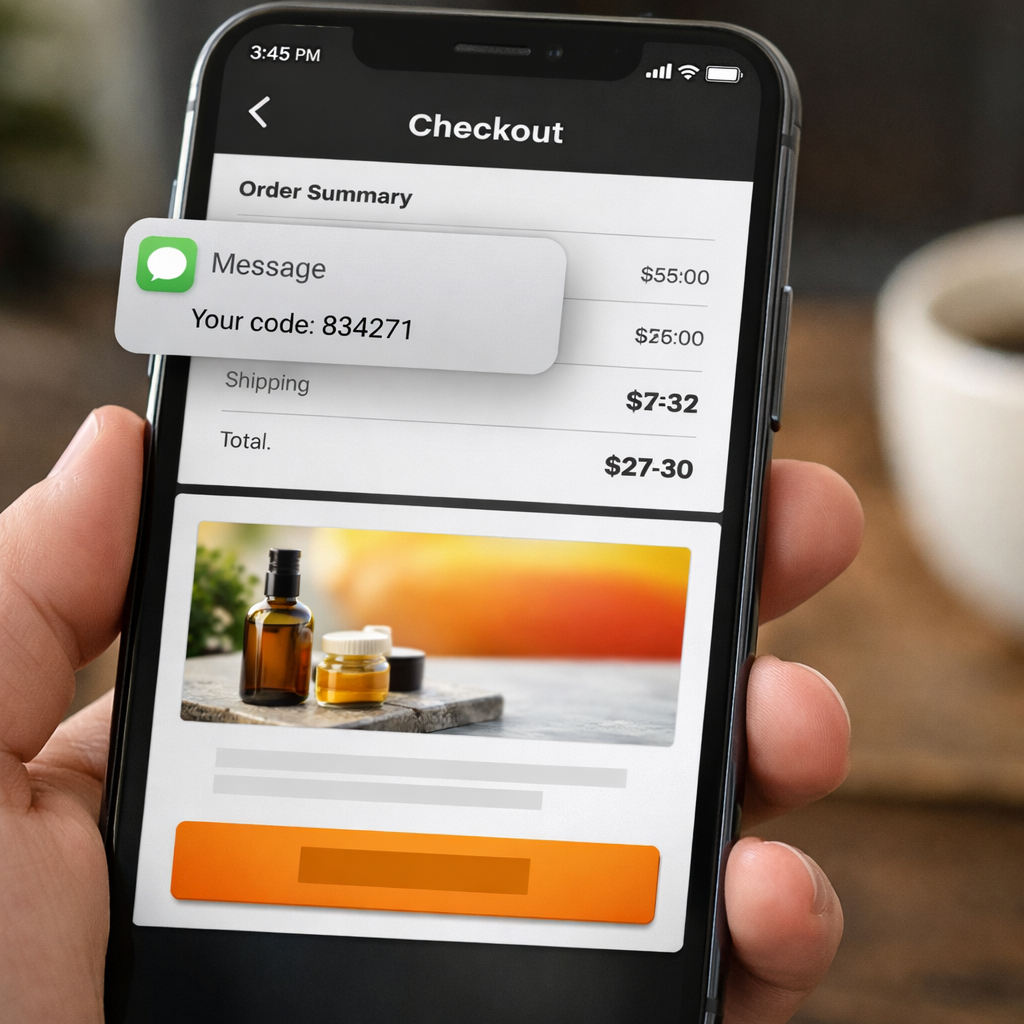
Takeaway: test one high-value, low-friction offer at checkout and a single follow-up SMS within 48 hours. Measure attach rate against overall revenue per buyer and iterate – you will find simple, contextual offers beat broad cross-sell attempts most of the time.
5. Gleantap: SMS-first Automations for Gyms and Fitness Centers
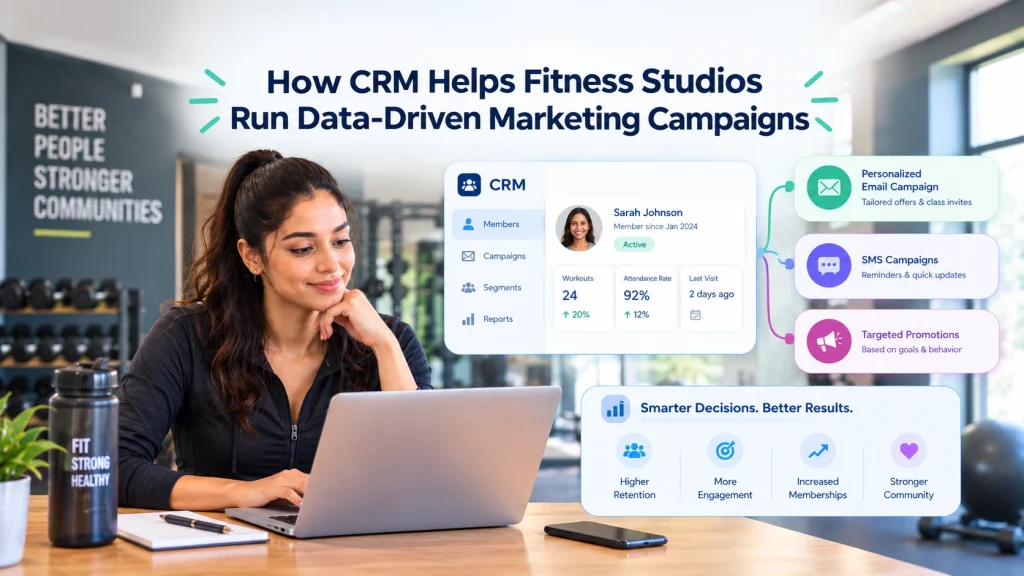
SMS-first automation moves the needle fastest for gyms. Members see texts, act on them, and reply — which makes SMS the most reliable channel for time-sensitive triggers like bookings, reminders, and trial conversion nudges. Gleantap specializes in that workflow pattern and integrates with booking systems and CRMs to run two-way, event-driven sequences.
Core flows and triggers
- Booking lifecycle: immediate confirmation, 24-hour reminder, 1-hour reminder, and post-class check-in.
- Trial-to-member: timed tour prompts, attendance checks, and a final trial-expiration offer with one-tap payment.
- No-show recovery: automatic follow-up asking why they missed and offering reschedule links or a small incentive.
- Renewals and payments: renewal reminders with one-tap payment links and fallback email if SMS undelivered.
Implementation checklist
- Map events: define booking, attendance, membership status, and trial end events in Mindbody or your CRM.
- Sync data: connect booking system via native integration or webhook so events trigger in real time.
- Capture consent: ensure SMS opt-in and store timestamped consent records for TCPA compliance.
- Build conversational templates: include reply parsing for common intents like YES, RESCHEDULE, or PAY.
- Payment and links: use short, trackable links for bookings and one-tap payments; store outcomes back to CRM.
- Fallbacks and governance: route undelivered messages to email, and maintain suppression lists and opt-out handling.
- Test and QA: run closed-group tests, verify reply parsing, and monitor webhook reliability before scaling.
Sample SMS templates: Confirmation – Thanks for booking at 7pm tonight. Reply HELP for info or CHANGE to reschedule. Reminder (24h) – Quick reminder: class tomorrow at 7pm. Reply YES to confirm. Trial offer (day 6) – Love your first week? Lock in membership for $X/month. Reply JOIN or tap the link to save your spot.
Practical trade-off: SMS gets high engagement but it is constrained – short character limits, carrier filtering, and opt-in rules. That means you must prioritize clarity and fewer sends. Over-messaging burns opt-ins fast; under-messaging wastes intent. Plan cadence and suppression aggressively.
Concrete example: A regional boutique gym connected Gleantap to its booking platform and automated confirmations, 24-hour and 1-hour reminders, plus a 6-day trial conversion sequence. The team stopped manually chasing no-shows, responses started coming into the sales queue as warm intents, and the front desk reconverted many trials via one-tap links triggered by SMS replies.
Key KPIs to track: class attendance rate, no-show rate, trial-to-paid conversion, SMS reply rate, and revenue per member attributed to automation. Start with one primary KPI – usually attendance or trial conversion – and run a holdout test for clean attribution.
Measurement and next step: prioritize a single flow to A/B test – pick booking reminders or the trial-expiration offer – instrument a 10-20% holdout, and measure lift at 30 days. If you need a reference for consent and copy best practices.
6. Referral and Advocacy Automation
Referrals scale cheaply but fail when they are inconvenient or mistimed. Automating referral asks at moments of demonstrable customer satisfaction turns a manual, low-yield tactic into a predictable acquisition channel within your marketing automation use cases.
Triggers, required data, and the core automation
Key triggers: high NPS/CSAT response, recent purchase or successful session, repeat purchase, milestone (30 days active), or standout behavior like five attended classes in two weeks. You need a reliable event feed, unified customer ID, and consent flags before sending an SMS referral request.
- Step 1: Detect the signal. Ingest nps_submitted, purchase_complete, or attendance_count events into your CDP/automation tool within 5 minutes of occurrence.
- Step 2: Small ask first. Send a short SMS with a one-click referral link and prefilled message. Use URL parameters to capture referrer id and landing page UTM.
- Step 3: Gentle follow-up. If no click after 48 hours, send a single reminder with social proof. After 7 days, move eligible non-responders into a longer-term advocacy nurture via email.
- Step 4: Reward and verify. Issue rewards on completed referral conversion, record events via webhook to CRM, and suppress further referral requests for that referrer for a set period.
Sample copy: SMS: Hey Sara, loved seeing you today. Share this link with a friend for a free class – they get one free, you get a 1-month credit: https://yourclub.com/r?ref=abc123. Email nurture follows with shareable assets and copy suggestions.
Tradeoffs and limits: Incentives drive volume but can attract low-intent referrals or fraud. Non-monetary rewards like exclusive classes scale brand affinity but convert at a lower rate. Track quality of referred users, not just raw signups, and set referral caps per user to limit gaming.
Measurement and attribution judgment: Never rely on last-touch alone. Use an extended attribution window (30-90 days) and compare cohorts of referred users against matched non-referred cohorts for retention and LTV. Primary KPI to watch is referral conversion rate and referred-user retention at 30 days.
Concrete Example: A mid-size gym used Gleantap to trigger an SMS referral link after a member attended three classes in 10 days. The automated flow sent the initial SMS, a 48-hour reminder, then an email with a printable guest pass. Within two months referrals accounted for 12 percent of new trial signups, with referred members showing 1.2x higher 30-day retention than unpaid channels.
| Metric | Practical target / note |
| Referral click rate | 15 30% on well-timed SMS |
| Referral-to-trial conversion | 2 8% depending on incentive |
| Referred user 30-day retention | Target >= organic cohort |
| Cost per referral (CPA) | Often 10 40% of paid acquisition when reward is small |
Important: For local businesses prioritize SMS-first referral asks for immediacy and higher click rates; follow with email assets for advocates who want shareable content.
Start small: run the referral automation against high-satisfaction segments only, measure referred-user LTV for 60 days, then expand trigger criteria.
7. Measurement, Orchestration, and Lifecycle Analytics
Straight to the point: automation without measurement is a cost center. You need deterministic signals, an orchestration layer that respects those signals, and repeatable experiments to prove lift — or turn the automation off.
What to instrument first
Minimum viable taxonomy: capture a small, disciplined set of events and attributes that map to your lifecycle stages: lead.created, trial.started, booking.confirmed, visit.completed, payment.failed, membership.renewed. Attach customer_id, timestamp, source_utm, and booking_id to each event.
- High-priority events: booking.confirmed, booking.attended, trial.expired, purchase.completed
- User attributes: membership_tier, consent_status, last_activity_date, lifetime_value_estimate
- Technical notes: prefer server-side webhooks for critical events to avoid client drop-off; log raw payloads for auditing
Trade-off to accept: engineering time buys accuracy. Start with a tight event set and one unified customer id rather than tracking everything. You can expand later — but a messy, overbroad event model kills analysis and slows iteration.
Attribution, experiments, and dashboards that matter
Measure with purpose: pick one primary KPI per automation (trial-to-paid for onboarding, no-show rate for reminders, churn at 30 days for retention). Use randomized holdouts or A/B tests to attribute lift instead of relying on last-touch heuristics.
Concrete example: a mid-size gym used Gleantap booking reminders and split 20% of new bookings into a holdout. Over eight weeks they measured class attendance and trial-to-paid conversion; the automated reminder cohort increased attendance by 18% and lift in trial conversions by 7 percentage points. That causal test made the ROI case and justified wider rollout.
- Attribution window: choose 7–30 days depending on decision latency; longer windows increase noise from other channels
- Primary dashboard widgets: funnel conversion by cohort, time-to-activation curve, churn velocity, revenue uplift per cohort
- Experiment cadence: run a single-variable test every 2–6 weeks and retire losing variants
Practical judgment: multi-touch attribution and perfect data models are aspirational. For most SMBs, a simple cohort-based lift analysis with a randomized control is the fastest way to know if a flow moves the needle.
Orchestration, failure modes, and operational guardrails
Orchestration choice: use real-time triggers for high-urgency automations (one-hour booking reminders) and batched jobs for lower-urgency campaigns (weekly re-engagement). Real-time costs more and increases complexity; batching reduces race conditions and simplifies debugging.
- Common failure modes: duplicate sends from parallel workflows, outdated suppression lists, timing gaps between CRM and CDP
- Mitigations: central suppression table, idempotent message keys, SLA for event delivery, fallback to email if SMS fails
- Compliance: persist consent_status and timestamp to meet TCPA and data audits
| Metric | Dashboard widget / query |
| Trial-to-paid conversion | Cohort funnel with control vs treatment (30-day window) |
| No-show rate | Attendance rate by booking date and reminder variant |
| Revenue uplift | Net revenue per user by cohort; incremental revenue vs holdout |
Governance checklist: suppression lists, consent logs, unified customer ID, event SLA monitoring, backfill plan, and a runbook for webhook failures. Treat these as features — not paperwork. Missing them breaks attribution and invites compliance risk.
Start small, test hard: instrument just enough to run a causal test; prove lift; then scale instrumentation and orchestration.
If you want a practical reference for tooling and integrations, use a CDP like Segment to unify events, push the same deterministic signals to your marketing automation tool, and build dashboards in Looker or Data Studio.
Frequently Asked Questions
Most teams ask the same operational questions — and their answers decide whether an automation program scales or stalls. Below are concise, practical answers you can act on this week rather than theory to file away.
Attribution and measuring success
Primary rule: pick one business KPI per flow and test it with a holdout, not just pre/post comparisons. Trial-to-paid conversion, no-show rate, or 30-day retention are clean choices because they map to revenue or cost savings.
Practical insight: for most SMB pilots you won’t reach full statistical significance. Use a 2–4 week holdout cohort for directional validation, track secondary operational metrics (open rate, reply rate, booking completion) and calculate a simple ROI using expected LTV uplift. For planning, expect to need several hundred leads or trials to detect a 10% relative lift.
Compliance, deliverability, and channel selection
Trade-off: SMS gets attention but increases regulatory and deliverability work. Make explicit opt-in, store consent records, support immediate opt-out, and register campaigns under 10DLC where required. If you treat SMS like email — blasting without governance — you will lose throughput and risk carrier filtering.
Example: a gym used SMS reminders routed through Gleantap to cut no-shows; they kept a consent timestamp, message template library, and a suppression list that removed unresponsive numbers after three months. That small governance step preserved deliverability and kept costs predictable.
No-code versus engineering
Reality check: ship the first working flow with no-code tools, but plan for one simple engineering task: deterministic event wiring. You need reliable events like class_booked, trial_started, payment_failed with a unified customer_id to power segmentation and routing.
- Channel priority: for local, time-sensitive use cases prioritize SMS then email; reserve push for app users.
- Minimum data set: customer_id, contact channels and consent, event name + timestamp, source/UTM, membership/billing status.
- Iteration cadence: run focused A/B tests every 2–6 weeks; change one variable per test (send time, CTA, incentive).
- Escalation rule: define when a flow hands off to a human — e.g., after 3 failed automated touches or if LTV > threshold.
Key takeaway: pick one flow, instrument the four required events, run a short holdout, and lock in suppression and consent rules before scale. Small measurement discipline prevents big mistakes.
Concrete next actions: 1) choose the highest-impact use case (trial conversion or no-show reduction), 2) implement the three events needed to trigger and measure it, 3) run a 2–4 week holdout to validate lift, and 4) codify suppression/opt-out and an SLA for human follow-up.
Ready to Run Successful Marketing Campaigns and Grow Your Business?
Gleantap helps you unify customer data, track behavior patterns, and automate personalized campaigns, so you can increase repeat purchases and grow your business.
Ready to Run Successful Marketing Campaigns and Grow Your Business?
Gleantap helps you unify customer data, track behavior patterns, and automate personalized campaigns, so you can increase repeat purchases and grow your business.