
Route the right clients to the right service — automatically.
Most salon clients start with one service. But the highest-margin growth comes from cross-service expansion — cuts to color, single service to package, drop-in to membership. This recipe watches for buying signals and routes clients to a warm stylist consult at the right moment.
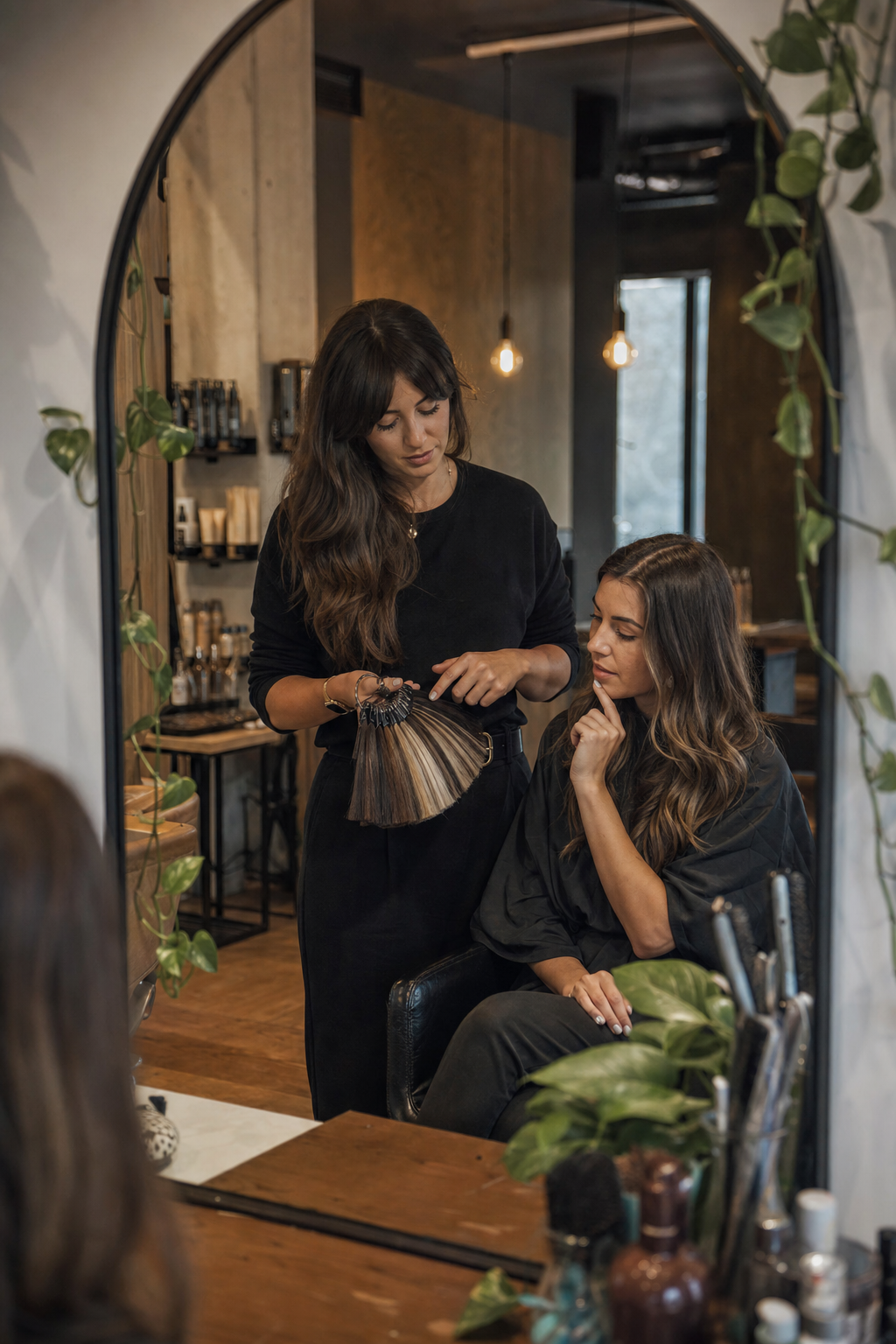
The average single-service salon client (cut-only) spends $800–$1,200/year. The multi-service client (cut + color, or cut + treatment) spends $2,000–$3,500/year. Same client base, same rebook cadence — just wider service adoption.
Most salon cross-service upsells fail because they come at random moments — a mass email about 'try our color service!' arrives when the client wasn't thinking about it. This recipe watches for behavioral signals (asking questions, gray growing in, seasonal changes, third-visit milestone) and routes to a stylist consult at exactly the right moment.
What this recipe does
Four moving parts. All watching client behavior.
Detects buying signals
Watches for staff-noted "asking about" moments, service history patterns (multiple cuts, no color), and seasonal signals.
Alerts the right stylist
When a signal fires, the client's stylist gets an inbox alert with context and a suggested outreach template.
Warm consult invites
Stylist sends a personal SMS: 'ever considered X? Free 10-min consult?' Not a cold pitch.
End-to-end attribution
Signal → consult → new service booking, with revenue attributed back to the trigger and the stylist.
How the service upsell recipe works
Six steps. From behavioral signal to booked complementary service.
-
1Trigger · Live
Detect a cross-service signal
Gleantap watches for four signal types: staff-noted ‘asking about’ moments (front desk logs ‘client asked about balayage’), service history patterns (3+ cuts with no color, no chemical treatment in 12 months), seasonal signals (root grow-out timing, wedding-adjacent booking windows), and third-visit milestone.
-
2Heads-up · Live
Alert the primary stylist
When a signal fires, the client’s primary stylist gets an inbox alert with the client’s full context: current services, mentioned interests, likely recommendation.
-
3Invite · SMS
Warm consult invite
Stylist sends a personal SMS referencing the signal — ‘been meaning to ask about adding some dimensional highlights, would look amazing on you. Free 10-min consult?’ No pitch, offers a low-commitment path.
-
4Book · One-tap
Auto-schedule if client replies
If the client replies yes, the recipe drops the stylist’s calendar. Client picks a time, consult is booked (usually 10-15 min slot before an existing appointment).
-
5Prep · Pre-consult
Give the stylist a briefing
The stylist gets a briefing: client history, mentioned interests, service recommendation, and pricing/package options.
-
6Close · Post-consult
Follow up with a service plan
24 hours after consult, stylist sends a follow-up with the plan discussed + booking link. Not a generic pricing sheet — a plan tailored to the conversation.
Services sell when a stylist notices something and reaches out — not when marketing fires a promo.
The recipe doesn't sell services. It surfaces the moment. Then a stylist — who already knows the client's hair and history — has the conversation. Consults 3x, close rates double, and no pitch ever feels pushy.
What your clients actually see
Copy that reads like your stylist noticed something and cared to reach out.
What service upsells look like at salons
Ranges from salons running this recipe. Your numbers depend on signal quality, stylist warmth, and service pairing accuracy.
Clients who accept a consult invite after a behavioral signal fires.
Consulted clients who book at least one new service.
Average annualized revenue lift per client who adopts a new service through this recipe.
Ranges assume at least two service categories in your salon (cut + color minimum). Cut-only barbershops see lower absolute lift.
-
Client visit + service historyAt least 90 days of history and service types per client for signal detection.
-
Stylist consult slots10–15 min consult slots on stylists' calendars (often paired with existing appointments).
-
Auto-schedule integrationVagaro, Boulevard, Booksy, or other booking systems with calendar API.
-
Service cross-recommendation mapA simple map of which services pair well (cut → color, color → treatment, straightening → gloss). Comes pre-built for common combinations.
-
Attribution trackingEnd-to-end tracking so you can attribute new service revenue to the signal and stylist.
More recipes for salons
Automations we see paired with service upsell.
Win-Back Lapsed Clients for Salons & Barbershops
The average salon client rebook window is 6–10 weeks for cuts, 4–8 for color. When someone passes 14…
Missed-Appointment Recovery for Salons & Barbershops
Salon no-shows cost $80–$500 per empty chair — and every empty chair is one your stylist can't refill.…
New-Client Onboarding for Salons & Barbershops
65% of first-time salon clients never rebook. Not because they didn't like the cut — because nobody engineered…
Client Referral Program for Salons & Barbershops
Ask a salon client for a referral when they're loving their new look — not in a cold…
This recipe also works for
The same signal-and-consult approach powers upsell across verticals.
Frequently asked questions
What salon owners ask before running service upsell.
What signals actually predict cross-service interest?
What service pairings work best?
Should we offer a discount on the new service?
How is this different from an email blast about services?
What if a client says no to the consult?
How do we prep stylists for these consult calls?
Can this cannibalize existing service revenue?
See this recipe running in your salon.
A 20-minute walkthrough of the signal detection and consult flow on your active client data. We'll show which of your current clients are showing cross-service signals right now — you can start reaching out today.
- No slide deck
- Live product, your data
- A list of clients showing cross-service signals right now
Schedule a Demo
See how Gleantap can help your salon grow.