
 Divya Ghughatyal
In crowded markets the cheapest customers are the ones you keep; this guide shows how to improve customer loyalty with concrete use cases and Loyalty & Gamification tactics that drive repeat purchases and higher CLV. You will get a step-by-step Loyalty Program playbook, including KPI baselines, reward mechanics, omnichannel messaging templates, and a 90-day pilot plan with metric targets. No fluff – only the experiments, checks, and operational rules you need to measure lift and scale without training customers to expect discounts.
1. Establish retention KPIs and baseline analytics
Start with three primary, measurable retention KPIs. Define repeat purchase rate, short-term churn (30 and 90 days), and a 12-month customer lifetime value so every loyalty tactic has a clear north star.
Formulas and a concrete baseline example
Repeat purchase rate (RPR): number of customers who made more than one purchase in the period divided by total unique customers in the same period. Example: 1,000 customers in the last 12 months, 250 made a second purchase so RPR = 25 percent.
Churn (30/90-day): customers active at the period start who did not return within 30 or 90 days divided by customers at the period start. Use both windows; 30-day shows immediate engagement, 90-day shows program stickiness.
12-month CLV (simple): average order value purchases per customer per year gross margin percentage – average CAC. Sample calculation: AOV = $50, purchases/year = 2, gross margin = 40 percent, CAC = $10 => CLV = 50 2 0.4 – 10 = $30.
| Metric | Formula | Sample |
| Repeat purchase rate | Customers with >1 purchase / Total customers | 250 / 1000 = 25% |
| 30-day churn | Active at day 0 who did not return in 30 days / Active at day 0 | 120 / 600 = 20% |
| 12-month CLV | AOV purchases/year margin – CAC | $50 2 0.4 – $10 = $30 |
Cohorts, attribution, and cadence
Segment by acquisition source and lifecycle stage. Track cohorts for new customers, lapsed returns, and VIPs and include acquisition channel so you can tell whether the program lifts organic repeat or just discounts paid acquisition. Baseline each cohort for at least one full buying cycle before you launch any loyalty mechanic.
- Minimum cohort size: aim for at least several hundred customers per cohort to avoid noisy signals. If you cannot reach that, extend the measurement window rather than over-segmenting.
- Reporting cadence: weekly for operational signals, monthly for cohort trends, and a 90-day view for program impact.
- Control groups: always reserve a randomized control group to measure incremental lift from the loyalty program rather than relying on raw retention changes.
Practical tradeoff: granular segmentation gives more actionable targeting but reduces statistical power. In practice, start with three high-value segments and one acquisition channel slice. Increase granularity only after the pilot proves lift.
Concrete example: A three-location gym chain tracked 30-day visit retention by acquisition campaign. Baseline showed a 35 percent 30-day return for referral signups versus 20 percent from a Facebook ad. The gym used that baseline to design tiered visit rewards for the weaker cohort and to reallocate marketing spend toward referrals.
Common measurement mistake: teams often report gross active users or points issued as success. Those are vanity metrics. What matters is incremental repeat purchases and revenue per retained customer. Use randomized pilots and cohort lift to attribute impact correctly. For foundational thinking on a single metric to grow, review The One Number You Need to Grow.
Key takeaway: do not build a loyalty mechanic until you have baseline RPR, 30/90-day churn, and a 12-month CLV. Without those baselines you cannot calculate incremental ROI or decide which segment the program should prioritize.

Next consideration: after establishing baselines, choose the loyalty model that matches your purchase frequency and margin profile so KPI targets map directly to a realistic rewards budget.
2. Choose the right loyalty model for your business
Direct point: The wrong loyalty model wastes budget and trains customers to price shop. Pick a model that matches customer behavior and unit economics, not what looks trendy.
Core loyalty models and when they work
- Points-for-purchase: Best for medium frequency, low to mid AOV businesses where simple earn and redeem keeps customers returning. Low barrier to launch but risks commoditizing value.
- Tiered rewards: Best for brands that can offer experiential perks or exclusivity. Works well when you want to reward heavy users and increase lifetime value through status.
- Subscription / membership: Best for predictable revenue models and high retention targets. Requires ongoing, perceivable benefits to avoid churn risk.
- Community or experience-based: Best for niche brands with high emotional connection or where social proof drives acquisition. Slow payoff and operationally heavier.
- Discount or cashback focused: Short term effectiveness but high risk of training price sensitivity unless tightly controlled.
| Model | Best for | Primary KPI | Key tradeoff |
| Points-for-purchase | Daily retail, quick service | Repeat purchase rate | Easy adoption but low differentiation |
| Tiered rewards | Mid-frequency with upsell potential | Average order value and retention of top customers | Can be complex and confuse customers |
| Subscription / membership | High-AOV or service businesses | Recurring revenue and churn | High expectation for continuous value |
| Community / experience | Lifestyle and specialty brands | Engagement and referrals | Slow to scale, resource intensive |
Decision criteria: Use purchase frequency, margin per transaction, average order value, and customer acquisition cost to decide. If purchase frequency is weekly or higher, a points or visit-based model can move the needle. If AOV is high and purchases are infrequent, favor tiered or membership models that sell perceived value rather than points.
A practical workflow to decide
- Quantify behavior: Pull three cohorts and measure average purchase interval, AOV, and margin contribution for each cohort.
- Match model to behavior: Map high frequency to points or streak mechanics; low frequency to tiers or membership; social purchases to community incentives.
- Estimate unit economics: Calculate break-even for rewards by modelling redemption at conservative and aggressive rates.
- Pilot fast: Choose a small cohort, run a 90-day pilot, and measure lift in repeat purchase rate and incremental CLV before scaling.
Concrete example: An independent coffee shop with daily footfall and low AOV increased repeat visits by adding a digital visit punch card and weekend double-point days tied to a small upsell. A boutique fitness studio with monthly memberships implemented tiered perks such as priority booking and free guest passes to reduce churn among mid-tier members.
Choosing a model is not permanent. Start with the simplest model that addresses your main retention gap, measure incrementally, then evolve the program once you see durable behavior change.
Quick checklist before you pick a model: 1) Do you know average purchase cadence by segment? 2) Can you afford the cost of rewards at projected redemption? 3) Will this model increase perceived value rather than only cut price? 4) Is the model operable across channels you use?
Next consideration: After you choose a model, map it to specific pilot KPIs and messaging channels and run a controlled test.
3. Design reward mechanics that change behavior
Start simple and measurable: Reward mechanics must produce a specific behavior change – more visits per month, higher basket size, or more referrals – not just increase points balances. Design one primary earn path tied to your highest-value action, one secondary path, and one clear redemption that feels valuable in a single interaction.
Tradeoff to manage: More complexity can feel differentiated but it creates friction and increases support cost. Simple rules increase participation and predictability. If you need tiers or premium perks for segmentation, make tier entry transparent and cap rules to three variables – frequency, spend, and referral.
Concrete mechanics that move metrics
- Welcome bonus: grant an immediate, small value on sign up to drive first repeat within 7 days
- Points per dollar with clarity: standardize earn rate so customers can calculate value easily – e.g. 1 point per 1 USD and 100 points = 10 USD
- Milestone rewards: fixed outcomes at 3, 6, 12 visits to create clear short term goals
- Time-limited double-earn days: use sparingly to shift traffic to off-peak periods
- Referral credit with fixed redemption: give both referrer and friend a fixed credit – avoids discount spirals
- Experiential exclusives: early access, members only events or priority booking for high-value segments
| Model | Earn rate | Redemption threshold | Effective rebate |
| Conservative | 1 point per 1 USD | 200 points = 20 USD | approx 10 percent |
| Balanced | 1.5 points per 1 USD | 150 points = 20 USD | approx 13 percent |
| Generous | 2 points per 1 USD | 100 points = 20 USD | approx 20 percent |
Concrete Example: A neighborhood coffee shop replaces a paper stamp card with a digital program that gives 50 welcome points for signup, 1 point per 1 USD, and a free pastry at 250 points. They add a 3-visit milestone reward at 30 points to encourage a quick second and third visit. After 60 days the owner measures change in 30-day repeat rate and finds a 12 percent lift in new signups who redeem within 30 days.
What often fails in practice: Teams assume bigger discounts equal more loyalty. In reality that trains price sensitivity and erodes margin. Design rewards that offer perceived value through convenience or exclusivity when possible – people value skip-the-line, free add-ons, or members only time slots more than a permanent 5 percent off coupon.
Measurement lens: Build earn-burn math into your pilot so you can estimate cost-per-retained-customer. Target an incremental cost that fits your unit economics – for many retail and F B businesses that means keeping effective rebate under 15 percent unless the program delivers a measurable CLV uplift above that.
Design rewards to produce one clear short-term action and one long-term habit – not to be clever about points.
Quick checklist: 1) Pick the single behavior you want to change 2) Create an immediate reward for the first repeat 3) Set a milestone within 3 to 12 interactions 4) Calculate effective rebate and test in a small pilot
Further reading and frameworks: For gamification mechanics that support these reward decisions see the Octalysis framework Octalysis Gamification Framework. For retention emphasis and ROI framing refer to the HBR piece The One Number You Need to Grow.

4. Apply gamification to build habit and social engagement
Straight truth: gamification only works when it maps to a specific, measurable behavior you want to repeat. Use gamified mechanics to increase visit frequency, referral actions, or social sharing – not to dress up random promotions. Start with the KPI you care about and design the game around it.
Map behaviors to mechanics and KPIs
| Customer behavior | Gamification mechanic | Direct KPI to track |
| Weekly visits or check-ins | Streaks and progressive rewards | 30-day repeat rate lift (target +8 to +15 percent in pilot) |
| Trying new product categories or upsell | Time-limited challenges with milestone rewards | Average order value and category penetration |
| Referring friends | Badges + leaderboard + one-click referral link | Referral conversion rate and CAC of referred customers |
| Creating user-generated content or reviews | Community points and public recognition | Social shares and earned media reach |
- Keep mechanics simple: one clear objective per mechanic – if a challenge asks customers to do three unrelated things it fails.
- Align rewards to margin: give meaningful status or convenience perks where cash payouts are expensive; use small monetary rewards for high-value actions only.
- Segment responses: competitive leaderboards work for a motivated minority; offer low-friction alternatives (badges, progress bars) for the rest.
- Prevent gaming: enforce daily limits, record device and location telemetry where possible, and flag suspicious patterns for manual review.
- Respect privacy and consent: make social features opt-in and explain what will be shared publicly.
Trade-off to acknowledge: gamification raises engagement but adds operational overhead – you will need a simple fraud strategy, incremental reward budget, and measurement to prove lift. If you launch many mechanics at once you will not know what moved the needle.
Concrete example: a local boutique gym runs a 6-week streak challenge: members earn a small instant credit after three consecutive weeks of two visits per week, plus a visible leaderboard for class attendance. The program uses an automated cadence of WhatsApp and push reminders tied to the streak and a follow-up offer when a streak breaks. This focuses behavior on habitual visits rather than one-off discounts.
What people misunderstand: badges and points are not meaningful by themselves. The common failure is designing gamification for internal delight rather than customer value. If a badge does not unlock a real convenience, recognition, or monetary value your program trains customers to ignore it.
Design one measurable gamified mechanic, pilot it with a control group, and require a statistically meaningful lift in your primary KPI before scaling.
Quick checklist for a pilot: pick 1 behavior, choose 1 mechanic, set a 30-day lift target, cap per-user rewards, instrument cohort reporting, and run a randomized pilot.
Next consideration: pick the single behavior you want to change, design a minimal mechanic that ties directly to margin-friendly rewards, and instrument a randomized pilot with clear fraud rules – scale only after you can prove incremental CLV.
5. Build an omnichannel messaging and automation strategy
Straight to the point: messaging is how a loyalty program becomes a habit or becomes background noise. A thoughtful omnichannel strategy ties specific behaviors to specific channels, timing, and suppression rules so you nudge the right customer at the right moment without driving opt outs.
Core flows, channels, and who they serve
- WhatsApp and SMS for time sensitive nudges: class reminders, reservation confirmations, last hour rewards. High open rates but high risk of opt outs if frequency is wrong.
- Email for statements and storytelling: monthly reward summaries, tier benefits, community updates and longer-form content that builds emotional connection over time.
- Push for in-app micro nudges: streak reminders, live challenge progress, immediate feedback after activity.
- Social for social proof and community: announce leaderboard winners, repost user generated content, run referral challenges that live partly on social.
Practical flows to build first: implement a welcome sequence, first-repeat incentive, lapsed reactivation at 7 and 30 days, milestone notices, and reward-expiry alerts. Instrument each flow with a primary success metric such as percent lift in 30-day repeat and secondary metrics like conversion rate and cost per retained customer.
Segmentation and triggers that actually work
- Segment by behavior, not just demographics: active, at-risk, lapsed, high AOV VIPs. Behaviorals drive timely triggers; demographics drive personalization tokens and offer size.
- Use recency first: triggers should be tied to actions or lack of actions. A 7-day no-visit event is a different urgency than a 30-day lapsed event and deserves different messaging and channel priority.
- Apply suppression and preference rules: cap promotional SMS to three messages a week, respect user channel preference, and pause sequences after a conversion to avoid overmessaging.
Tradeoff to accept: faster delivery often means simpler data needs but lower personalization. If your POS to messaging sync is slow, avoid time-sensitive offers that require immediate confirmation. Better to send a slightly delayed, accurate reward than a faster, incorrect one that erodes trust.
Concrete example: a regional gym used WhatsApp for class reminders and streak nudges and email for monthly progress summaries. They launched a 7 day reactivation WhatsApp sequence with a simple one click booking and saw measurable lift in return visits during a four week pilot. Because the gym limited messages to two per week and honored opt-out preferences, opt outs stayed under expected limits.
Measurement and experiments that matter: run randomized lift tests for each flow. Test channel order and cadence rather than only creative. Key metrics to track per flow: open rate, CTA conversion, incremental repeat lift versus control, redemption economics, and cost per retained customer. Use cohort analysis to avoid misattributing seasonal effects as program wins.
Key action: start with three flows built and instrumented for lift tests: welcome, 7 day lapsed reactivation, and reward expiry reminder. Run a 4 week randomized pilot before scaling channel mix.
Judgment you will not hear enough: omnichannel is not about using every channel. It is about choosing the right channel for the right trigger and then owning the timing and data. Many teams waste budget blasting every channel; the better path is fewer, well-measured flows that respect preferences and sync reliably with your POS or CRM.
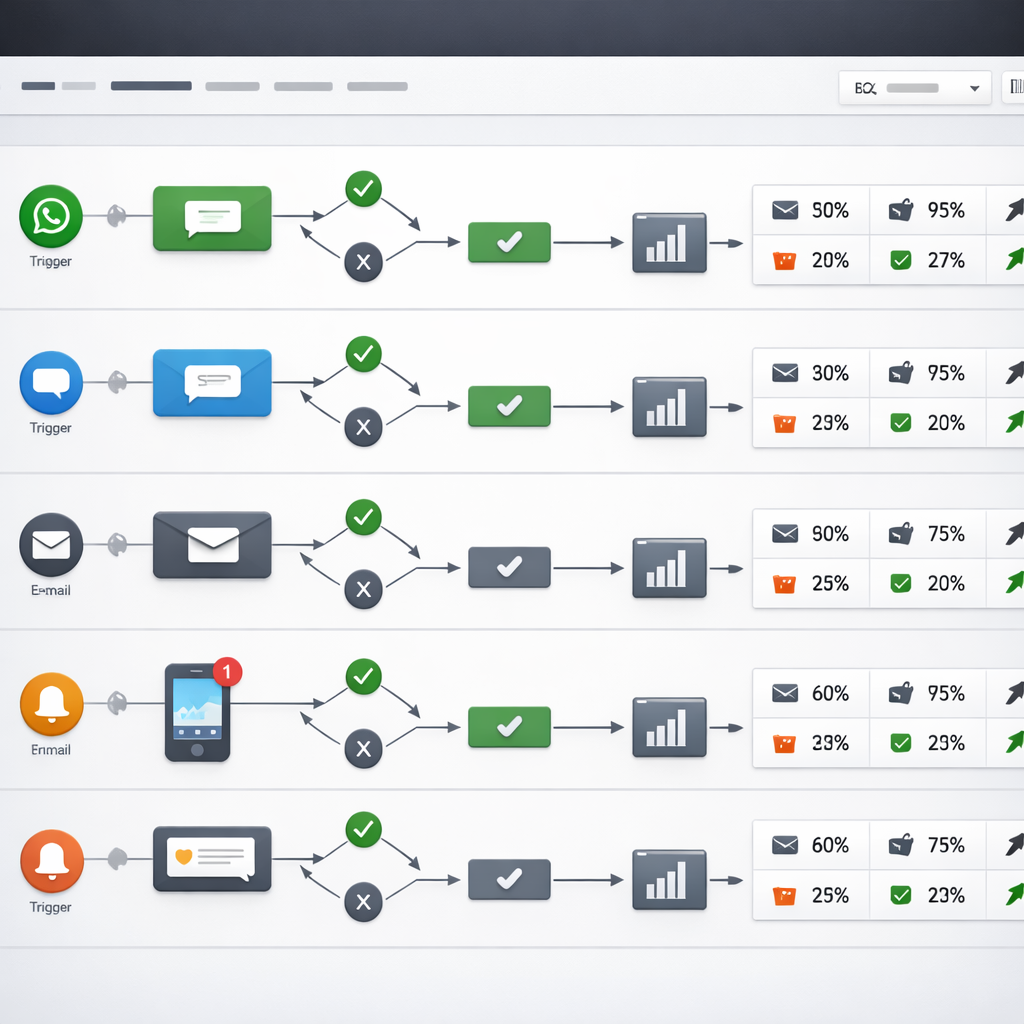
Next consideration: before you build more flows, confirm your data sync latency and opt-in status. If those are not solid, invest there first; otherwise your best automation becomes your biggest liability.
6. Pilot, measure, and iterate with experiments
Start small and treat the loyalty program like a product experiment. Run controlled pilots that force a clear comparison between the new mechanic and the current experience, and measure incremental lift on the retention metric you care about rather than vanity KPIs.
Pilot design checklist
- Define the primary lift metric: choose 30-day repeat rate, 90-day retention, or incremental CLV. Aim for a minimum detectable lift target such as +10 percent on 30-day repeat for a clear decision rule.
- Randomize cohorts: create control and test groups at the customer level to avoid selection bias. If full randomization is impossible, use matched cohorts by acquisition date and AOV.
- Sample size and duration rules of thumb: for retail aim for 500 to 1,000 customers per arm to detect ~10 percent lifts; for small local businesses 100 to 300 per arm is workable but expect noise and use longer observation windows.
- Choose short, measurable windows: track behavioral triggers in 7, 30, and 60 days. Use the 30-day metric for quick decisions and 90-day for durability checks.
- Budget guardrails: cap incentives and messaging costs per cohort so experiment does not exceed early-stage ROI thresholds.
Practical tradeoff: longer pilots reduce random noise and seasonal distortion but delay scaling and add cost. A pragmatic approach is a two-stage pilot – short run for directional signal, then an expanded roll for statistical confidence while iterating on the reward economics.
Metric set to capture weekly: cohort repeat curve, redemption rate, cost per retained customer, incremental AOV, and churn rate. Build a simple dashboard showing lift versus baseline and the payback period of incentives so the business can decide whether to scale.
Concrete example
Concrete Example: A mid-size cafe tested a tiered visit program versus a flat points scheme. They randomized 800 loyalty-eligible customers into two arms, targeted a 30-day repeat lift of 12 percent, and used WhatsApp nudges for the tier arm. Result after 45 days showed a 14 percent lift but a higher cost per retained customer, so they iterated by lowering redemption friction and shifting some nudges to email before scaling.
Common failure modes to watch for: novelty effects that fade after a month, cross-contamination between cohorts if staff treat customers differently, and seasonal spikes that mask real lift. Do not scale on a one-off surge.
| Metric | Pilot target / decision rule |
| 30-day repeat rate lift | +10 percent or no scale |
| Cost per retained customer | Less than 20 percent of projected 12-month CLV |
| Redemption rate | 20 to 40 percent depending on reward type |
| Payback period | Under 3 months preferred for promotional-heavy pilots |
Important: judge experiments by incremental lift and sustainable unit economics, not by how many signups occurred in week one.
Pilot Checklist: randomize cohorts, set a measurable lift target, define sample sizes and duration, cap incentive spend, track cohort and channel-level metrics, validate against seasonality, and prepare an operational scale plan.
Next consideration: if the pilot shows directional lift and acceptable unit economics, prepare an operational scale checklist and integrate the chosen flows with your messaging stack.
7. Scale operations and governance
Start with operational constraints, not feature ideas. Scaling a Loyalty Program multiplies small process gaps into large financial and customer-experience risks. Put governance, reconciliation, and clear ownership in place before you roll out program-wide perks or high-value rewards.
Operational checklist for scale
- Fraud controls and abuse prevention: set per-account earning caps, velocity checks, and a flagged-review workflow. Tradeoff: tight caps reduce abuse but can frustrate legitimate high-frequency customers.
- Loyalty accounting: record outstanding rewards as a liability and reconcile redemptions daily. Provide a monthly statement that matches POS and CRM records.
- Integration points: require API contracts for POS, payments, CRM, and messaging channels. Define failure modes and fallbacks – for example, queue enrollments locally if the messaging API fails.
- Customer support playbooks: scripted responses for enrollment issues, reward disputes, and expiries. Include escalation steps and SLA targets for first response and resolution.
- Operational dashboards: real-time redemptions, outstanding liability, dispute rate, and error logs. Create alert thresholds for spikes in redemptions or refund abuse.
- Change control: versioned program rules, freeze periods for rule changes that affect outstanding obligations, and a communications plan for members when rules change.
Key judgment: many teams treat loyalty as marketing only. In practice it is a cross-functional product that touches finance, legal, operations, and customer support. If you do not assign accountable owners in each function, costs and disputes grow faster than engagement.
Governance roles, SLAs, and KPIs
| Owner | Primary responsibility | Suggested SLA |
| Head of Loyalty or Growth | Program strategy, P&L oversight, and change approvals | Weekly review |
| Finance | Reward liability accounting, provisioning, and monthly reconciliation | Monthly close within 5 business days |
| Operations / Store Manager | Enrollment accuracy, dispute triage, and local escalation | First response within 24 hours |
| Customer Support | Resolve reward disputes and record outcomes | Resolution within 72 hours |
| Engineering / Integrations | Maintain API uptime and message queues; deploy incident fixes | Critical incidents addressed within 4 hours |
Practical constraint: SLAs cost money. Do not promise instant support if your team cannot deliver it. Better to set realistic SLAs and meet them consistently than to underdeliver on aspirational targets that increase churn.
Vendor selection and platform criteria
- Data ownership and exportability: require easy export of member data and reward liabilities – you must be able to move platforms if needed.
- Segmentation and automation: platform must support event-driven triggers, cohort messaging, and backfill capabilities for missed events.
- Audit trails and compliance: logs for opt-ins, consents, redemptions, and admin changes to support disputes and legal requests.
- Operational tooling: admin UI for blind redemptions, manual adjustments with audit notes, and bulk uploads for reconciliations.
Concrete example: A three-location gym chain moved reward handling from spreadsheets to an integrated POS-CRM platform. They introduced a reconciliation job that matched daily redemptions to POS receipts and created a one-click dispute workflow for members. The result was a 40 percent drop in reward-related support tickets and a predictable monthly liability number for Finance.
Operational rule of thumb: expect operational costs equal to 15 to 25 percent of your program budget during scale. This covers support bandwidth, reconciliation work, and fraud monitoring. Plan this into ROI forecasts before expanding rewards.
Do not scale loyalty features until your reconciliation, dispute, and integration flows are automated and owned. Scaling without those controls creates financial leakage that erodes the customer lifetime value you are trying to protect.

8. Legal, privacy, and long-term sustainability
Start with consent as a product decision. Treat opt in and consent records as first class features of your loyalty program rather than afterthoughts. If you cannot prove consent for WhatsApp or SMS messages you cannot reliably run time sensitive nudges, and you expose the business to fines and reputation loss.
Practical compliance checklist
- Channel consent and audit trail: Store timestamped opt in, source of consent, and exact consent language for SMS, WhatsApp, email, and push. This is required evidence for disputes and audits.
- Regulatory basics: Respect TCPA for SMS in the United States and GDPR for EU customers. Map where your customers live and apply the strictest applicable rule per user.
- Data minimization and retention: Capture only what you need to run the program. Define retention windows for PII and loyalty activity logs and automate purge processes.
- Third party tracking and cookies: Get explicit consent for third party profiling. If you rely on cross site or cross app tracking, prepare for higher opt out rates and reduced personalization.
- Reward liability and accounting: Define how outstanding points show on the balance sheet, set estimated breakage rates, and have a reconciliation cadence.
- Terms clarity and dispute process: Publish short, plain language T and Cs for points, expiry, redemptions, and refunds. Provide an easy path for customers to raise disputes and get a timely resolution.
- Portability and migration clauses: Design a fallback where points can be converted to a cash equivalent or a one time credit if you change vendors or wind down the program.
- Age restrictions and geographic limits: Enforce minimum age and region rules at enrollment to avoid targeted marketing violations.
Trade off to acknowledge. Heavily personalized experiences increase repeat purchases but also increase legal and operational overhead. In practice the best compromise is progressive profiling and consent based enrichment so high value segments get deeper personalization while casual customers receive useful but privacy safe nudges.
Concrete example: A mid sized gym chain used point of sale checkout to capture WhatsApp consent and recorded the consent string with every membership sale. That allowed automated visit reminders and streak notifications to be sent only to opted in members. When the chain later moved platforms they converted outstanding points into fixed class credits and migrated consent artifacts, avoiding customer churn and complex refund claims.
Privacy preserving tactics that work. Prefer event level triggers and hashed identifiers over full profile replication. Use cohort or segment based personalization when deterministic identifiers are not available.
Legal step before launch: Run a privacy impact assessment, lock down retention periods, document opt in sources, and have a dispute playbook. Involve legal and privacy teams before any public launch.
Opaque rules and hidden expiry are the fastest way to turn a loyalty program into a PR and legal liability. Clear, simple rules cost less to run over time.
Next consideration: plan a pilot that includes an opt in only cohort and a privacy safe cohort so you can measure the actual lift from richer personalization versus the incremental compliance and messaging costs. That will tell you whether to scale up deterministic personalization or invest in broader privacy safe mechanisms.
9. 90-day implementation roadmap and checklist
Straight to the point: a 90-day roadmap forces decisions you will otherwise postpone – who owns the data, what an acceptable lift looks like, and for which cohort you will risk incentives. Treat this as an operational sprint with stop/go criteria, not a feature wishlist.
Phase 1 — Weeks 1 to 3: Prepare and lock the experiment
- Audit data sources: confirm customer identifiers across POS, CRM, and web; map missing fields and estimate sample fidelity.
- Define cohort and KPI: pick a pilot cohort (500–2,000 users depending on traffic) and the primary KPI such as 30-day repeat lift or change in visits per customer.
- Choose model and offers: decide on Loyalty Program mechanics and one gamification element to test – simplicity wins for pilots.
- Technical gating: integrate Gleantap or chosen platform, set up event triggers, and stub test messages.
- Compliance check: validate SMS/WhatsApp opt-in, reward terms, and basic privacy checklist with legal before messaging.
Phase 2 — Weeks 4 to 8: Build, QA, and train
- Assemble flows: build welcome, reactivation, milestone, and reward-expiry flows; include fallback content for failed deliveries.
- Gamification rules: author clear rules to prevent abuse – daily caps, minimum time windows, and fraud flags.
- Message QA: test copy and delivery on each channel; validate link tracking and conversion attribution.
- Staff playbook: create short scripts for frontline staff to enroll members and resolve reward disputes.
- Baseline dashboard: publish weekly cohort retention and redemption dashboards; set alert thresholds.
Phase 3 — Weeks 9 to 12: Run pilot, measure, decide
- Launch the pilot: start with a randomized control design where feasible; keep control size ≥ 30% for statistical power.
- Monitor weekly: measure signal-to-noise early – look for directionality in week 1 and significance by week 4 of the pilot.
- A/B tests: iterate one variable at a time – reward value, channel sequence, or gamification presence.
- Calculate unit economics: compare incremental CLV to incentive and messaging costs; include redemption leakage.
- Stop/go decision: proceed to scale if lift meets pre-agreed thresholds and unit economics are positive.
Practical trade-off: moving too fast shrinks your ability to detect real lift; moving too slow wastes momentum and increases cost. Choose a pilot size that gives statistical power without exposing the whole customer base to unproven mechanics.
Concrete example: a regional coffee chain ran a 90-day pilot with 1,200 customers split 60/40 control/pilot. They tested a simple welcome bonus plus weekly streak reminders via WhatsApp. Result: 12 percent lift in 30-day repeat for the pilot and acceptable reward cost after accounting for average ticket uplift, which justified rolling the program to 15 stores.
Key targets and thresholds: aim for a 8–12 percent absolute lift in 30-day repeat for proof, redemption rate under 25 percent of issued value in pilot, and cost-per-retained-customer lower than your CAC. Adjust these by margin and business model.
Common mistake and judgment: teams often launch with too many moving parts – multi-tier mechanics, multiple channels, and complex gamification. That creates noise and hides cause-and-effect. Start with one clear win condition and one channel, then layer complexity only after you have measured positive ROI.
| Weeks | Owner | Deliverable |
| 1–3 | Growth lead & Data | Cohort defined, KPI baseline, integration checklist |
| 4–8 | Product & CX | Flows built, QA complete, staff training |
| 9–12 | Analytics & Ops | Pilot live, weekly dashboard, stop/go decision |
Next consideration: if the pilot succeeds, prepare a scale playbook that includes fraud controls, customer support capacity, and channel frequency caps.
Frequently Asked Questions
Straight answer up front: the questions you ask when building or upgrading a loyalty program reveal whether you will build defensible habits or a short-term discount machine. Below are the practical FAQs teams run into and the decisions that actually change outcomes.
Top operational and measurement questions
- How much will a basic program cost a small business? Expect one-time setup plus the first 90 days of platform and messaging costs in the low thousands for a simple points program; incentive spend is variable. Plan for 20 to 30 percent of your first-quarter loyalty budget to be incentives while you test earn-redeem economics.
- How big should a pilot be to show reliable lift? Run a randomized pilot of at least several hundred customers or 5 to 10 percent of monthly active users, whichever is larger, over a 30 to 90 day window. Use cohort lift on repeat purchase rate and incremental CLV as your primary success metric – McKinsey shows personalization lift only matters when the sample and targeting are stable.
- What redemption rate should we assume for liability provisioning? Use conservative defaults: 20 to 40 percent redemption for point-based programs early on, then update monthly with observed data. For accounting, treat outstanding points as a liability and revise your redemption assumption every quarter.
- How often can we message customers without increasing opt-outs? Use channel-specific caps – no more than three promotional SMS per week, one WhatsApp promo per week, and keep transactional messages separate. Respect channel preference and let customers choose frequency to reduce churn from over-communication.
- When is gamification useful versus harmful? Gamification helps when it maps to a narrow behavior you can measure, like weekly visits or referrals. It fails when used as window dressing – badges and leaderboards without measurable KPIs create noise and operational overhead.
Practical trade-off: increasing reward generosity improves short-term repeat but raises CAC-per-retained-customer; tighter rewards preserve margin but slow adoption. Structure your pilot to test both generosity and the type of benefit – monetary credit, experiential perks, or convenience – because the same customer will respond differently depending on purchase frequency and ticket size.
Design, legal and channel specifics you will actually act on
- Can we avoid discounts and still build loyalty? Yes. Offer exclusive access, convenience, or community benefits that have perceived high value but low direct cost – think early booking windows, curated content, or members-only events.
- Is WhatsApp OK for loyalty messaging? It can be highly effective for transactional and timely nudges but requires correct opt-in handling and templates. Engage legal early to document consent flows and follow platform policies.
- How do we stop gaming and fraud? Set per-day caps, require activity verification for high-value redemptions, and monitor outliers. Fraud prevention is cheaper than cleaning up trust after abuse.
Concrete example: A mid-size gym introduced a visit-streak mechanic plus a referral badge. Over a 12-week pilot the gym saw a 12 percent increase in weekly visits from the engaged cohort and a 3x higher referral conversion among members who earned badges. The gym limited redemptions to class credits to protect margin while increasing footfall.
Common mistake people underestimate: failing to plan for customer support and dispute workflows. If your rules are ambiguous, support costs spike and trust erodes faster than any short-term lift can recover. Build clear T&C, simple earn-redeem statements, and a script for frontline staff before launch.
Key takeaway: aim for measurable short-term wins (a 5 to 15 percent lift in 30-day repeat) in pilots, then lock in operational processes – measurement without operational readiness leads to churned gains.
Next actions: pick one test: choose a single behavior (visit frequency, referral, or AOV), design a simple reward with clear earn rules, set a randomized pilot cohort, and assign a weekly reporting owner. If you need templates for gyms or local businesses.
Ready to Run Successful Marketing Campaigns and Grow Your Business?
Gleantap helps you unify customer data, track behavior patterns, and automate personalized campaigns, so you can increase repeat purchases and grow your business.
Ready to Run Successful Marketing Campaigns and Grow Your Business?
Gleantap helps you unify customer data, track behavior patterns, and automate personalized campaigns, so you can increase repeat purchases and grow your business.