
Gym Marketing Campaigns: 12 Campaigns Mapped to the Member Journey (and the 5 to Automate First)
 Divya Ghughatyal

The gym marketing campaigns that produce members follow the member journey: instant lead follow-up, tour reminders, first-30-day onboarding, at-risk and lapsed-member outreach, and win-back. Seasonal promotions help, but behaviour-triggered campaigns run all year and are where most clubs lose members. Measure each campaign by one number: tours booked, joins, visits or renewals.
What Gym Marketing Campaigns Actually Work?
Search “gym marketing ideas” and you get a list of promotions: referral contests, social media giveaways, free week passes. Those tactics have a place, but they are not campaigns. A campaign ties a trigger to a message to a measurable outcome – and the best gym advertising campaigns fire because a member (or prospect) did something, not because January arrived.
Below are 12 campaigns mapped to the stages every member moves through. Each one names the single metric it should move. If you are building your fitness marketing strategies from scratch, start here; if you already run campaigns across four or five tools, this map will show you which stages have gaps.
The Member Journey in 7 Stages
Every gym member moves through the same path, whether they stay for years or leave after a month:
- Lead – They fill out a form, click an ad or walk in and ask for pricing.
- Tour / trial – They visit the facility and decide whether it feels right.
- Join – They sign a membership agreement or buy a package.
- First 30 days – The habit window. If they visit regularly now, they stay.
- Active member – Engaged, visiting, a candidate for reviews and referrals.
- At-risk – Visits drop. They have not come in for 14 or more days.
- Lapsed / cancelled – They are gone. Win-back is now the only play.
Most gym marketing strategies focus on stage 1 (lead generation) and ignore stages 4 through 7. That is where you lose money you already spent to acquire the member.
12 Campaigns, One per Stage
| Campaign | Journey Stage | Trigger | Channel | The One Metric |
| Speed-to-lead follow-up | Lead | New inquiry received | SMS + AI reply | Response time (under 60 seconds) |
| Tour reminder | Tour | Tour booked | SMS + email | Tour show rate |
| Tour no-show rescue | Tour | Missed tour appointment | SMS + call task | Rebooked tours |
| Trial / first-visit nurture | Tour → Join | First visit completed | Email drip + SMS | Conversion to paid membership |
| First-30-days onboarding | First 30 days | Membership start date | Email sequence + SMS | Visits in first 30 days |
| Visit-milestone review request | Active | Hits 10th, 25th or 50th visit | SMS + email | New Google reviews |
| Referral ask | Active | After a visit milestone | SMS + email | Referral sign-ups |
| At-risk outreach | At-risk | No visit in 14 days | SMS + call task | Return visits |
| Lapsed-member outreach | Lapsed | No visit in 30 days | Email + SMS + call task | Reactivations |
| Cancelled-member win-back | Lapsed / cancelled | Cancellation processed | Email sequence | Rejoins |
| Expiring pass / package renewal | Active → At-risk | Pass or package nearing end date | SMS + email | Renewals |
| Seasonal promo (New Year / summer) | Lead | Calendar date | Email + SMS + ads | New memberships |
| Abandoned online join | Lead | Started but did not finish online sign-up | SMS + email | Completed sign-ups |
Speed-to-lead follow-up. A prospect who fills out a form at 9 PM expects a reply before they move on. The best fitness CRM software connects your lead source to an instant AI-powered text so the conversation starts in seconds. This is the highest-leverage campaign in gym marketing automation.
Tour reminder and no-show rescue. An automated reminder the evening before and morning of the tour cuts no-shows. A same-day “we saved your spot” text recovers prospects who still miss it.
Trial / first-visit nurture. A short drip of two or three messages over a week keeps the gym top of mind after a free trial and drives conversion to paid membership.
First-30-days onboarding. The campaign most gyms skip and the one that moves retention the most. Members who visit eight or more times in their first 30 days cancel at a fraction of the rate of those who visit twice.
Visit-milestone review request. Ask for a Google review after the 25th visit, not the first – at that point they are a genuine fan.
Referral ask. Trigger the referral request after a positive milestone, not randomly. A member who just earned a loyalty reward is far more likely to share your gym.
At-risk outreach (14 days). Two weeks without a visit is a signal. A personal text paired with a staff call task pulls members back before they mentally cancel.
Lapsed-member outreach (30 days). The habit is broken. This campaign needs more weight: a special offer, a personal call and an email that acknowledges the gap without guilt.
Cancelled-member win-back. A member who cancelled three months ago is still easier to win back than a cold lead. A timed email sequence with a low-commitment re-entry offer brings a percentage back every quarter.
Expiring pass / package renewal. Commonly missed. If your gym sells class packs or prepaid packages, the expiration date is a trigger, not a cancellation. A renewal offer sent 7 days before expiry prevents false churn (more below).
Seasonal promo. New Year and back-to-school still drive traffic. The difference is treating them as one of 12 campaigns, not the only two you run all year.
Abandoned online join. If prospects leave your online sign-up mid-flow, an automated follow-up within an hour recovers sign-ups that were already 80 percent complete.
Calendar Campaigns vs. Behaviour-Triggered Campaigns
Seasonal promotions – Black Friday deals, New Year specials, summer challenges – still matter, but they run twice a year at most.
Behaviour-triggered campaigns run every day. When a member stops visiting, the at-risk campaign fires. When a lead inquires at midnight, speed-to-lead fires. These are the gym marketing campaigns that prevent the slow, invisible bleed of members who stop showing up.
Real example: a club with roughly 2,000 members noticed “cancellations” piling up. When they dug into the data, approximately 560 were not cancellations at all – they were prepaid passes expiring. The right campaign was not a win-back email but a renewal offer triggered 7 days before expiry. Different problems, different campaigns, and one calendar-based approach would never catch on.
A studio group we spoke with in late 2026 faced a similar gap. Purchases had dipped roughly 12 percent year over year, so they re-targeted lapsed clients with a low-price class offer paired with an abandoned-cart flow – behaviour-driven campaigns addressing the specific moment each client dropped off.
The takeaway: run your seasonal promos, but build your gym marketing automation around triggers. The calendar gets you leads; behaviour keeps you members.
The 5 to Automate First
You cannot automate all 12 on day one. Start with the five that leak the most revenue when they run late or not at all:
- Speed-to-lead follow-up. A lead that waits more than five minutes is half as likely to book a tour. Automate an AI-powered text that fires in under 60 seconds – this single automation produces 2.1x more conversions and converts 30 percent more inquiries into tours.
- Tour no-show rescue. When a prospect misses their tour, an automated same-day text plus a staff call task gets them rebooked before they forget your name.
- First-30-days onboarding. Automate a sequence of check-ins, class recommendations and visit-milestone messages. This is the campaign that moves retention, and it is impossible to run manually for every new member.
- 14-day at-risk outreach. An automated text paired with a call task catches members before they lapse. Tracking visit gaps manually across hundreds of members is not realistic.
- Cancelled-member win-back. A timed email sequence – 30 days, 60 days, 90 days after cancellation – runs in the background and brings members back without anyone on your team remembering to send it.
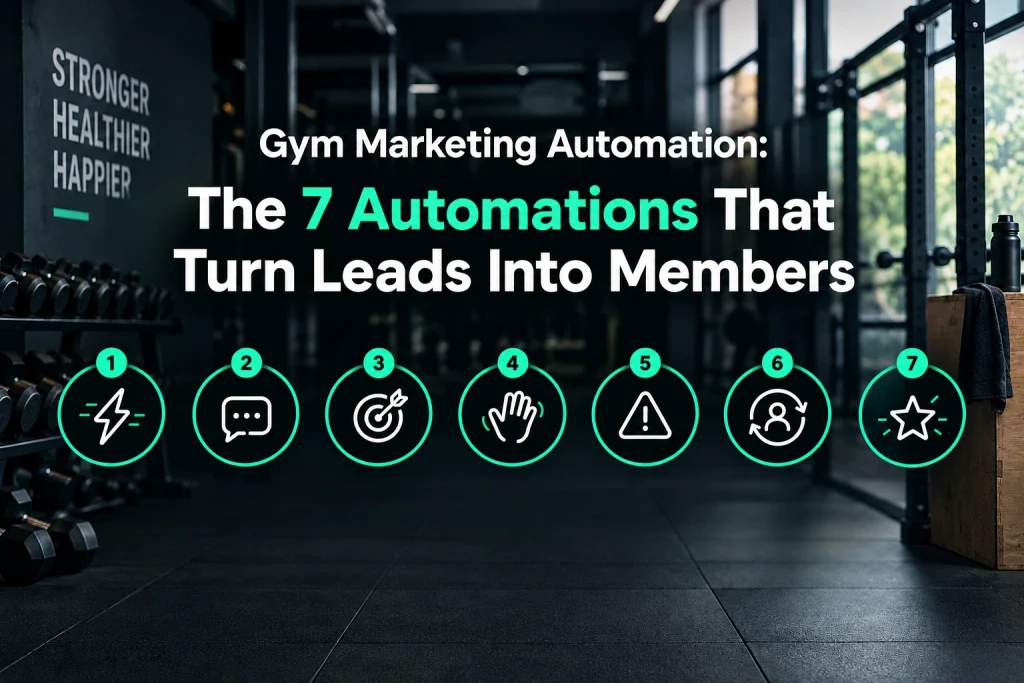
For the step-by-step on setting these up, read Gym marketing automation: the 7 automations that turn leads into members. That post covers the how-to; this one is the campaign plan.
How to Measure Campaigns When They Live in 6 Tools (and Why One Login Matters)
The problem most gym owners hit: speed-to-lead texts live in one app, onboarding emails in another, review requests in a survey tool, and the loyalty program in yet another. That is four to eight logins, four to eight invoices, and zero visibility into how a lead moved from inquiry to tour to member.
A multi-department athletic club we spoke with in late 2026 wanted to consolidate their email tool, loyalty app, survey tool and lead tool into one system – not because any tool was broken, but because nobody could see the full journey.
This is where the best fitness CRM software earns its pricing. A platform like Gleantap works alongside your existing club management system – ABC, Mindbody, ClubReady, Jonas or Club Automation – and puts CRM, texting, email, reviews, surveys, loyalty, website chat and an AI receptionist in one login. When all 12 campaigns run from the same system reading the same member data, you can finally see which campaign produced which member and which ones are leaking.
The numbers back it up: clubs using this approach report an average of $158K in added revenue per location. Gleantap carries a 4.5 out of 5 on G2 and a 5.0 out of 5 on Capterra, with plans starting from $299 per month.
See your 12 campaigns running from one login, with your club data synced, in a 20-minute demo.
FAQ
How many campaigns should a gym run? Most independent gyms and small multi-location clubs should aim for 8 to 12 active campaigns covering every stage of the member journey. Start with the five behaviour-triggered automations above, then layer in seasonal promos and referral campaigns. Running fewer than five means entire journey stages go unaddressed.
What’s a good gym marketing budget? Industry benchmarks suggest 5 to 10 percent of gross revenue. The bigger question is what share goes to retention versus acquisition. Most clubs over-invest in lead generation and under-invest in the onboarding and at-risk campaigns that protect members they already have.
Text or email for gym campaigns? Both, for different jobs. SMS earns open rates above 90 percent and works best for time-sensitive triggers: speed-to-lead, tour reminders, at-risk check-ins. Email works for longer nurture sequences and win-back offers. The strongest gym marketing campaigns layer both channels with a call task for high-value moments.
How do I stop messaging people who already cancelled or froze? This is one of the biggest reasons to consolidate tools. When your texting app, email tool and loyalty app do not share data, a cancelled member keeps getting promos – or a frozen member gets a win-back email while still paying. A unified fitness CRM that syncs with your club management system (ABC, ClubReady, Mindbody, Jonas or Club Automation) suppresses them automatically so every campaign reaches the right people at the right stage.


Ready to Run Successful Marketing Campaigns and Grow Your Business?
Gleantap helps you unify customer data, track behavior patterns, and automate personalized campaigns, so you can increase repeat purchases and grow your business.
Ready to Run Successful Marketing Campaigns and Grow Your Business?
Gleantap helps you unify customer data, track behavior patterns, and automate personalized campaigns, so you can increase repeat purchases and grow your business.