
 Divya Ghughatyal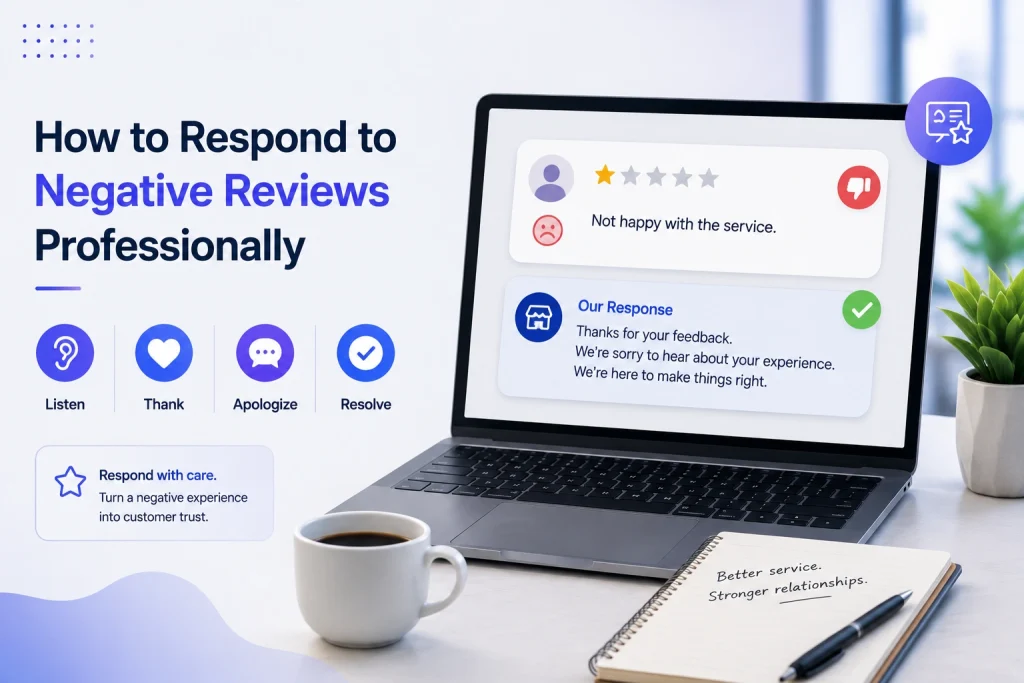
Negative reviews are inevitable, and how you respond to negative reviews often determines whether you lose a member or win one back. This guide gives a repeatable five-step framework, channel-specific tactics, six editable templates, clear escalation rules, and four KPIs you can apply immediately. It also shows how to fold responses into Gleantap workflows so your team acts fast, keeps tone consistent, and logs outcomes for follow-up and measurement.
Why Responding to Negative Reviews Should Be Part of Daily Operations
Direct business signal: Negative reviews are not noise. They are high-intent customer feedback that shows up where prospects decide whether to join and where current members decide whether to stay. Leaving them unaddressed allows rating erosion, lost conversions, and recurring service issues to compound.
Make it a daily task, not an occasional chore. Set a simple operational rule: review new public feedback at the start of each day and respond or assign within business hours. Platforms reward timely engagement and customers expect a prompt reply; see Google Business Profile guidance and practical findings in the Harvard Business Review piece on responses.
Operational checklist to make review response daily work
- Assign ownership: one named person per location for review triage each day
- Alerting: route new negative reviews to a central Slack or Gleantap alert channel so nobody misses them
- Templates and guardrails: keep preapproved replies to speed response while allowing local edits
- Logging: write outcome and next steps into the customer profile for follow up and measurement
- Escalation rule: immediate manager and legal alert for injury, threats, or regulatory claims
Practical tradeoff: Speed matters but quality matters more. A hurried, robotic reply can worsen perceptions and reduce the chance of remediation. Target a first public response within 24 to 72 hours, but do not sacrifice a thoughtful, specific reply for speed. Use templates to save time, not to replace human editing.
Unique operational advantage: Treat public responses as both customer service and local marketing. A good public reply signals competency and process to future customers. But do not use the public reply to debate facts or admit liability; offer remediation and move the conversation offline.
Concrete example: A downtown fitness studio received a single star complaint about locker room cleanliness. The community manager responded publicly within 12 hours acknowledging the issue, committed to a same-day deep clean, and invited the reviewer to message for a manager callback. The manager logged the incident in the member profile, followed up privately, and the reviewer updated it to four stars after the issue was resolved.
Real metric to target: reply to 100 percent of negative reviews within 72 hours and aim to resolve or move to private remediation within 48 hours of initial contact.
Key takeaway: Daily review operations reduce rating drift, speed remediation, and create a repeatable path from complaint to retention. If you cannot staff full daily coverage, rotate ownership and keep a central alert channel so nothing slips through the cracks.
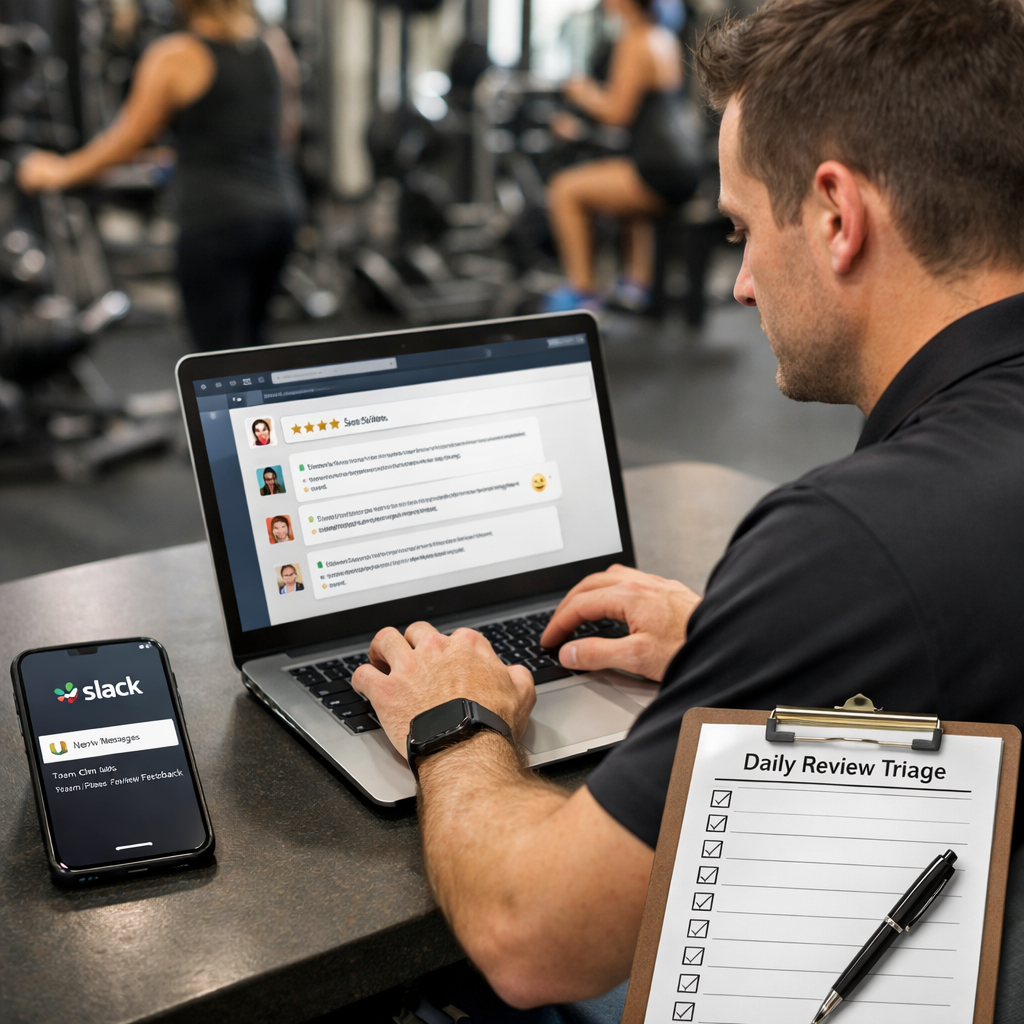
Next consideration: map reviewer status into your customer profile so follow up is measurable and you can report conversion from complaint to retained member.
The 5-Step Response Framework Every Team Must Use
Start with a repeatable structure. When teams follow the same five steps, responses are faster, legal risk falls, and converting an unhappy reviewer into a retained member becomes realistic instead of lucky.
The five steps
- Step 1 — Acknowledge the issue: Restate the core complaint in one sentence so the reviewer knows you read the problem. Keep this to facts the reviewer wrote; do not add new details or assign blame.
- Step 2 — Apologize appropriately: Use an empathy-focused apology that accepts the experience without admitting legal liability. Example phrasing: I am sorry you had this experience. We want to make it right.
- Step 3 — Explain next steps briefly: Offer a short factual context or corrective step – not a long defense. Use one to two sentences and avoid promises that cannot be kept.
- Step 4 — Offer remediation and move offline: Provide a clear remediation option and invite private contact via phone or messaging. Public responses should make it easy for the reviewer to reach a named contact.
- Step 5 — Close and log: Give a point of contact, a follow up timeline, and immediately log the review and any private correspondence into the customer profile for tracking.
Practical constraint: Public transparency helps reputation but creates a record that legal teams will see. If the complaint could imply injury, regulatory breach, or litigation risk escalate to management before posting more than the minimal acknowledgement. Follow platform removal processes rather than trying to argue the review away publicly.
Tradeoff to accept: Short, consistent public replies improve perception but will not satisfy every reviewer. Investing staff time in private remediation produces the business outcome you want, while long public debates only amplify negativity.
Concrete Example: A member posts that a trainer missed their booked session. Public reply following the five steps: acknowledge the missed session, apologize for the inconvenience, state you are reviewing the booking logs, offer a complimentary make up session and provide a manager phone number, then log the case. The team calls the member within 24 hours, fixes the scheduling issue, and records the outcome in the member profile so the follow up is visible to future staff.
What teams get wrong: Many teams either write long defenses or offer blanket refunds for every complaint. Both are mistakes. Long defenses look defensive and reduce trust. Blanket concessions waste margin and teach members to escalate for refunds. Use the framework to calibrate proportionate remediation tied to the actual harm.
Key rule: Always include a named point of contact and a next-step timeline in the public reply. Then move detailed problem solving to private channels and capture every interaction in the reviewer record. If you use Gleantap, map the reviewer into the customer profile to automate follow up and retention workflows.
Bottom line: A short, consistent public response plus a fast, documented private remediation sequence wins more members than public arguments or silence. Make the five steps standard operating procedure for every negative review.
Channel-Specific Tactics and Examples
Start from the platform: each review channel demands a different tone, length, and escalation path. Treat the public reply as a visible signal to prospects and a triage step for resolution—short and accountable on high-traffic sites, slightly more explanatory where context matters.
Google Business Profile
Google-specific tactic: keep it concise, include the timeframe for next steps, and avoid asking for removal publicly.** Google often shows the business reply next to the review; use that real estate to demonstrate professionalism, not to litigate facts. Follow Google’s guidance on responses at Google Business Profile help.
Yelp
Yelp-specific tactic: never offer incentives for removal and stick strictly to facts and empathy.** Yelp enforces limits on offering discounts in exchange for review changes; if the complaint is complex, acknowledge publicly and move to private messaging or invite the reviewer to contact management. See Yelp’s response guidelines at Yelp support.
Facebook and Instagram
Social tactic: reply fast and short in comments, then complete the fix in DMs.** Social audiences reward responsiveness; a two-line public reply that promises a private follow-up demonstrates attention and limits public back-and-forth. Use platform DMs to confirm identity, offer remediation, and log the outcome in your CRM.
Concrete example: A member posts on Instagram about a missed personal-training session. Public reply: We’re sorry you missed your session—please DM us your preferred contact and time and we’ll make it right. In the DM you confirm the booking, document the adjustment, and offer a one-time make-up; then update the customer profile so front-desk staff can follow up.
TripAdvisor, Apple Maps, and Industry Platforms
Niche platforms tactic: prioritize safety, hygiene, and operational fixes and escalate quickly.** For complaints that imply regulatory, health, or safety issues, route immediately to operations and senior management and include timestamps and corrective steps in your reply. These platforms may be slower to moderate but attract consumers researching trust and cleanliness.
- Quick channel checklist: Google — 1–2 sentences, timeline, private follow-up; Yelp — factual empathy, no incentives, escalate if suspicious; Facebook/Instagram — fast public + DM resolution; TripAdvisor/Apple — prioritize safety, escalate to operations.
- Length trade-off: short public replies reduce pile-on but can feel curt; balance by promising and promptly executing a private follow-up.
- Legal and policy trade-off: detailed factual defenses risk admitting liability; keep public language neutral and move details offline.
Practical insight: responding everywhere the reviewer expects to see you matters more than polishing a perfect public statement.** Consistent, quick replies across channels shape your business reputation; inconsistent tone or delayed responses cost trust faster than a single negative review.
Key takeaway: prioritize platform-appropriate brevity in public replies, move problem-solving offline, and always log the outcome in your customer profile so future interactions reflect resolution.

Judgment: spend time standardizing brief, platform-specific replies and training staff to move from public acknowledgment to private remediation—this is where review management actually changes retention, not long public defenses.
Six Editable Response Templates for Common Scenarios
Directly usable templates save time but require editing. Below are six short, editable responses mapped to common problems. Use them as the baseline for your public reply and as the seed for a private remediation message. Always insert specific details, a real contact, and a next step before sending.
Template selection rubric
Pick the template that matches the root issue, not the emotion of the review. If the complaint alleges safety, escalate first and use the Safety template. If the reviewer is factually wrong, use the Misunderstanding template and avoid public confrontation. Reserve the Fake Review template for clear cases only after documenting evidence.
- Service Failure – Public reply: We are sorry to hear about your experience on {date} at {location}. That is not the standard we aim to deliver. Please call {phone} or message us so we can schedule a make-good and make this right. Service Failure – Private follow-up: Hi {name}, I am {agent name}, community manager. I reviewed the shift log and want to offer {remediation}. Can you confirm a good time to speak?
- Misunderstanding or Mistaken Identity – Public reply: Thank you for the feedback. We will investigate the details you mentioned and reach out privately to confirm dates and staff involved. Misunderstanding – Private follow-up: Hi {name}, we could not find a record for the session you referenced. Can you send your membership email or a photo of the receipt so we can resolve this?
- Pricing or Policy Complaint – Public reply: Thank you for letting us know. Our policy is {short policy line} and we are happy to review exceptions. Please message us so a manager can discuss options. Pricing – Private follow-up: Hi {name}, I reviewed your account and can offer {compromise} for this instance if you are open to a quick call.
- Safety or Hygiene Concern – Public reply: We take safety seriously. Thank you for reporting this. We will inspect the area and contact you with findings. For urgent issues, please call {phone now}. Safety – Private follow-up: Hi {name}, we started an immediate review and logged your concern under incident {id}. We will update you by {timeframe} after inspection.
- Malicious or Fake Review – Public reply: We take reports of false reviews seriously and have flagged this with the platform. If you can message us any details, we will investigate and share findings. Fake Review – Private follow-up: Hi {name}, we logged the review and could not match the account to a transaction. Please send any evidence and we will request a platform review.
- Resolved Complaint Follow-up – Public reply: Thank you for working with us. We are glad we could resolve this and hope you notice the improvement on your next visit. Resolved – Private follow-up: Hi {name}, thanks again for your time earlier. We completed {actions}. If this feels resolved, a short update to the review helps others see the outcome.
Practical consideration – personalization matters. Automating these templates without at least changing the first sentence will sound robotic and reduce chances of reviewer retraction. Aim for a personal first line and a factual second line, then use templated remediation language.
Tradeoff to accept. Faster responses increase perception of care but increase risk of mistaken facts. If you are uncertain about details, use the Misunderstanding template and escalate to operations before promising compensation.
Concrete Example: A member posts that they were locked out of class because the staff forgot to scan them. Use the Service Failure template publicly: apologize, confirm you will investigate, and invite offline contact. Privately follow up with the member, check door logs, offer a free make-good, and log the interaction in the member profile so future staff see the context.
Key action: Always store the final public reply and the private remediation notes in the customer profile.
Legal and platform constraint. Never use these templates to admit fault for injuries or regulatory breaches. If the review alleges physical harm, pause public replies and escalate to management and legal. For platform guidance on responding, review the Google Business Profile help page.
One final rule: Customize the first line and include a named contact. Templates speed action. Personalization closes the loop.
Escalation Rules and Legal Red Flags
Clear rule first: escalate quickly for safety, threats, regulatory exposure, or alleged physical injury; everything else stays in the customer-success lane until proven otherwise. Legal escalation is not a default — it is a controlled step reserved for high-risk claims where evidence, liability, or reputation damage goes beyond a normal service complaint.
Who to notify and when
- Immediate escalation (within 1 hour): alleged physical injury, credible threats, safety or sanitation failures that could cause harm, and police or regulatory mentions.
- High-priority escalation (within 24 hours): claims of illegal activity, accusations of discrimination, or regulatory violations that cite bodies like OSHA or local health departments.
- Manager-level (24–72 hours): repeated unresolved complaints, journalist or influencer mentions, or reviews that claim material financial loss.
- Customer-success handling: pricing disputes, onboarding frustration, scheduling errors, and tone-based complaints where no legal exposure is present.
Practical insight: escalate too often and you bloat legal/ops bandwidth; escalate too rarely and you risk real liability and regulatory headaches. Use the thresholds above as a gatekeeper — escalate when the claim crosses from customer experience into potential business, safety, or legal exposure.
Evidence preservation checklist
- Capture the review: screenshot with timestamp and reviewer profile URL; save the platform native link.
- Collect correlated records: membership check-in logs, class rosters, CCTV clips, staff schedules, incident reports, and any messages exchanged.
- Lock a chain of custody: store materials in the member record in Gleantap using.
- Avoid altering originals: do not redact or edit the original platform evidence; add annotations in your internal case file only.
Trade-off to recognize: preserving evidence fast is essential, but publicly responding from a legal posture or releasing details can escalate conflict and open you to discovery. When legal is looped in, pause substantive public replies and let counsel craft the messaging.
Platform removal and authenticity routes
Actionable links: report fake or abusive reviews directly through platform procedures: Google Business Profile removal process, Yelp review guidelines and reporting, and TripAdvisor moderation pages. Follow each platform form exactly — do not publicize the takedown attempt.
| Trigger | Immediate action | Owner |
| Alleged physical injury | Preserve evidence, suspend public reply, notify manager and legal, contact the member privately | Manager + Legal |
| Threats or harassment | Escalate to manager, document, and consider police report if threat credible | Manager + Security |
| Fake or spam review | Collect evidence, file platform removal request, and log in member profile | Community Manager |
| Policy or pricing dispute | Resolve via customer-success workflows and offer remediation; escalate if repeated | Customer Success |
Concrete example: A member posts that they were injured on equipment and threatens legal action. The community manager screenshots the review, pulls CCTV of the timeframe, notifies the operations manager and legal within one hour, and pauses any public reply that admits fault. The team logs all artifacts into the member profile and opens an incident ticket for follow-up.
Do not sue over an ordinary bad review. Most negative reviews are opinion; litigation is expensive and rarely resolves ratings problems. Use removal routes for clearly fake content and escalation for genuine risk.
Critical rule: if a review alleges injury, threats, regulatory breaches, or criminal behavior — stop public engagement, preserve all evidence immediately, and notify manager + legal. Public messaging should be limited to an acknowledgment that you are investigating.

Next consideration: define and document these escalation triggers in your SOPs, train staff to recognize them in the first 15 minutes after a review posts, and run quarterly drills so escalation becomes a practiced action, not an emergency improvisation.
How to Train Staff and Maintain Consistent Tone
Training determines whether your negative review responses are a brand asset or a liability. A short workshop with concrete rules beats a long policy doc that nobody reads.
Two-hour training template you can run next week
- 0–15 min — Expectations and metrics: Explain KPIs (time to first response, response coverage, tone score) and why consistent tone protects local reputation.
- 15–45 min — Tone sheet walk-through: Teach the approved phrases, apology language, and forbidden phrases (no legal admissions, no cheering, no blaming).
- 45–90 min — Role play: Run five paired scenarios across channels (short public reply, private follow-up, escalation handoff). Score each reply immediately with the rubric.
- 90–105 min — Template editing: Show how to personalize the six core templates without breaking tone rules; practice with real recent reviews.
- 105–120 min — Operations & logging: Demonstrate routing: who owns the reply, how to log outcomes into the customer profile, and when to escalate to management.
Practical insight: Scripts are useful, not sacred. Require staff to use the template base but allow two personalization slots (customer name, one line acknowledging specifics). Too much rigid scripting makes replies read robotic; too much freedom makes them inconsistent.
Style sheet and calibration rules
Create a one-page style sheet that lists: approved openers, three acceptable apology sentences, three closing lines, maximum public reply length by platform, and a short list of words to avoid. Keep it visible in the response workspace.
| Rubric criteria | Score (0–2) |
| Acknowledges specific complaint | 0 = generic, 1 = partial, 2 = specific |
| Appropriate apology (no legal language) | 0 = missing/defensive, 1 = weak, 2 = clear empathetic |
| Offers remediation or offline next step | 0 = none, 1 = vague, 2 = concrete contact and action |
| Tone matches style sheet and platform | 0 = off-brand, 1 = minor issues, 2 = spot-on |
Calibration cadence: Score a rotating sample of 20 replies each month, then hold a 30-minute calibration with managers to align on edge cases and update the style sheet. Calibration prevents drift — without it, small variations multiply across locations and months.
Coaching, escalation triggers in practice, and a trade-off to accept
Coaching approach: Use the rubric for quick coaching: one-line correction, show a better alternative, and require a rewrites-and-resubmit exercise until the score is 6 or higher. Managers should shadow first-week replies from new staff.
Trade-off to accept: Faster responses may be slightly less polished. If your team must choose, prefer timeliness over perfect prose for the first public reply, then follow with a polished private message. Timely engagement preserves potential conversions; perfect but late responses rarely recover trust.
Concrete example: A downtown gym received a complaint about overcrowded evening classes. During training, a community manager role-played the public reply, then sent a private message offering a make-good class pass and scheduling a call. The reviewer edited the review two weeks later. The team logged the outcome into the member profile and marked the case as resolved.
Key practice: Require manager approval for any message that offers refunds, discounts over a set value, or deviates from the style sheet. This prevents well-intended staff from creating financial or legal exposure.
Embed training outcomes into operations: add a line item in weekly ops meetings to review recent negative-review replies and one customer story with outcome. Also link reviewer records into the customer profile for follow-up.
Next consideration: Schedule your first calibration within 30 days of training and measure whether response time and rubric scores improve before expanding to other locations.
Measuring Impact and Reporting to Leadership
Start with business outcomes, not vanity metrics. Leadership will care about retained members and revenue impact, not how many replies you sent. Frame your reporting so each metric ties to member retention, acquisition, or risk mitigation.
Core KPIs to track and how to use them
| KPI | How to calculate | Target (practical) | Why it matters |
| Average star rating | Weighted average of platform ratings over rolling 90 days | Hold steady or improve 0.1 stars per quarter | Visible signal to prospects – small changes move conversion rates for local searches |
| Negative-review response rate | Percent of reviews 1-3 stars replied to publicly within target window | >= 90% within 72 hours | Shows responsiveness; platforms surface business replies and a higher rate reduces perceived neglect |
| Time to first response | Median hours from review posted to first public reply | < 24 hours for high-traffic locations | Speed affects perception and the chance the reviewer will engage offline |
| Reviewer conversion rate | Percent of reviewers who become retained members within 90 days after remediation | Aim for 15-25% for service businesses – benchmark internally | Direct link from response behavior to revenue; the clearest ROI signal |
Practical insight: use rolling windows and minimum sample thresholds.** Single bad week can skew average star ratings and lead to overreaction. Report 30, 60, and 90 day windows plus location sample sizes so leadership understands signal strength.
Weekly dashboard contents – what to present
- Top-line KPIs – average rating, response rate, median time to first response for the week
- Trending complaint keywords – cold calls reveal operational issues faster than monthly reports
- Top 3 locations by negative volume – include counts and recent escalations
- Outcome status – resolved, pending remediation, escalated to manager or legal
- Reviewer conversion snapshots – list reviewers who became retained members and the dollar value estimate
Trade-off and limitation: precision vs speed.** Building flawless attribution requires tight data, which takes time. Start with conservative, easy-to-measure signals and iterate. If you try to prove causation immediately you will stall the program; instead demonstrate correlation and operational improvements, then run controlled tests.
Concrete example: a gym with 600 members loses one complaining member worth 50 per month. If your reviewer conversion program reclaims 3 members per quarter, that equals 150 per month recovered or 1,800 per year. Presenting this simple math to leadership justifies dedicating 2-4 hours per week to review management and follow-ups.
Judgment: focus reporting on retained revenue and conversion, not just replies.** Teams commonly celebrate public reply counts. That feels good but rarely convinces finance. Translate response activity into membership dollars, operations fixes, and reduced churn.
Start with these three numbers each week: average star rating, negative-review response rate, and recent reviewer conversions.
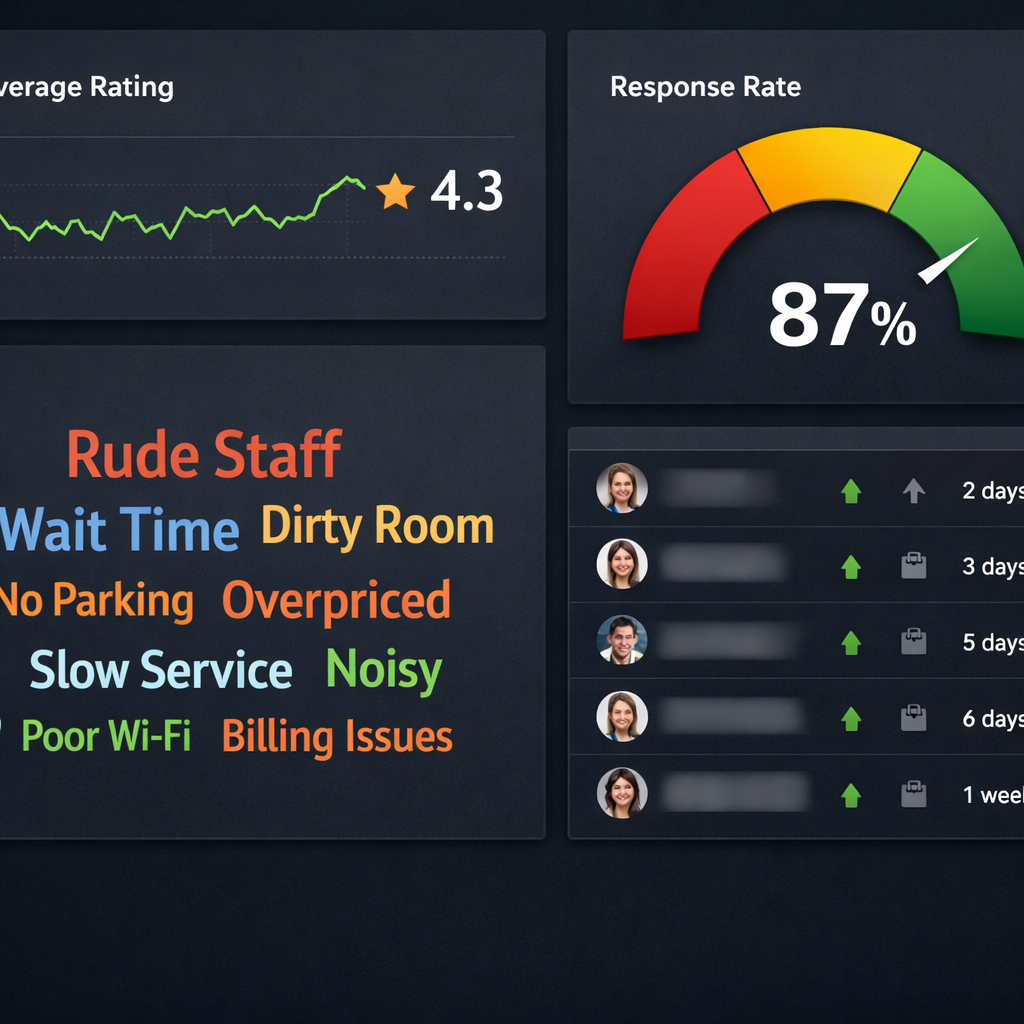
Next consideration – add an experiment column to the dashboard. Run two response scripts in parallel for comparable complaints, measure conversion lift after 30 and 90 days, and use results to refine templates and escalation rules. Leadership will reward measurable improvement more than steady activity.
Integrating Review Response into Gleantap Workflows
Make review response part of the operational workflow, not an extra task. If your team treats reviews as ad hoc items, response time slips and outcomes are inconsistent. Use Gleantap to route every new negative review into a single, auditable case so nothing falls through the cracks and you can measure remediation steps end to end.
Enrich the alert with context before the responder writes a reply. When Gleantap ingests a negative review, automatically attach the reviewer profile, membership status, recent interactions, and last class or service date. That context changes the reply – a paying member gets a different remediation path than a prospect – and reduces back-and-forth.
Automate triage but require a human for public apologies and offers. Set rules that auto-prioritize reviews by star rating and keywords, start private follow-up sequences, and draft templated replies with macros. Then require human approval for the public post. The tradeoff is speed versus persuasion – fully automated public replies look robotic and reduce chances of conversion. Also consider practical limits: SMS outreach requires prior consent, and some platforms throttle repeated edits or replies – follow platform rules such as those in the Google Business Profile help.
Suggested Gleantap workflow
- Ingest: connector pulls the new negative review and creates a case in Gleantap with full metadata.
- Auto-tag: sentiment, priority, keywords like safety or billing, and membership status populate the case.
- Notify: send an alert to the community manager channel and open a task with SLA timers (first response target 24 hours).
- Draft & review: Gleantap populates a templated public reply; assigned staff edit and approve it before posting.
- Private remediation: trigger a private message sequence – first outreach within 24 hours, second check-in at 72 hours, then escalation if unresolved.
- Log outcome: update the customer profile, tag the case resolved or escalated, and record any follow-up offers or credits for accounting.
- Close loop: if the reviewer updates their public review, mark the case as converted and credit the location or rep for retention metrics.
Concrete Example: A two-star Google review calls out a trainer for poor instruction. Gleantap flags the review as high priority and shows the reviewer is a current member. The community manager receives the alert, edits the drafted public reply, posts it to Google, and starts a private sequence offering a complimentary coaching session. The session outcome and any review update are logged back to the member profile for retention reporting.
| Trigger | Gleantap Action | Owner |
| 1-star review mentioning injury | Immediate high-priority case, alert Ops and legal, pause public offer templates | General Manager |
| 2-star service complaint from active member | Assign community manager, draft public reply, start private remediation sequence | Community Manager |
| Fake or spam review | Auto-tag for verification, collect evidence, file platform removal request | Support Lead |
Key operating rule: Automate context, routing, and reminders – do not automate the final public apology or any language that admits liability. Use templates to save time, but require a human edit and a recorded outcome in the customer profile.
Frequently Asked Questions
Direct answer up front: Treat this FAQ as operating rules, not gentle suggestions. Each answer below is framed to be actionable for a gym or local service team and highlights the trade-offs you will actually face when you respond to negative reviews.
Timing and priorities
What is the ideal time to respond to a negative review? Aim to respond publicly within 24 to 72 hours. Faster signals care and helps conversion; slower responses let the narrative calcify and competitors step in. The trade-off: rushing can produce mistakes or admissions you cannot back up. If you need time to investigate, post a short acknowledgement within 24 hours saying you are looking into it and will follow up privately.
When and how to ask for removal or updates
Should we ask a reviewer to remove their review? Never ask for removal in a public reply. That looks transactional and can violate platform rules. If a complaint is resolved, use a private message to say: we fixed X; would you consider updating your review? Keep the private request optional and brief. Expect a low conversion rate; a single manager call or in-person refund will lift conversions more reliably than multiple private messages.
Concrete example: A gym received a two-star comment about locker-room cleanliness. The community manager acknowledged publicly within 6 hours, escalated to ops, then called the reviewer the next day to describe cleaning changes. The reviewer updated the review to four stars and re-signed for a membership after the call.
Escalation, legal, and safety
When should this go to legal? Escalate immediately for allegations of physical injury, threats, regulatory breaches, or explicit defamation. Do not try to adjudicate those claims in public replies — preserve evidence, capture timestamps, and route to senior management. Legal review is a cost; use it only when the claim could create regulatory exposure or material financial risk.
Practical limitation: Platforms rarely remove legitimate negative reviews. Expect to spend more energy on service recovery and converting the reviewer than on removal petitions.
Detecting fake reviews and platform rules
How can I tell if a review is fake and what do I do? Look for patterns: generic copy, no transaction reference, impossible timestamps, or multiple similar posts from the same account. That is probabilistic, not proof. Flag the review through the platform process and document why you flagged. Do not publicly accuse a reviewer of dishonesty — that risks escalation and community backlash. See Google’s guidance for flagging steps.
Tone, offers, and policy traps
Can offering refunds or discounts publicly help? Publicly promising compensation can violate platform rules and set bad precedents. Offer remediation offline and log the offer in the customer profile. The trade-off: public silence on compensation looks odd, but a short public reply that invites an offline fix keeps things clean and collectible for leadership review.
- Who should own response? Assign local ownership for first touch and a central reviewer for quality control.
- Cross-channel consistency: Use the same intent and outcome across platforms but adapt phrasing to the channel tone.
- Measuring success: Track reviewer conversion to retained members, not just updated stars.
Quick rule: If you can convert one complaining member back into a paying member, that single win often pays for the weekly time spent managing reviews. Log every interaction into the customer profile for measurable follow-up.
Common mistake: treating FAQs as optional. Turn 3–4 of these answers into SOPs your staff can follow without manager input.
Next actions to implement this week: 1) Set a 24-hour acknowledgement SLA and publish it to staff. 2) Create one short private follow-up script for edited review requests. 3) Add a review-field in your customer profile to mark reviewer status and outcome so leadership can measure conversions.
Recent blog posts
Back to blog

Ready to Run Successful Marketing Campaigns and Grow Your Business?
Gleantap helps you unify customer data, track behavior patterns, and automate personalized campaigns, so you can increase repeat purchases and grow your business.
Ready to Run Successful Marketing Campaigns and Grow Your Business?
Gleantap helps you unify customer data, track behavior patterns, and automate personalized campaigns, so you can increase repeat purchases and grow your business.