
 Divya Ghughatyal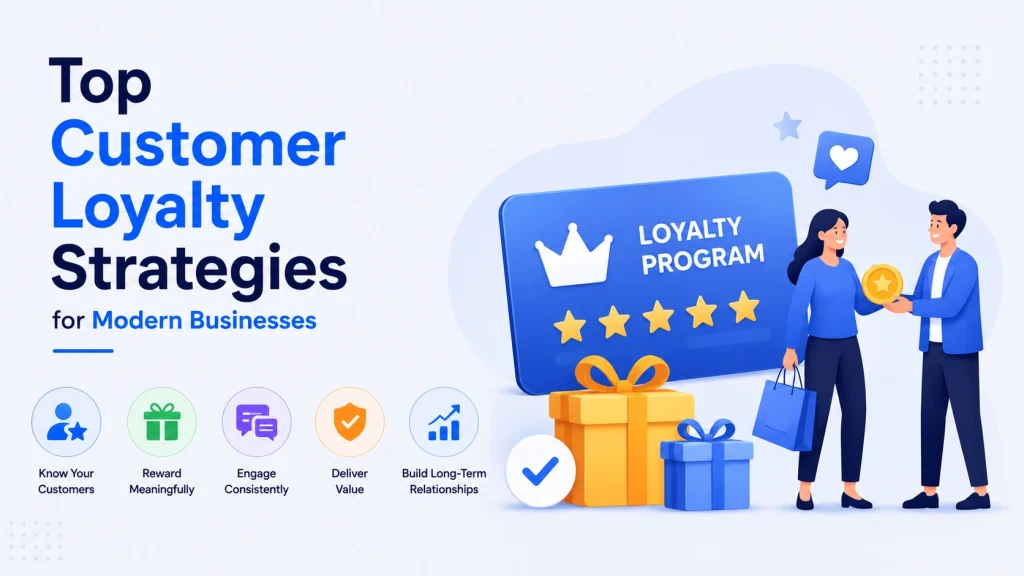
Customer loyalty strategies that actually move the needle now combine data-driven personalization, cross-channel messaging, and reward mechanics tied to repeat purchases and lifetime value. This post lays out seven high-impact tactics you can implement in 30, 60, and 90 days, with practical checklists, recommended tools like Klaviyo, Braze, and Gleantap, and 2-3 KPIs to measure success for each. Expect real examples, campaign cadences, and the common pitfalls that waste time and budget.
1. Tiered Loyalty Programs with Clear Earning and Redemption Paths
Key point: Tiered loyalty programs convert casual buyers into repeat customers by creating visible progress and increasing the perceived value of each purchase. Well designed tiers are one of the most effective customer loyalty strategies for raising purchase frequency and average order value without constant discounts.
Why tiers beat flat programs
Why it works: Tiers create a psychology of advancement. Customers do not just collect points; they chase status, exclusive benefits, and the cost of losing hard earned status reduces churn. Brands from Sephora to Starbucks show that status plus simple, tangible rewards builds both brand loyalty and emotional connection.
Step by step implementation checklist
- Define tiers and entry criteria: Keep 2 to 4 tiers; use purchase frequency or spend thresholds that map to real revenue bands.
- Set clear earning rules: Decide whether points accrue by spend, actions, or frequency and publish the math plainly.
- Map redemptions to meaningful value: Offer a mix of monetary rewards, experiential perks, and exclusives so redemptions feel worth the effort.
- Build onboarding and tier nudges: Launch a welcome flow that explains how to reach the next tier and automated nudges when a member is near promotion.
- Announce and measure: Launch via email and SMS, then compare member cohorts to a control group for the first 90 days.
Practical tradeoff: Simple rules increase adoption but limit precision. If you make tiers too coarse you will leave revenue on the table. If you make them too granular you will confuse customers and increase support costs. Start simple, iterate using cohort analytics, then add complexity only where it lifts retention or AOV.
- Recommended tools: Smile.io or Yotpo Loyalty for program mechanics, Gleantap for cross channel onboarding and tier nudges, and your CRM or CDP to join transactional and engagement data.
- Alternative stack: Klaviyo for email flows, Braze for complex omnichannel journeys when you need fine grained messaging control.
- KPIs to track: Repeat purchase rate by tier, average order value by tier, percentage of active members per tier.
Common pitfalls: Over rewarding low value behavior, burying the redemption mechanics, and failing to re engage dormant members in lower tiers. Avoid abstract rewards that do not increase purchase frequency.
Measure lift with matched cohorts. Compare members who reached Tier B with non members of similar value to isolate program impact on retention.
Quick benchmark: Aim for a 5 to 10 percent lift in repeat purchase rate among promoted members in the first 90 days. Small retention gains compound into meaningful lifetime value increases per Bain research.
Concrete example: Sephora Beauty Insider uses tiers to unlock exclusive events and early product access, driving habitual buying among high value customers. A local fitness chain can replicate this by giving Bronze members branded merchandise, Silver members quarterly private workshops, and Gold members early class booking.
Next consideration: Before adding more perks, validate that each new benefit increases frequency or retention enough to cover cost. If it does not, it is marketing noise not a loyalty asset.
2. Personalized Omnichannel Messaging using Platforms like Gleantap, Braze, and Klaviyo
Direct point: Coordinated, behaviorally driven messages across SMS, WhatsApp, push, and email produce far higher repeat purchase rates than siloed blasts – but only when identity, timing, and consent are enforced at the orchestration layer.
Implementation checklist
- Unify customer ID: consolidate CRM, POS, and app IDs into a single profile so the same event does not trigger duplicate messages.
- Prioritize three behavioral segments first: new customer welcome, dormant 30 to 90 days, VIPs with high purchase frequency.
- Map channel intent: assign each message type to the most effective channel – transactional and time sensitive to SMS or WhatsApp, rich content and lifecycle to email, in-app for product prompts.
- Build templates and cadence rules: create fallbacks so a user who opened email in 24 hours does not get the same offer on SMS immediately.
- Set consent and frequency logic in the platform: central preference center, channel level opt-outs, and throttling to prevent cross-channel fatigue.
- Test with holdouts: run a control group to measure incremental lift before rolling out broadly.
Tool judgment: Use Gleantap for SMS and WhatsApp automation when you need fast, operational win-back flows for local and retail verticals. Choose Braze when you need complex, stateful journeys and heavy experimentation. Use Klaviyo for ecommerce-first email flows and product recommendation personalization. Each tool carries a tradeoff – Braze is powerful but requires engineering resources and budget; Klaviyo is less effective for WhatsApp; Gleantap is practical for high-frequency SMS and conversational flows.
Practical limitation: Personalization only improves outcomes when fed by recent behavioral signals. If your data is stale or fragmented, hyper-personalized messages appear wrong and harm brand loyalty. Fix data hygiene and identity resolution before scaling microsegments.
Concrete example
Concrete Example: Golds Gym used Gleantap to run targeted reactivation flows combining SMS and WhatsApp for members who missed three scheduled visits. The program paired a timed message, a low friction offer, and a follow-up push in the app – the published case study shows measurable retention gains and clearer attribution for campaign ROI.
Measurement to run from day one: track channel-specific conversion rate, repeat purchase lift for targeted cohorts, and incremental lift versus holdout. Sample formula – Incremental repeat purchase lift = (Repeatratetarget – Repeatratecontrol) / Repeatratecontrol.
Key constraint: SMS drives fastest short term purchase lift but also highest risk of churn from overmessaging. Balance speed with long term customer satisfaction.
Key takeaway: Small improvements in personalized outreach compound. Invest first in clean identity and a three-segment playbook, then use a platform that matches your engineering bandwidth.
3. Referral and Advocacy Programs that Turn Customers into Acquisition Engines
Referral programs are acquisition tools disguised as loyalty initiatives. When done right they lower CAC and bring customers who already trust your brand, but they demand operational discipline: tracking, timely communication, and rewards that both motivate sharing and preserve margin.
Implementation checklist
- Decide the reward structure. Pick a double-sided incentive (referrer gets credit, referee gets discount) or experiential reward (early access, VIP invite) depending on margin and brand fit.
- Make sharing frictionless. Generate unique share links or one-click invites in the app, email, and SMS; expose progress in the user dashboard so participants can see earned rewards.
- Trigger asks around high-satisfaction moments. Send referral invites after a 5-star review, a successful customer success interaction, or a positive NPS response to increase conversion.
- Automate status updates. Notify referrers via SMS or email when a friend redeems an offer; use automation to deliver the reward immediately to avoid confusion.
- Protect margin and prevent fraud. Set reward caps, require purchase for reward eligibility, and flag suspicious patterns (multiple accounts from same device or IP).
Trade-off to accept: aggressive discounts accelerate growth but compress unit economics. If you lean on monetary rewards you must model payback time and cap exposure; if you push experiential rewards you gain brand value but may get lower short-term conversion.
KPIs and tools to measure impact
- Referral conversion rate: referred_customers / invites_sent. Track by channel (SMS vs email vs in-app share).
- CAC of referred vs paid channels: include reward cost amortized over expected LTV uplift.
- Retention lift of referred cohort: compare 30/90/365 day retention for referred customers versus a matched control.
- Share rate and viral coefficient: average invites per referrer and referral multiplier to see if the program is self-sustaining.
Recommended tools: ReferralCandy or Friendbuy for referral mechanics and tracking; Gleantap to automate reminder nudges and status messages over SMS/WhatsApp; Mixpanel or Amplitude to measure cohort retention and viral coefficient.
Concrete example: Dropbox used a double-sided reward early on — both parties received extra storage when the referral completed sign-up — which reduced CAC and created a viral loop. For a local example, a regional gym chain layered referral links into its member app and used Gleantap to send SMS updates when a referral converted; the immediate reward credit reduced support tickets and improved trust because members saw their reward arrive instantly.
Common mistake people make: they treat referrals as one-off marketing campaigns instead of a lifecycle feature. Referral asks should be embedded into the customer journey and tied to satisfaction signals; otherwise you pay to acquire low-engagement customers who churn quickly.
Key action: prioritize asking promoters. Use NPS or recent positive interactions as triggers.
If your referred customers are not retaining better than paid cohorts you are paying for volume, not quality. Stop increasing incentives and fix onboarding or product-market fit first.
4. Community and Experiential Loyalty such as Events, Workshops, and Local Meetups
Community-driven experiences create a different kind of customer loyalty — one that resists price switches because it is social and habitual rather than transactional. Events, workshops, and local meetups move customers from buyers to participants, and participants are easier to retain, to upsell, and to turn into advocates.
Implementation checklist for experience-first loyalty
- Define the experience and the outcome: pick education, skill-building, social connection, or VIP access and state the retention outcome you want (lower churn, higher AOV, referral uplift).
- Segment invitations: invite customers by behavior — frequent visitors, recent buyers, local radius, or lapsed VIPs — rather than blasting your whole list.
- Limit seats and price intelligently: scarcity raises perceived value; free for high-LTV members, low-fee for newcomers to qualify intent.
- Operationalize RSVP → attendance → follow-up: integrate Eventbrite/Meetup RSVPs with your CRM and use Gleantap for SMS/WhatsApp reminders and post-event sequences.
- Create repeatable content: run a 6-week workshop or monthly local meetup so community norms form and habit builds.
Practical trade-off: in-person meetups create stronger emotional bonds but cost time and money; virtual workshops scale cheaply but deliver weaker local habit formation. Choose a hybrid cadence — flagship in-person events quarterly, monthly virtual touchpoints — to balance cost with impact.
Tools and tactics that work in practice
- Registration and discovery: use Eventbrite or Meetup to capture RSVPs and surface events to local audiences.
- Community platforms: run ongoing conversation and content on Circle, Slack, Discord, or a private Facebook Group for members.
- Messaging and automation: use Gleantap to send RSVP confirmations, day-before reminders, and 24–48 hour post-event offers or surveys.
- Content repurposing: record workshops and convert into email drip and in-app micro-content to engage no-shows and extend reach.
Concrete example: A regional gym chain ran a series of weekend skills workshops for small groups and tracked attendees in their CRM. They used Gleantap SMS reminders to reduce no-shows and followed up with a targeted 7-day trial upgrade offer; attendees converted at twice the rate of non-attendees and showed lower churn at the 90-day mark.
Measurement and KPIs to tie events to revenue: track event attendance rate, 30/60/90-day post-event purchase lift, delta in churn for attendees vs matched control, referral rate from attendees, and community engagement metrics such as weekly active members and post counts.
| Metric | Why it matters |
| Event attendance rate | Shows event marketing effectiveness and filters engaged customers |
| Post-event purchase lift (30/60/90 days) | Direct link between experience and revenue |
| Churn delta (attendees vs control) | Measures long-term retention impact |
What people get wrong: running one-off promotional events that feel like sales pitches damages trust. Real community loyalty requires recurring value and operational follow-through — consistent scheduling, meaningful content, and visible member recognition — otherwise events are costly one-offs with no measurable retention gain.
Quick operational rule: send an RSVP confirmation, a reminder 48 hours before, a day-of message, and a personalized follow-up within 24–48 hours containing a short survey and a narrow next-step offer. This sequence turns attendance into measurable behavior change.
Final takeaway: community and experiential loyalty win slowly but stick. Use tight measurement, segment invitations, and a repeatable cadence — treat events as product features that feed your CRM and loyalty programs rather than as one-off marketing stunts.
5. Data-Driven Retention: Predictive Churn Models and Automated Win-Back Flows
Key point: Predictive churn models only earn their keep when they reduce wasted outreach and target offers that match the reason a customer is slipping away. A model that spits out a score without a mapped intervention plan creates noise, not retention.
Implementation checklist
- Collect the right signals: product usage, visit cadence, purchase recency and frequency, support contacts, NPS and refund indicators.
- Choose your approach: standard churn classifier for volume control or uplift models when you want to predict who will respond to incentives rather than who will churn.
- Create tiered win-back journeys: soft touch (content or tips), value add (personalized offer), last resort (discount) – sequence by predicted risk and predicted uplift.
- Holdout and measure: always reserve 10-20 percent of the high-risk cohort as a control to measure true incremental impact.
- Operationalize: wire model outputs into your messaging platform (Gleantap, Braze, Klaviyo), set frequency caps, and centralize suppression lists and consent.
Practical consideration: There is a tradeoff between recall and cost – casting a wide net catches more at-risk customers but raises incentive spend. Use predicted uplift to prioritize customers who are both likely to churn and likely to respond to an offer.
Recommended tools and measurement
- Analytics and modeling: Amplitude, Mixpanel, or a data warehouse with Looker/Mode for model monitoring.
- Orchestration and delivery: Gleantap for SMS and WhatsApp flows, Braze for cross-channel journeys, Klaviyo for ecommerce email-first flows.
- Experimentation and dashboards: Use a BI tool to track model precision/recall and uplift; keep dashboards showing reactivation rate, cost per reactivated customer, and long-term retention delta.
| Model type | When to use | Practical tradeoff |
| Churn classifier | If you need to limit outreach volume quickly | Higher recall, lower clarity on incentive effectiveness |
| Uplift model | When incentives are costly and you must target who will respond | Harder to train, higher ROI if implemented well |
| Survival analysis | When you want timing predictions – when a customer will likely churn | Good for scheduling interventions, needs time-to-event data |
Concrete example: A mid-market fitness chain used Mixpanel to identify members who missed four classes in 30 days and combined that with support ticket data. They ran an uplift model to find members likely to rebook with a free PT session rather than a blanket 20 percent discount. By holding out a control group and executing the win-back via Gleantap SMS flows, they cut cost per reactivation in half while increasing three-month retention of the targeted cohort.
Common mistake: sending the same discount to everyone flagged at risk. That lowers margin and trains customers to churn for deals. Targeted, tiered offers save cost and protect pricing power.
Quick metric checklist: track model precision, uplift or reactivation rate, and cost per reactivated customer. Always compare against the holdout control for true incremental impact.
Judgment: Start simple with a classifier and a two-step win-back (helpful content then personalized offer). Move to uplift modeling once you have repeat experiments and at least several thousand labeled outcomes. Many teams overcomplicate modeling before they have clean data pipelines – fix data quality first.
Next consideration: Build the holdout now. Without a control you will never know if your model, the message, or plain chance moved the needle. For a practical start, link model outputs to a Gleantap or Braze flow and test one incentive type with a measured holdout.
6. Gamification and Micro-Incentives to Increase Engagement
Direct point: Small, frequent rewards change behavior faster than big, occasional discounts. Micro-incentives and simple game mechanics convert passive customers into repeat actors by making the desired action obvious, visible, and immediately rewarding.
Design patterns, trade-offs, and limits
Key trade-off: Micro-incentives drive short-term engagement but can erode margin or brand perception if poorly designed. Use them when the action you buy – a visit, a referral, a review, a social share – has measurable downstream value that exceeds the cost of the reward.
- Define the atomic action: Pick one or two measurable behaviors (visit, purchase, review, referral) and optimize for frequency rather than everything at once.
- Use variable rewards: Replace predictable payouts with intermittent, tiered rewards to sustain interest without linear cost growth.
- Make progress visible: Streaks, progress bars, and badges must be surfaced in your app, email, or SMS so customers feel the momentum.
- Control economics: Cap redemptions, set point expirations, and run limited-time challenges to concentrate activity and protect margin.
- Social leverage: Leaderboards and shareable achievements increase organic reach but require moderation to keep interactions positive.
Practical limitation: If your core product experience is weak, gamification amplifies disappointment. Gamification works as an accelerant, not as a substitute for product fit or customer service.
Implementation checklist
- Map value paths: Quantify LTV lift from each desired action so you know how much to spend on a micro-reward.
- Segment players: Target high-potential cohorts (new customers, near-churn, occasional buyers) with different reward curves.
- Build visible mechanics: Implement streaks, badges, point balances, and challenge timers in the customer touchpoints you control.
- Orchestrate nudges: Use SMS, WhatsApp, and in-app notifications to remind customers of progress and expiring rewards via tools like Gleantap.
- Test and measure: Run randomized holdouts to isolate incremental impact before scaling.
| KPI | Why it matters |
| Frequency of desired actions | Shows whether gamification actually changes behavior rather than just increasing clicks |
| Retention lift (cohort vs control) | Captures sustainable impact on repeat customers and LTV |
| Cost per incremental action | Ensures rewards are affordable and the program is scalable |
| Redemption rate and point breakage | Helps manage liability and predict reward costs |
Concrete example: Duolingo maintains daily activity with streaks and small XP rewards; notifications nudge users back after a single missed day. A local boutique fitness chain can copy that pattern on a smaller scale: run 7-day attendance streak challenges, award a free guest pass after a 14-day streak, and send WhatsApp or SMS nudges through Gleantap to re-engage members who break their streaks.
Judgment: Gamification delivers the best ROI when rewards map directly to business value, progress is visible across channels, and programs are routinely pruned. Throwing badges at everyone without tying them to revenue or behavior is a common, expensive mistake.
Start small: run two 4-week experiments—one that uses daily micro-rewards for a near-churn cohort and one that uses a weekend challenge for occasional buyers. Compare cohort retention and cost per reactivated customer before rolling out.
Next consideration: If you decide to run gamified incentives, prepare a control group and a clear accounting rule for reward expense so you can prove the lift instead of guessing it.
7. Seamless Post-Purchase Experience and Proactive Customer Success
Key point: the moment after purchase is decisively more valuable than another acquisition touchpoint — it is where you convert a transaction into ongoing customer value or where you create the friction that causes churn.
What to own: confirmation, fulfillment transparency, first-use onboarding, milestone check-ins, a painless returns/warranty path, and proactive outreach when signals show trouble. Treat these touchpoints as conversion funnels — each one has measurable drop-off and can be optimized like acquisition campaigns.
Implementation checklist
- Immediate confirmation (0–2 minutes): send an order receipt that includes delivery window, tracking, and a single CTA to manage the order. Use SMS for high-open confirmation and email for the details — Gleantap is suitable for the SMS leg and Klaviyo or your transactional email provider for receipts.
- Onboarding series (0–7 days): 3-message sequence timed to product first-use: how-to, tips, and an invitation to a help channel. Segment by product complexity and value to avoid over-messaging.
- Milestone check-ins (7–90 days): trigger messages at meaningful product milestones (first use, 30-day review, refill reminder). Link these to product analytics so triggers fire on behavior, not calendar guesses.
- Proactive support escalation: flag orders with delivery delays, returns, or repeated help tickets for human outreach within a defined SLA. Use Zendesk or Intercom for ticket routing and Gleantap for immediate SMS nudges.
- Feedback + operational loop: collect NPS or micro-feedback via Delighted after critical milestones and feed responses into a workflow that creates ops tickets for real fixes. Do not let feedback sit in a dashboard.
KPIs to track: time to first value (days until customer completes a defined first-use action), post-purchase repeat rate (30/60/90-day), and time-to-resolution on critical post-purchase issues. Measure lift as cohort delta versus customers who did not receive the post-purchase sequence.
- Trade-off — automation vs human touch: automate confirmations and milestone nudges; reserve human outreach for high-value or emotionally charged failures (lost shipment, complex installs). Over-automating reduces empathy; over-humanizing is expensive.
- Data requirement: this approach needs event-level signals (fulfillment, product usage, support tickets). If your data is fragmented, prioritize synchronizing fulfillment and CRM first — otherwise triggers will misfire.
- Frequency risk: frequent check-ins increase purchase frequency but can damage trust if messages ignore channel preferences. Respect opt-outs and preference centres.
Concrete example: Warby Parker built its reputation on low-friction returns and clear post-purchase instructions; customers get tracking, styling tips, and an easy returns label that makes the next purchase feel low-risk.
Judgment: many teams treat post-purchase as a manual ops burden instead of a structured retention channel. If you want higher customer lifetime value, instrument the post-purchase flow as you would a marketing funnel — with segmentation, A/B tests, and ROI on offers — not as ad-hoc firefighting.
Do this first: map the customer journey from purchase to 90 days, add event-based triggers for the top three failure points, and automate the low-complexity messages before hiring more support staff.
Why it matters: a small lift in retention produces outsized profit gains — see Bain research on retention impact Loyalty in a Digital Age. Investing a little in post-purchase experience pays back more than the same spend on additional top-of-funnel acquisition.
Frequently Asked Questions
Straight answer first: the decisions you make about budget, channel mix, measurement, and privacy determine whether customer loyalty strategies pay off or become a recurring cost sink. Below are compact, practical answers you can act on immediately.
- How much should a small business budget to launch a tiered loyalty program? A minimum viable program using an out-of-the-box provider like Smile.io plus messaging through a platform such as Gleantap can be launched for under $2,000 (one-time setup plus an initial reward pool). Expect ongoing costs for reward liability, messaging credits, and a small monthly SaaS fee; budget 5–10% of projected loyalty-driven revenue for the first year and adjust after you measure payback.
- Which channel delivers the fastest repeat purchase lift? SMS typically produces the fastest short-term lift because of open and click velocity, but that lift is tactical. Combine SMS with targeted email and in-app messaging to avoid channel fatigue and improve long-term repeat purchase rate.
- How should I measure ROI for a loyalty program in the first six months? Use an incremental approach: run a matched control cohort, measure incremental repeat purchase rate and average order value, and calculate payback on rewards and incremental marketing spend. Track cohort retention curves and compute a simple payback formula: incremental gross margin from members ÷ (setup + reward costs + messaging costs).
- When is personalization harmful to loyalty efforts? Personalization fails when based on stale or inferred data that surprises customers, or when it crosses privacy expectations. If your behavioral signals are older than 30 days or you cannot honor channel preferences, scale back personalization until data is reliable.
- Can small local businesses use the same strategies as large brands? Yes — scaled-down mechanics work: simple referral incentives, a basic tier or punch-card, and local events produce measurable retention without enterprise tooling. Focus on execution and measurement rather than feature parity with national brands.
- What quick wins produce measurable retention impact within 30 days? Implement cart-abandonment SMS, a two-message welcome series for new members, and a targeted 30-day win-back coupon for dormant customers. Each is fast to deploy and easy to measure with short-term conversion KPIs.
- How should customer privacy and consent be managed across channels? Obtain explicit consent per channel, centralize preference management, and document opt-in timestamps. Ensure processes align with TCPA for US SMS and GDPR for EU customers, and surface easy preference updates in every message.
Practical trade-off: aggressive incentives accelerate retention but compress margin and train customers to expect discounts. If you use steep discounts early, plan a phased escalation to non-monetary benefits (experiences, exclusives) to preserve margin while keeping engagement.
Concrete Example: A regional fast-casual chain rolled out a simple membership tier and combined it with cart-abandonment SMS. They used a small reward credit (equivalent to 10% of an average order) and A/B tested messages against a control group. Within 60 days they measured a 12% lift in repeat visits among members and a two-month payback on the initial reward budget.
Measurement nuance most teams miss: single-channel lift looks good, but you must measure net-lift across channels and cohorts. If email wins customers that would have bought anyway after an SMS nudge, your apparent ROI is inflated. Always include a holdout group and measure purchase frequency over at least two repeat cycles.
Where to read more and the one operational step to take now
If you want to tie loyalty metrics to growth frameworks, read the HBR piece on Net Promoter and growth for context on measurement and operationalizing feedback.
Key takeaway: Start with one high-impact channel (usually SMS), use a matched control group to measure incremental lift, and commit a fixed reward budget with clear payback criteria before scaling other loyalty mechanics.
Next actions you can implement this week: 1) Create a 30-day holdout cohort (5–10% of customers). 2) Launch cart-abandonment SMS plus a two-message welcome flow. 3) Track repeat purchase rate, incremental gross margin, and payback period for those cohorts and decide whether to scale rewards or shift to experiential benefits.

Ready to Run Successful Marketing Campaigns and Grow Your Business?
Gleantap helps you unify customer data, track behavior patterns, and automate personalized campaigns, so you can increase repeat purchases and grow your business.
Ready to Run Successful Marketing Campaigns and Grow Your Business?
Gleantap helps you unify customer data, track behavior patterns, and automate personalized campaigns, so you can increase repeat purchases and grow your business.