
 Divya Ghughatyal
Your business already has a personality. It shows up in how you price or how you respond to that bizarre customer email at 11 p.m. But most people never see that side. They see a logo and a website that feel like they were pulled from the same drawer as everyone else’s. That gap between who you are and what people get is where small business branding quietly breaks.
That is exactly what we are going to fix here. We will show you how to build a strong brand identity that is alive and unmistakably yours. And yes, we will back it up with real examples that prove a small business can leave a mark that is bigger than its size.
Why Is Small Business Branding Important For Long-Term Growth: 5 Key Benefits
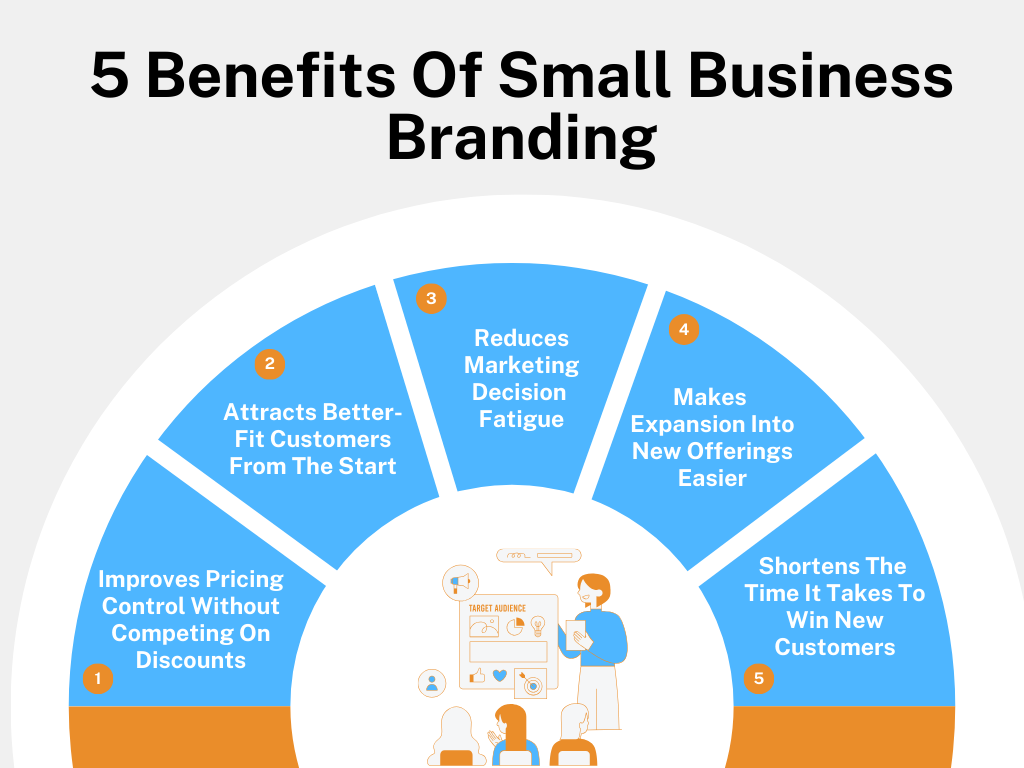
If you think consistent branding is just about looking good, these 5 benefits will change how you see it.
1. Improves Pricing Control Without Competing On Discounts
Your brand is the reason someone will pay $50 instead of $30. It is the little details people notice without thinking – the way your packaging feels, the tone in your messages, the small signature touches no one else does.
When brand image is clear, you don’t have to constantly fight over price. You don’t flail around trying to match competitors or post endless discounts. People understand your core values in a competitive market before they even reach for their wallets.
2. Attracts Better-Fit Customers From The Start
Not every customer is a good customer. Some drain time. Some push back on boundaries. And most small businesses assume this is just part of the job. It is not. Branding quietly decides who feels welcome and who feels out of place. Words, visuals, positioning – they all tell people whether this business is for them or not.
When that clear brand identity, the right people hang on every word, and the wrong ones move on. That means you will have fewer refunds and fewer projects that feel like a bad idea halfway through. Growth is smoother because your customer base actually supports your business.
3. Reduces Marketing Decision Fatigue
If you don’t have a strong brand positioning, it would be like going back to square one for every marketing decision. What should this post sound like? What should this ad look like? Should we try this platform or that one? The output ends up all over the place because of constant assumptions.
A strong brand personality gives you a built-in decision filter. You know your brand vision. You know what your business stands for. You know what is off-limits. With that brand consistency and clarity, everyday marketing becomes simpler.
Writing posts, planning campaigns, making calls – it all moves fast. Your team makes choices that match your brand without having to run everything by you.
4. Makes Expansion Into New Offerings Easier
Business growth almost always means adding something new – a new service, a new product, a new audience, a new market. Without a strong brand, every expansion is risky because customers don’t know what to expect from you beyond what they already bought.
A great brand strategy creates a transferable reputation. When people trust your brand, they are more willing to give new things a shot because they already know the experience will be familiar.
You can introduce new lines faster and enter adjacent markets with less resistance. This reduces the cost and time required to grow while increasing the success rate of new initiatives.
5. Shortens The Time It Takes To Win New Customers
When your brand is weak, customers take longer to decide. They read more. They compare more. They ask more. They hesitate more. Every sale takes more time and more effort. And that matters, because about 81% of consumers say brand trust is a deciding factor or a deal-breaker when they choose who to buy from.
A strong brand visibility does the opposite of all that confusion. People understand what you do and what it is like to work with you almost instantly. That speeds up trust. Sales conversations become simpler. Decisions happen faster. You close more deals with less friction, which directly accelerates long-term growth without increasing workload.
8 Small Business Branding Strategies That Make People Remember You
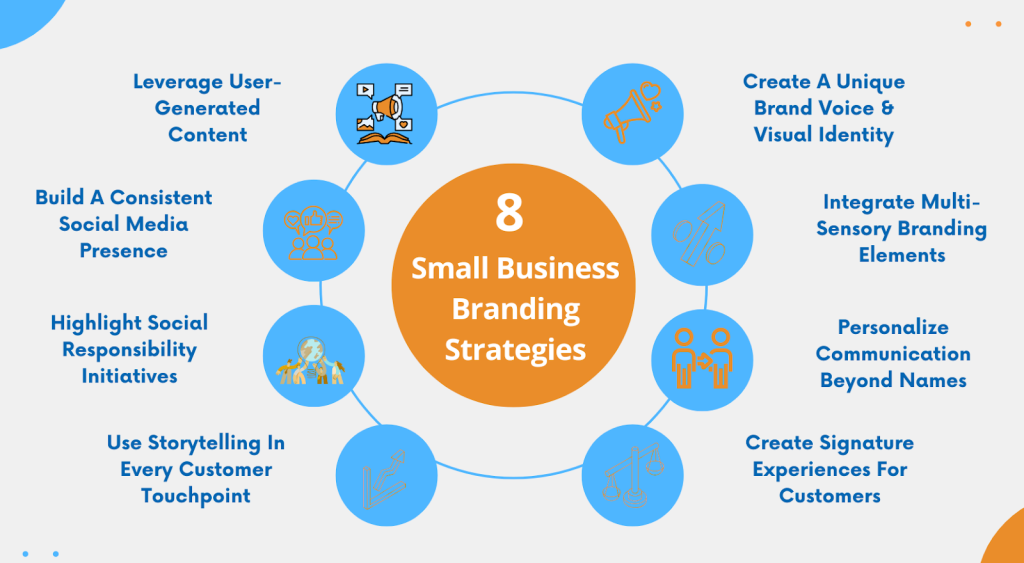
Being “good” at what you do is not enough if people forget you 5 minutes later. Here are 8 strong brand strategies that make small brands memorable.
1. Create A Unique Brand Voice & A Cohesive Visual Identity
Many small businesses think they “have” a brand voice because they chose a tone like friendly or professional. That is not a voice. A successful brand voice is the way you talk and write so consistently that people would recognize you even without your logo.
Same with visual branding. About 55% of a brand’s first impression is based on visuals, so having just a logo is not enough if the rest of your brand looks like stock templates.
Do This:
- Write 5 example sentences that sound exactly like your business and 5 that never should. Use them as your voice filter.
- Choose one headline font and one body font with one accent style and use them across all platforms and marketing materials.
- Define your layout rules – spacing, alignment, button style. Save them in a shared file.
- Rebuild your homepage, email templates, product descriptions, and social bios to match these rules exactly – line by line.
2. Integrate Multi-Sensory Branding Elements
Most branding stops at how things look and what you say. But people remember brands because they keep noticing the same things over and over. The more senses your brand consistently activates, the easier it is for people to recognize it. You have to decide what people notice when they deal with your business – not just what your logo looks like.
Do This:
- Choose one consistent audio element, like a voicemail script style or video intro sound, and standardize it.
- Select one physical or tactile element – packaging style, paper type, material finish, additional branding assets – and use it everywhere.
- Create one recurring layout pattern or design motif and apply it across your website and ads.
- Train your team to use these same elements in every customer-facing interaction.
3. Personalize Communication Beyond Names
Using someone’s first name is the bare minimum. Real personalization is when your messages change based on what someone actually did – what they bought, what they clicked, what they ignored, how long they have been around, what they care about.
A first-time buyer gets guidance. A repeat customer gets straight-to-the-point offers. A power user gets insider language. And people notice that immediately. It shows that your business is listening and adjusting, not just shouting the same thing at everyone.
Do This:
- Send messages based on behavior triggers – first purchase, abandoned cart, repeat order, inactivity window.
- Reference specific past actions – “You downloaded the guide on X” or “You bought Y last month”.
- Change email and ad copy based on category interest instead of generic product grids.
- Use different messaging frameworks for new and loyal customers with separate templates.
4. Create Signature Experiences For Customers
A signature experience is that one specific thing people associate with you. No, it is not a mission statement or a brand value. It is an actual thing you do on purpose – every single time someone deals with your business. That single moment is what turns a normal checkout or call into something people actually remember and talk about.
Do This:
- Build a fixed onboarding sequence with exact steps and timing – day 0, day 3, day 7.
- Add a structured surprise at a specific milestone – third order, 30-day mark, first renewal.
- Create a visible progress system – status tiers, streak emails, progress summaries.
- Run a recurring branded ritual – a monthly insider drop, structured community update, scheduled private offer.
5. Use Storytelling In Every Customer Touchpoint
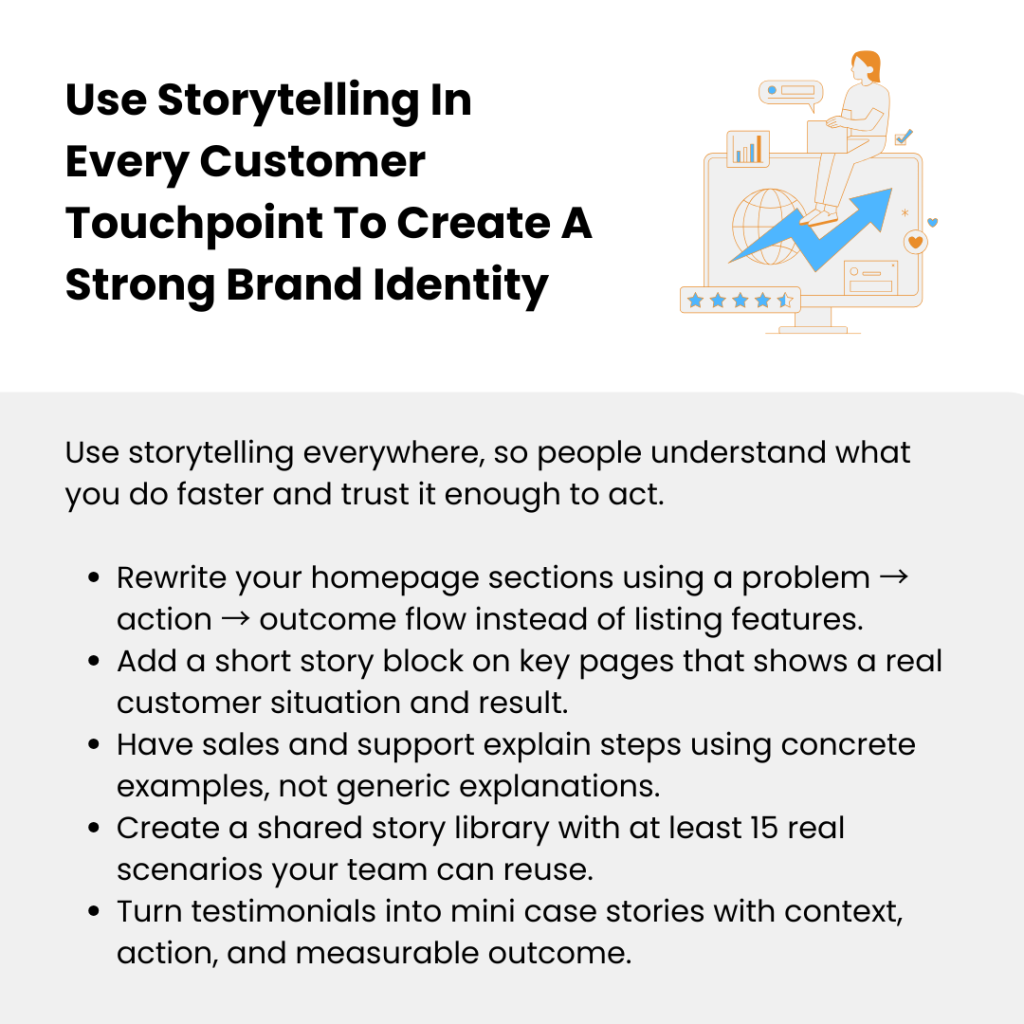
Most businesses only use the brand story once, usually on the About page. And then switch back to feature lists everywhere else. That creates a gap between how your business actually works and how it communicates.
You have to turn every customer interaction into a short and useful narrative. Storytelling can boost conversion rates by 30% because it makes information easier to process and easier to trust.
Do This:
- Rewrite your homepage sections using problem → action → outcome structure instead of features and benefits.
- Add one short story block to every major page that explains a real customer scenario or business decision.
- Train your sales and support teams to explain processes using examples instead of explanations.
- Build a story library with at least 15 real scenarios your team can use in marketing and sales.
6. Highlight Social Responsibility Initiatives
You can’t just say “we care about the environment” or “we support the community” and walk away. People remember brands that actually do something and show exactly what happened. Pick a clear and measurable way your business makes an impact, and make it visible.
Do This:
- Choose one primary initiative – local hiring, carbon reduction, donations, accessibility.
- Publish quarterly updates with numbers – trees planted, hours volunteered, funds donated, accessibility upgrades completed.
- Put a small but visible marker on your website and packaging that links to a detailed impact page.
- Partner with one local organization and show that partnership in communications – checkout messages, email signatures, packaging inserts.
7. Build A Consistent Social Media Presence
Posting without a plan just overloads your feed. Switching your tone all over the place makes people unsure what you actually are. Instead, structure your content such that people can tell it is you even before your name shows up. This puts everything into place on social media without you having to explain it every time.
Do This:
- Define 3–4 content pillars and rotate them on a fixed weekly schedule.
- Use a recurring post format. Same hook structure. Same caption length pattern. Same layout template.
- Use standardized brand visual elements to increase your reach on YouTube and other socials by making both algorithms and viewers recognize your content instantly.
- Post on fixed days and times so your target audience comes to expect your content.
8. Leverage User-Generated Content
Your best brand marketing is whatever your customers are already doing for you – but it only works if you actually collect it and show it off on purpose. Random reposts don’t create memory. Systematic collection and presentation do. User-generated content beats brand talk any day because it shows real outcomes with real emotional connection.
Do This:
- Create a clear branded hashtag and explain exactly how customers can share content.
- Feature one user story or example on a fixed schedule – weekly highlight, monthly case post.
- Build a dedicated space on your website and social media platforms for customer feedback and content.
- Reward participation with clear incentives – discount tiers, feature spots, loyalty points. Link them to participation volume.
4 Common Small Business Branding Mistakes You Should Fix Early

These 4 common branding mistakes quietly hold small businesses back early, and fixing them now saves a lot of cleanup later.
1. Failing To Document Brand Guidelines & Train Your Team
Most small business owners think their brand lives in their head, and that everyone else will just “know it.” The problem is they don’t. In fact, 56% of organizations say their internal processes break down simply because nothing is clearly documented.
That is how your brand ends up sounding like 5 different companies at once. Social posts and emails start looking completely different. One person writes like a cheerleader, another like a textbook. And suddenly your brand is all over the place.
How To Fix: Write down the rules. Not a 50-page PDF – just a clear guide covering voice, tone, colors, fonts, and basic visuals. Include examples as well. Give it to every team member and make sure anyone creating content uses it.
2. Relying Solely On Trends Instead Of Core Identity
Jumping on trends is tempting. TikTok dances, Instagram templates, viral copy formats – they are everywhere. But if you follow trends without tying them to your actual brand, people remember the trend, not you. Target customers might click, but they won’t connect the dots to your business.
How To Fix: Stick to your core corporate identity first. Define your voice and style. Then add trends on top only when they fit. If a trend looks forced or off-brand, skip it. You become a memorable brand not by being popular this week but by being recognizable every week. To keep everything aligned and track what is actually working, hire SEO and digital marketing experts to sync your branding with performance data and trace results back to real growth.
3. Neglecting Offline Touchpoints Like Packaging & Signage
Sure, online content is great, but offline moments stay in people’s minds longer. If your packaging is bland or your signage doesn’t match, every in-person interaction is wasted. Those small details can make someone remember you weeks later if they are done right.
How To Fix: Treat every offline touchpoint like a billboard for your brand. Standardize colors and brand messaging. Add small but repeatable brand elements—like a signature insert or label style. Offline branding should echo your online presence for an unforgettable experience.
4. Not Updating Branding When Products Or Services Evolve
Your business grows, but your own brand usually doesn’t. New products or services appear, but branding ideas stay in the old world. And that confuses customers. They can’t tell what is new or why they should stick around.
How To Fix: Review your branding efforts whenever you launch something new. Update visuals and messaging to match new offerings. Let customers see the connection between your old and new products clearly.
3 Small Business Branding Examples You Can Model Your Approach After
Some successful small businesses just get branding right in ways you can’t ignore. These 3 examples show exactly what they are doing, so you can use the same approach.
1. Beardbrand
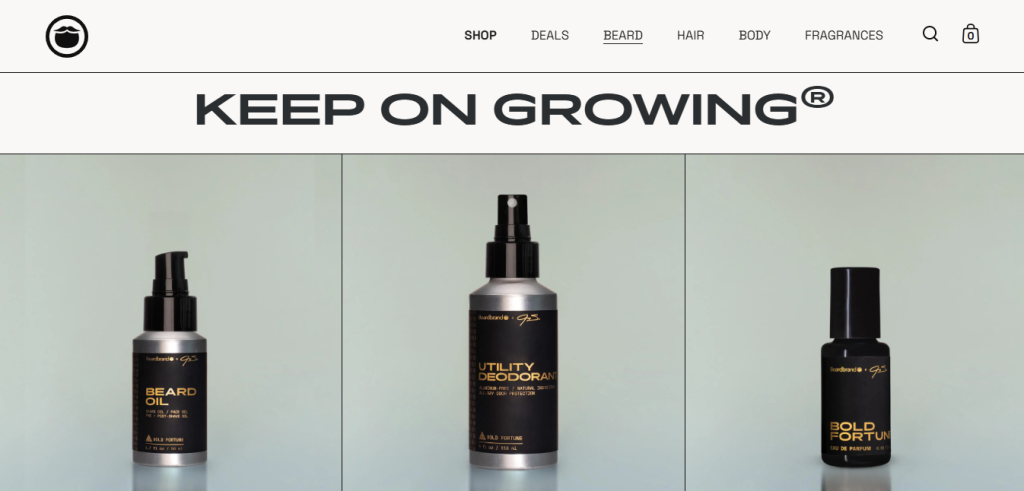
Beardbrand is one of the cleanest examples of small business branding done with discipline. They didn’t start by selling beard oil. They started by defining a type of man they wanted to serve and then built everything around that identity.
They controlled their brand identity by owning their education. Rather than relying on ads, they built a massive library of grooming content and lifestyle guidance that made customers trust them before ever buying a product. Their YouTube channel alone became a brand asset.
They also maintained a strict visual system – muted tones, editorial-style photography, long-form copy. This made them recognizable even without their logo. Pricing, packaging, messaging, and even product naming were all matched to the same core identity.
This worked because Beardbrand never tried to appeal to everyone. They built a brand that focused on one specific mindset and then reinforced it everywhere – content, product design, customer support, and community. That clarity turned customers into repeat buyers and brand advocates without relying on discounts or trend-driven marketing.
2. IceCartel

IceCartel took the opposite route and built a brand rooted in visibility and digital dominance. Their branding strategy centers around being first, bold, and everywhere in their niche. They positioned themselves as the fastest way to get iced-out chains that look expensive without the wait or the gatekeeping.
Their content is structured around high-contrast visuals, fast cuts, price callouts, and transformation clips that show the jewelry in motion. They use aggressive on-screen branding and consistent messaging hooks so their content is recognizable even without audio.
Their branding system extends into influencer seeding – chains on rappers, TikTok creators, and street-style shoots. IceCartel also built trust at scale through volume-based proof. Thousands of customer photos, order fulfillment videos, packaging clips, and influencer partnerships – all fed back into their brand narrative of speed and accessibility.
3. Re Cost Seg
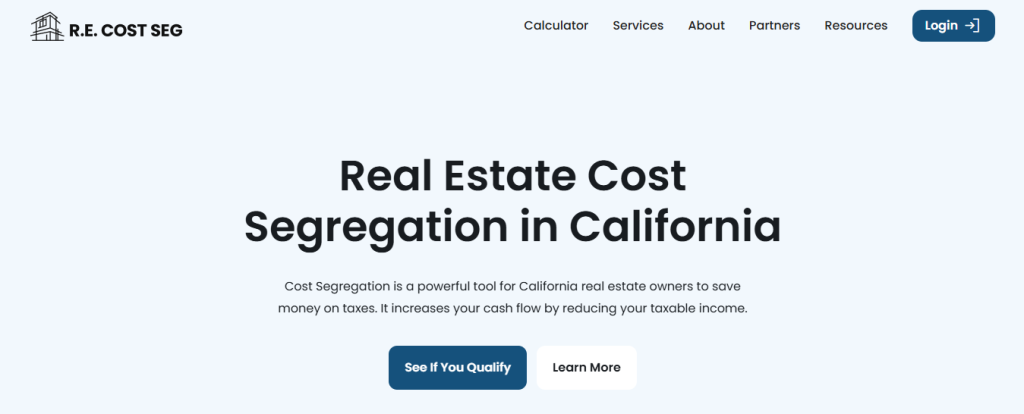
Re Cost Seg builds branding through clarity and authority in a highly technical niche. Their site architecture is structured by state and service category, which positions them as a systematic and nationwide operator rather than a random consultancy.
They use calculators and compliance-focused language to reduce perceived complexity and risk. Their branding relies on structured layouts and predictable page templates that show reliability. Instead of flashy visuals, they use trust signals like certifications and step-by-step explanations of cost segregation outcomes.
Their brand is built around being the most straightforward and no-nonsense option in a confusing space – and that clarity is their differentiator. This makes them recognizable as a professional and compliance-driven firm and shortens sales cycles by answering objections before a prospect ever schedules a call.
Conclusion
Small business branding is not a design project you “finish.” It is a business decision you make every day. So, stop trying to look like a brand. Start acting like one. And don’t wait until your business is “bigger” to take this seriously. An effective brand strategy has to grow with you. You can’t just tack it on later.
That is exactly the mindset we brought into building Gleantap. It is a unified system where your customer data, messaging, and engagement are in one place so you can nurture brand recognition and customer loyalty.
With Gleantap, you don’t have to assume which channel your customers prefer. You reach them in real time on the exact platforms they use, with automated journeys that move people from first awareness to repeat business without losing your voice in the process.
You get unified customer profiles, behavior-driven automation, AI-powered two-way conversations, and tools that help you monitor reviews and retention – all under one roof.
Book a demo or try it for free and see how it feels in action.
Author Bio:
Burkhard Berger is the founder of Novum™. He helps innovative B2B companies implement modern SEO strategies to scale their organic traffic to 1,000,000+ visitors per month. Curious about what your true traffic potential is?
- Author picture: Here
- Gravatar: [email protected]



Ready to Run Successful Marketing Campaigns and Grow Your Business?
Gleantap helps you unify customer data, track behavior patterns, and automate personalized campaigns, so you can increase repeat purchases and grow your business.
Ready to Run Successful Marketing Campaigns and Grow Your Business?
Gleantap helps you unify customer data, track behavior patterns, and automate personalized campaigns, so you can increase repeat purchases and grow your business.