
 Divya Ghughatyal
Most loyalty schemes are discount programs wearing a badge. They shave margin off purchases that would have happened anyway, and the reporting still looks healthy because enrollment keeps climbing. A behavior-based retail loyalty program works differently: it maps observable customer actions, a second purchase inside 30 days, a store visit, a referral that converts, to rewards that are earned rather than handed out.
This guide covers the ten decisions that determine whether the program produces incremental revenue or quietly leaks margin: what to measure, which behaviors to instrument, how to structure rewards, how to automate delivery, and how to govern it at scale.
1. Set objectives and KPIs before anything else
Pick one outcome for the next 90 days, repeat purchase rate, average order value, or churn among high-value customers, and let every design decision serve it. Define success in dollar terms, name an analytics owner, and set a weekly reporting cadence for the first 12 weeks.
| KPI | Definition | Example 90-day target |
| Repeat purchase rate | Customers with 2+ orders in 90 days ÷ customers with 1+ order | 18% → 21% |
| Average order value | Member revenue ÷ member orders | +10% |
| Active engagement rate | Members with an earn or redeem event ÷ total members | 40% active in 90 days |
| Incremental revenue | Revenue uplift measured against a holdout | 10% lift on targeted campaigns |
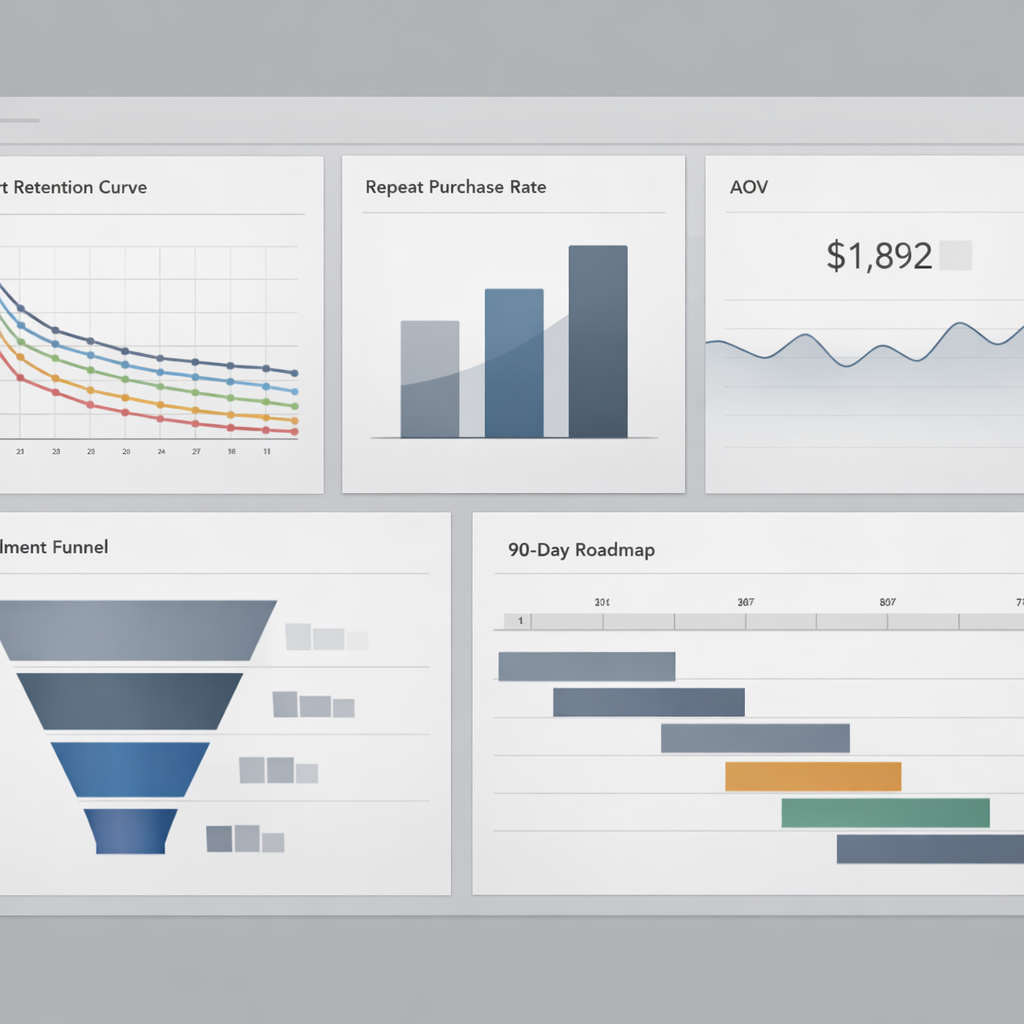
Customer lifetime value and enrollment rate belong here too, but treat enrollment carefully. It looks good on a slide and tells you almost nothing, 60% enrollment with 8% active engagement is a liability. Build a baseline cohort before launch and reserve a randomized holdout for anything you intend to scale, or you cannot separate seasonality from program impact.
One mid-market apparel retailer targeted a 15% increase in repeat purchases, ran a 30-day double-points welcome window plus a post-purchase cross-sell automation, and measured a 12% lift in repeat purchases and 7% in AOV against a matched cohort. Short of target, but real, and defensible in a budget meeting.
Every KPI needs a measurement method and a named owner. If you cannot say who runs the weekly check and where the number comes from, cut scope until you can.
2. Instrument the behaviors that actually move revenue
Start with a short list of observable actions tied to repeat purchase, higher AOV, or retail customer retention: second purchase within 30 days, repeat category buys, store visits, high-value orders, referrals, and abandoned carts. Pick signals that are actionable, measurable with systems you already run, and tied to a specific reward or message. If a signal needs a six-week engineering project to become reliable, it does not belong in your pilot.
Most of what you need already exists. POS exports cover revenue events and SKU-level AOV. E-commerce webhooks give you order_paid, checkout_abandoned, and product_viewed. Loyalty card scans handle in-store attribution if the ID matches a profile. Wi-Fi footfall is secondary at best, too variable to trigger rewards on.
| Event | Trigger condition | Downstream action |
| order_paid | Payment captured | Grant points, update RFM, send points summary |
| second_purchase_30d | 2nd order within 30 days of first | Auto-award bonus, send personalized cross-sell |
| store_visit | Loyalty scan or app check-in at POS | Increment punch, fire reward at threshold |
| abandoned_cart | Checkout started, not completed in 2 hours | Start recovery workflow; conditional points above threshold |
| referral_sent | Customer shares link or code | Log event, award on conversion |
Cross-channel identity is the linchpin. If in-store scans cannot be matched to an email or phone number, automation misfires and rewards land on the wrong profiles. One retailer solved this by collecting phone number at both POS and online checkout, unglamorous, and it unlocked everything downstream.
Begin with four to six high-signal events, cleanly instrumented. Purchase and cart events need near-real-time ingestion, or time-sensitive rewards arrive after the moment has passed.
3. Choose reward mechanics that change behavior
Most customer loyalty programs in retail default to a flat discount because it is easy to explain. It is also the mechanic most likely to pay customers for what they were going to do anyway. Design rewards that are earned by accelerating or changing a measurable behavior instead.
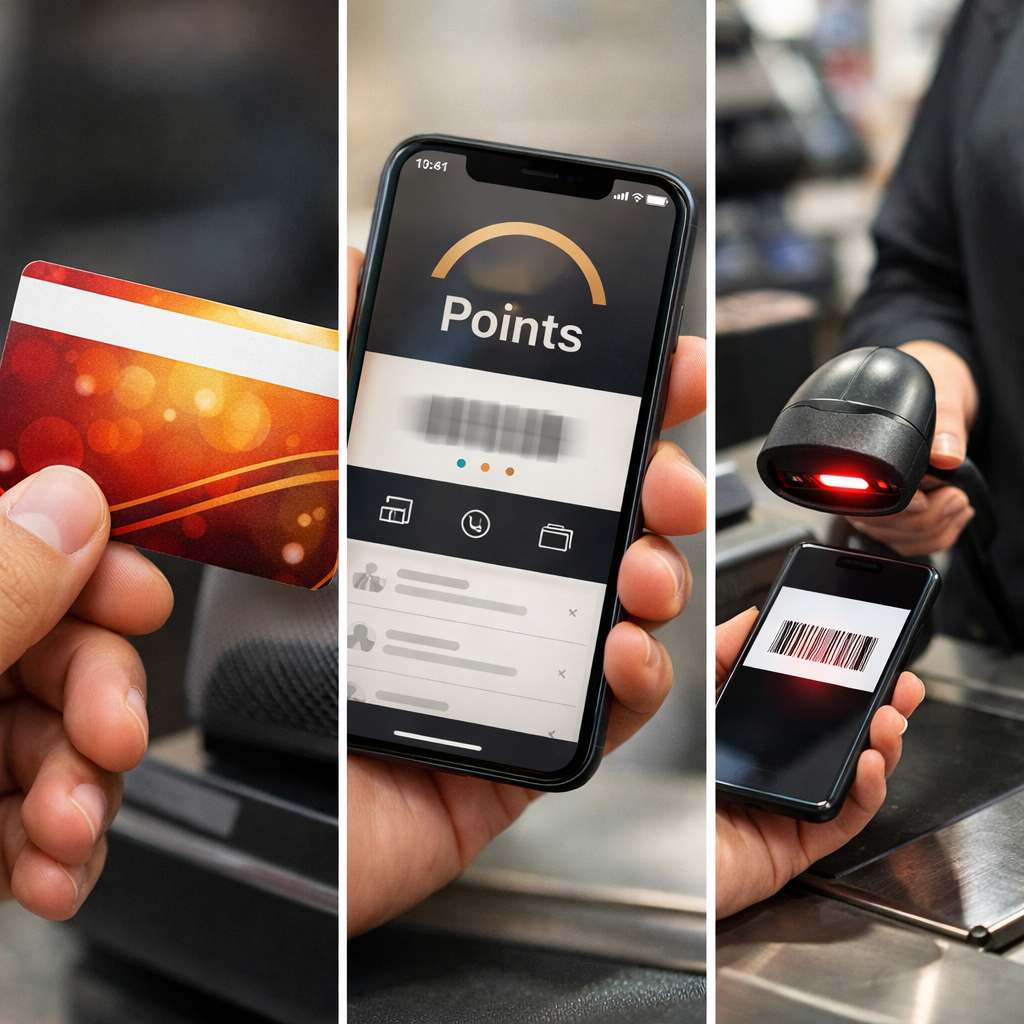
Each reward type has a job. Points per purchase drive frequency, best when the balance is visible immediately. Visit-based punches drive footfall where a visit produces add-on revenue. Milestone tiers drive lifetime value. Referral bonuses drive low-cost acquisition, but only when gated on a completed purchase rather than a signup. Experiential rewards build real attachment and cost the most, so reserve them for high-value members.
| Template | Earning rule | Reward | Cap / expiry |
| Fast-frequency starter | 2nd purchase within 30 days of first | 500 points (~$5) | Expires in 180 days; one use per order |
| Store footfall driver | Every 5 in-store visits | Free item up to $8 or store credit | Punches expire in 12 months; 1 reward per visit |
| VIP progression | $1,000 spend in 12 months | Free shipping, early access, events | Active while tier held |
The trade-off: simple mechanics get higher participation but reward some behavior that would have happened anyway, while tighter gating improves incrementality and cuts participation. Pick the configuration that serves the metric you chose in section one.
One apparel brand replaced a flat 10% birthday discount with a second-purchase accelerator: 1,000 points for any second order within 30 days. Repeat rate for new cohorts rose 14% and margin improved, because the reward only paid out after the behavior it was designed to cause.
4. Build a small set of behavioral cohorts
Create five to seven dynamic cohorts you can act on, not 25 theoretical segments sitting in a spreadsheet. Use RFM, recency, frequency, monetary, as the backbone, then attach two or three behavioral flags: category affinity, recent returns, app install, referral sent.
A workable starting set: new customer (0–30 days), active repeater (purchased in last 60 days, 2+ orders in 180), at risk (lapsed 60–90 days), loyal high-AOV (top 10% by spend), advocate (referred or reviewed in last 90 days). Keep the rules event-driven so membership updates itself, that eliminates manual tagging and makes measurement reproducible.
Then rank workflows by impact against effort. A welcome series and a post-purchase cross-sell sit in the high-impact, low-effort quadrant and should be automated first; abandoned cart with conditional points comes next. VIP experiential offers are high impact and high effort, leave them until the economics are proven.
Finer segmentation raises relevance but multiplies testing complexity and message volume. With limited capacity, prefer broader cohorts with stronger conditional logic inside the workflow.
One retailer combined RFM with a category flag to isolate customers who had bought outerwear but not purchased in 75 days, then ran a seven-day win-back on outerwear only. Reactivation hit 12% in 90 days, cleanly attributable because the cohort was behaviorally defined and time-boxed.
5. Design automated omnichannel workflows
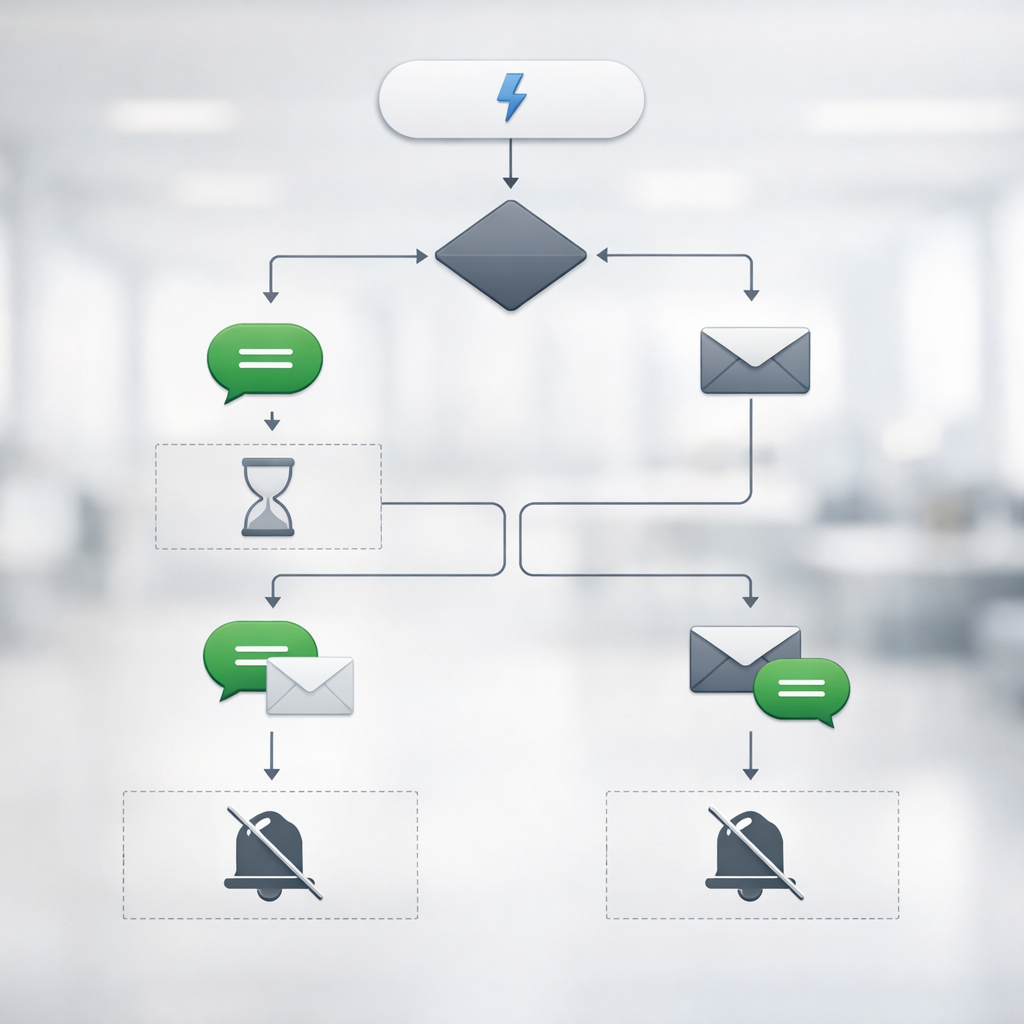
Automated journeys fail when channels are treated as independent systems, the customer gets the same message three times and opts out of all of them. Design each journey as one decision tree that picks a channel, defines a fallback, and applies a suppression window.
Use SMS for time-sensitive nudges, email for receipts and longer content, push for app users, in-store prompts for immediate redemption. If SMS fails or the customer opted out, fall back to email after a delay. Cap frequency across all channels: two loyalty SMS per week with a 24-hour cooldown after any promotional send is a defensible start. Three blueprints cover most of the value.
Welcome with points incentive. Triggered on registration or first purchase. SMS within the hour if opted in, email at 24 hours if not, push immediately for app users. Confirm membership, show the balance, present a 30-day double-points offer. Measure conversion to a second purchase within 30 days.
Abandoned cart with conditional points. Triggered at two hours when cart value clears your threshold. Email first; SMS with a 24-hour points bonus if unopened after six hours; retargeting at 48 hours. Measure recovered carts against a holdout, not total abandonment.
Lapsed win-back. Triggered at 90 days without a purchase where RFM shows prior repeat behavior. Seven-day email series with category reminders, SMS in week two with time-limited double points, in-store receipt messaging for anyone who walks in. Measure return purchase rate within 60 days and cost per reactivated customer.
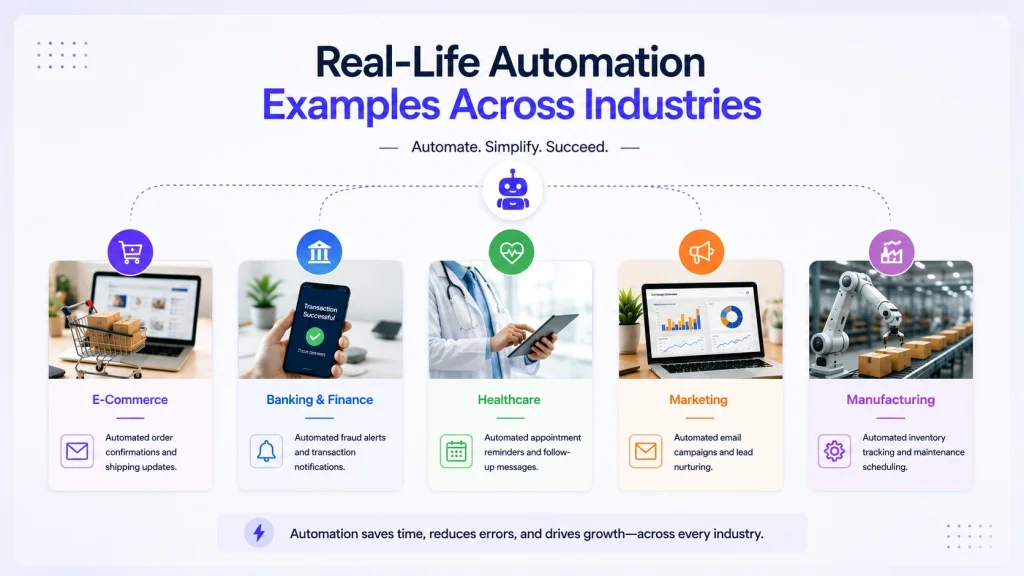
An automated loyalty program is not set-and-forget. Monitor incremental lift per workflow and throttle by customer value, high-frequency shoppers tolerate more outreach; low-value customers should not get expensive-channel messages weekly. Build a rollback plan for any workflow that pushes opt-outs above baseline.
6. Select technology that keeps the ledger honest
Start with the thing that must never break: the member ledger. Inaccurate points, tiers, or balances destroy trust faster than any reward design mistake, so prioritize an auditable ledger with a clear reconciliation path between POS, e-commerce, and messaging.
Your shortlist needs event ingestion with identity resolution across email, phone, and loyalty card ID; a rule engine fast enough for last-step interventions; a single-source ledger tracking earned, pending, redeemed, and expired balances; native SMS and WhatsApp alongside email and push; cohort reporting with exportable logs; and connectors for your existing POS and e-commerce stack.
The architecture choice comes down to three paths. A dedicated loyalty platform handles ledger and redemption complexity out of the box but can be rigid for custom behaviors. A CDP plus loyalty module centralizes identity and handles segmentation well, though you still need a ledger and a messaging partner. A marketing-automation-heavy approach is cheapest to start and hardest to scale. Whichever you pick, an automated loyalty program lives or dies on latency and identity matching, test both before you sign.
For a view of how this stack fits together in practice, Gleantap’s retail solutions cover the messaging and automation layer alongside member data.
Confirm the fields up front: identity (customer_id, email, phone_number, loyalty_card_id), transaction (order_id, order_total, timestamp, line items with category, store_id), and event context (event_type, event_source, consent flags). Missing consent flags alone will stop an SMS program before launch.
7. Measure incremental impact, not engagement
The only question that matters is whether the program produced revenue that would not have existed otherwise. Answer it with randomized holdouts: hold back 5–20% of the eligible audience, run the campaign, compare revenue per user.
A worked example. Of 3,000 eligible customers, 2,700 see a double-points offer and 300 are held out. Exposed revenue of $81,000 is $30.00 per user; holdout revenue of $6,000 is $20.00, a 50% lift, and strong evidence of incrementality if the split was randomized and the sample large enough for significance. Convert that into gross margin, compare against promotion cost, and scale only if it nets positive inside your payback window.
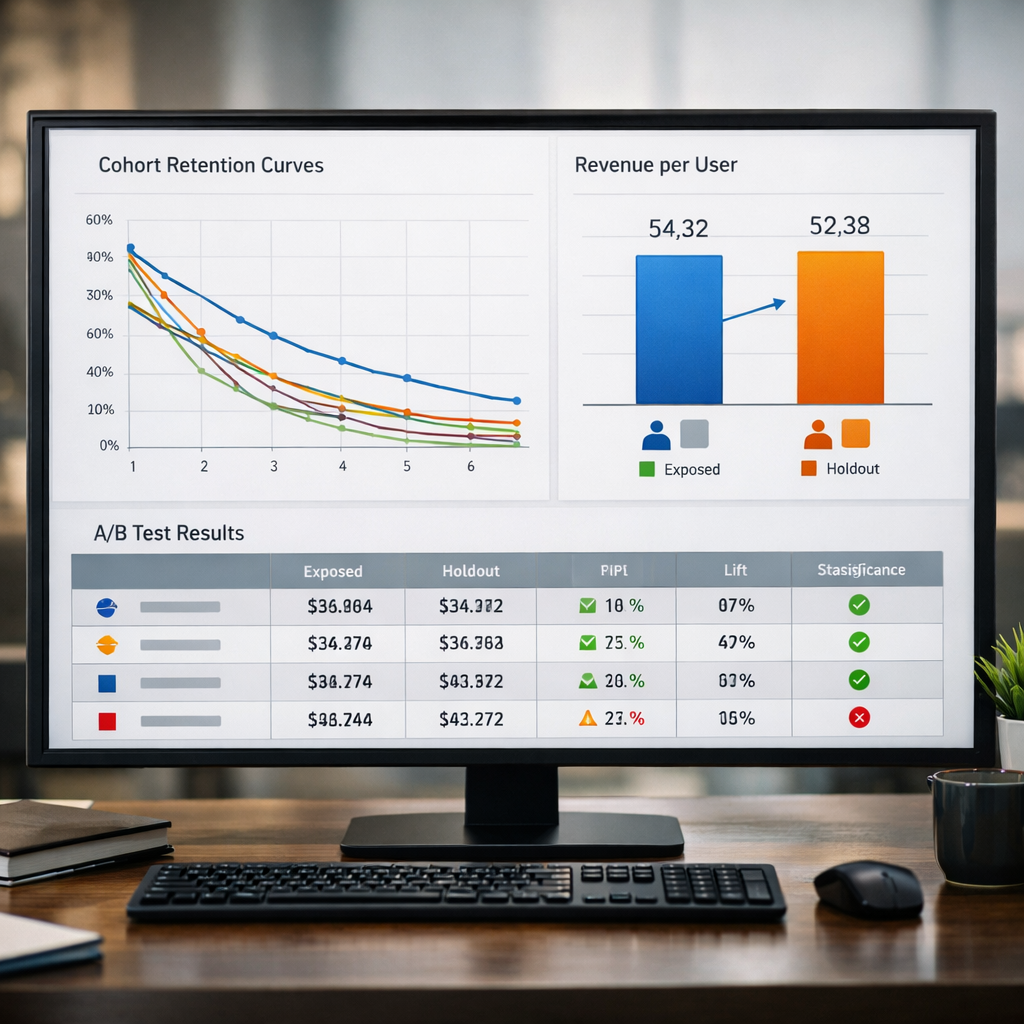
The most common mistake is comparing enrolled members to the general base without matching on recency and spend. Self-selection inflates performance every time, people who join loyalty programs were already your better customers. Use matched controls, and avoid short test windows on high-ticket items.
Prioritize experiments by expected incremental value against cost; lapsed win-backs and abandoned carts are the highest-leverage journeys to test first. Retire offers with weak incremental ROI even when engagement looks excellent. Sustained retail customer retention comes from the few journeys that survive this filter, not the full catalogue of things you could send.
8. Govern the program before it scales
Governance decides whether a retail loyalty program scales or becomes an expensive liability. Undefined decision rights, weak dispute handling, and missing audit trails are where programs leak margin and customer trust simultaneously.
Assign owners: program (strategy and P&L), analytics (measurement and reconciliation), creative (with legal review), store operations (redemptions and scripts), compliance (consent and messaging law), and fraud. Document who can adjust earning rules, change point values, approve promotions, and pause campaigns, and require analytics sign-off plus a 72-hour soft-launch window for any change.
Standardize disputes: acknowledge within 24 hours, verify against POS logs within 72, hold provisionally if verification runs long, escalate suspected coordinated fraud, then close and record the rationale. Cap local permissions, staff adjust up to 200 points unassisted, managers to 1,000, fraud team above that. Export the ledger daily and retain 12 months.
One chain caught repeated manual reversals on online returns through weekly reconciliation, froze adjustments at the outlier store, and recovered 12,000 incorrectly issued points before members noticed.
Track dispute resolution time, points reversal rate, unredeemed liability, fraud incidents per 10,000 members, and reconciliation variance weekly. Most teams obsess over mechanics and underinvest here.
9. Pilot, scale, and keep testing
A pilot is a measurement engine, not a marketing demo. Run it in one market or channel for 8–12 weeks with a randomized 10–20% holdout matched on RFM and channel behavior. Include refund handling, points adjustments, POS redemption flows, and staff scripts, scaling fails on execution far more often than on strategy.
Set the gate before you start: a statistically significant 10%+ lift in repeat purchase rate, or positive payback within 90 days. Below that, iterate rather than expand. When you do scale, phase it, a national launch captures momentum and multiplies liability from untested mechanics across every store at once.
Then treat the program as a product with quarterly sprints: a backlog of reward A/Bs, channel mixes, and cadence tests, each with a metric owner and a holdout.
One chain piloted in two metro stores plus e-commerce for ten weeks with a 15% holdout, saw a 12% lift in 90-day repeat purchases at manageable redemption cost, then expanded regionally over six weeks while capping experiential rewards.
Most pilots overstate upside by picking easy-win segments or running during a promotion. A good pilot is inconvenient: it stresses your data flows, staff, and returns process, and that friction is cheaper to find now than at scale.
10. Write copy that names the behavior
A message earns attention by stating what the customer did, what they got, and what to do next. Lead with the gain, not a description of the program.
- Welcome: “Welcome {first_name}! You earned {points_earned} points for joining. Balance: {points_balance}. Browse new arrivals: {cta_url}”
- Abandoned cart: “Hi {first_name}, your cart is waiting. Check out in 24 hours for 50 bonus points: {cta_url}”
- Lapsed win-back: “We miss you {first_name}. Double points for 7 days. Balance: {points_balance}. Shop now: {cta_url}”
- Tier upgrade: “Congrats {first_name}, you’re a Gold Member. Free returns and early access: {cta_url}”
Always show the current balance and the next threshold; visible progress outperforms vague promises. Give every variable a fallback and validate templates against 100 real profiles before sending. SMS drives urgency but demands concision; email carries more explanation at lower open rates. Test one variable at a time.
Frequently asked questions
What should I budget? Between $15,000 and $60,000 for setup and pilot at a mid-size retailer, covering platform, integration, creative, and analytics. Forecast ongoing messaging, platform, and reward costs as a percentage of incremental gross margin, never of top-line revenue.
How long until ROI is visible? Journey-level signals appear in 60–120 days. Use a three-to-six-month window with cohort comparisons and randomized holdouts.
Which behaviors come first? Revenue-linked events: first purchase, second purchase within 30 days, abandoned cart, and orders above your AOV threshold. Clearest conversion path, simplest implementation in both e-commerce and POS.
Can I run this without a dedicated platform? For a simple pilot, yes, CRM or marketing automation plus a lightweight ledger will do. A dedicated platform earns its cost once you need in-store redemption, member accounting, or tier logic.
How do I protect margin? Gate rewards on incremental behavior, cap high-cost rewards, use expirations, and favor service-based perks. Test every offer against a holdout, and keep explicit opt-in, documented consent, and a visible opt-out on every message per TCPA and local regulation.
Start with one journey
The programs that work are rarely the most sophisticated. They are the ones where a few behaviors are instrumented properly, rewarded only when earned, and measured against a holdout that tells the truth. Customer loyalty programs in retail fail far more often from unmeasured generosity than from insufficient creativity.
In the next 30 days: assign an owner, pick one journey, welcome or second purchase, define the holdout, set a success threshold, and instrument the minimum events needed to deliver the reward end to end. Prove that one works, then add the next.

Ready to Run Successful Marketing Campaigns and Grow Your Business?
Gleantap helps you unify customer data, track behavior patterns, and automate personalized campaigns, so you can increase repeat purchases and grow your business.
Ready to Run Successful Marketing Campaigns and Grow Your Business?
Gleantap helps you unify customer data, track behavior patterns, and automate personalized campaigns, so you can increase repeat purchases and grow your business.