
 Divya Ghughatyal

Invisible automation is the next evolution of CRM, systems that act in the background to catch leads, nudge members, and stop churn without adding manual work. For fitness studios and service SMBs wrestling with fragmented data and inconsistent follow up, that translates into measurable gains in retention, conversion, and staff time saved. You will get five concrete workflows, KPIs to quantify impact, and a 30-90-180 day roadmap with integration options like Gleantap, Twilio, and Segment to get started without hiring engineers.
What Invisible Automation Means for CRM
Definition: Invisible automation embeds automated decisions and actions into routine CRM workflows so those actions happen without manual triggers or visible campaign labels. In practice that means the system watches event signals – booking, payment, attendance, message reply – and takes context aware steps that feel seamless to the member rather than like a marketing blast.
How invisible automation behaves inside a CRM
Behavioral core: Invisible automation is event driven, identity aware, and decided by business rules or simple ML models. It sits in an orchestration layer that evaluates triggers in real time, checks member profile and consent, then runs the appropriate micro action – send a personalized SMS, surface a coach task, or update a membership status. This is different from visible automation which is schedule or campaign centric and often runs regardless of current member context.
- Ready sign – fragmented manual touches: If staff are repeatedly doing the same follow ups by hand, you can make that work invisible and reliable.
- Ready sign – data in multiple systems: If bookings, payments, and CRM data are siloed, you need identity resolution before invisible automation will be dependable.
- Ready sign – inconsistent follow up: If lead response and onboarding vary by staff, invisible automation gives predictable, measurable journeys.
Practical tradeoff: Invisible automation amplifies both good and bad data. When profiles are clean you remove friction and improve retention. When profiles are messy, you risk sending incorrect or repeated messages that damage trust. Plan a short data cleanup and a conservative pilot before broad rollout, and keep a human fallback for edge cases.
Concrete Example: A boutique gym uses background automation to reduce no shows. When a trial booking is made the CRM sets a conditional workflow: send a single-day reminder SMS, check attendance record within two hours after class ends, and if no show, assign a coach task with a templated SMS offering a reschedule link and a small incentive. That single invisible flow cut manual chasing by staff and reduced repeat no shows in the trial cohort.
Measurement shift: With invisible automation you stop optimizing for opens and clicks and start optimizing for business outcomes – time to second visit, churn reduction, and revenue per member. Use cohort comparisons and journey level A B tests rather than message level splits to prove impact.
Legal and trust constraint: Background automation must honour consent and escalation. Capture explicit opt in at signup, store opt out flags centrally, and route requests for human contact immediately. The business cost of getting consent wrong is real – reduced lifetime value and legal risk – so treat governance as a feature, not an afterthought.
Key takeaway: Invisible automation is not about hiding messages; it is about moving predictable, rules based tasks out of staff inboxes and into context aware workflows. Start small, clean data first, and measure outcomes that matter to retention and revenue.
Core Capabilities That Enable Invisible Automation
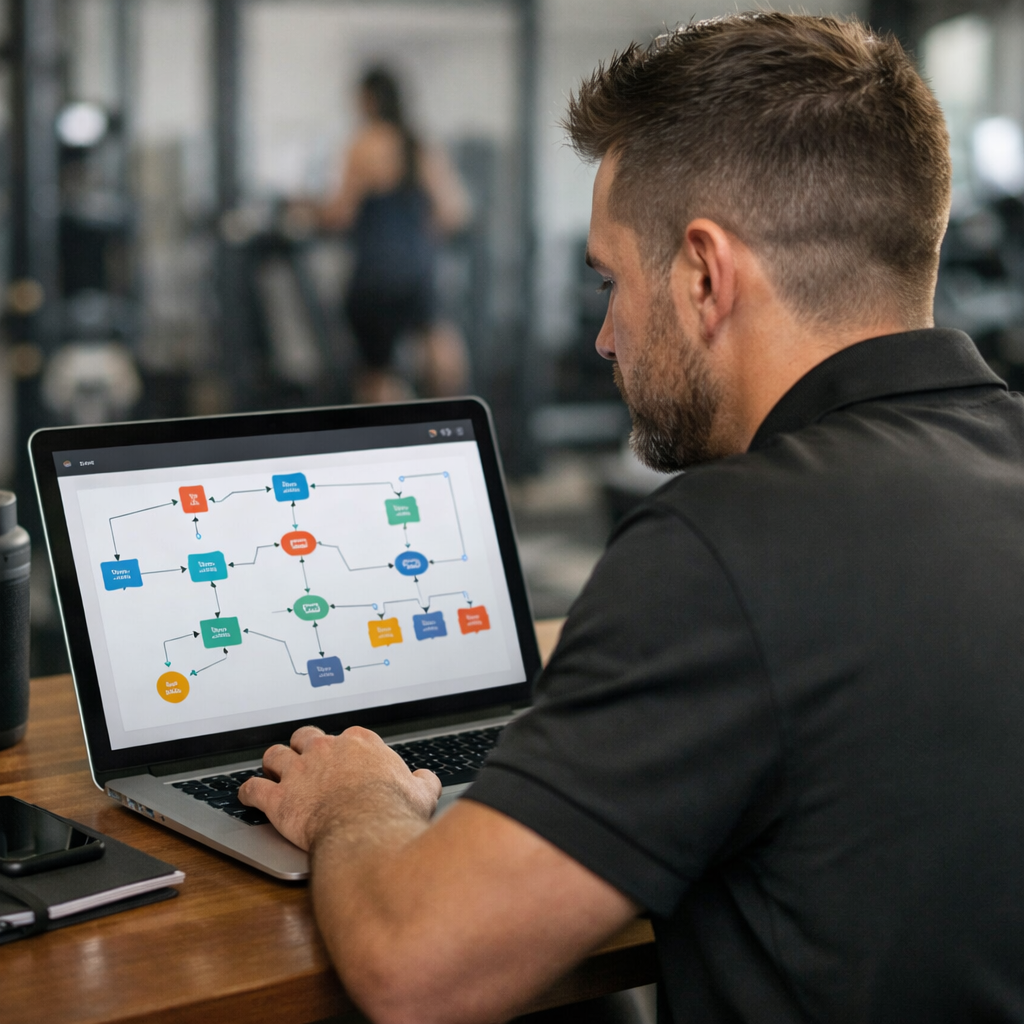
Core point: invisible automation succeeds or fails on infrastructure, not creativity. You can design perfect journeys, but without reliable events, identity, orchestration, delivery, and governance those journeys are brittle or worse, annoying to members.
The capability stack you actually need
- Event stream and real time triggers: Capture business events with low latency – booking created, payment failed, class no show, NPS response. Tradeoff: pushing events in real time increases engineering work and surface area for errors, but batch polling produces stale, visible automation.
- Identity resolution and single customer view: Merge booking, payment, messaging, and app data so every trigger targets the right member. Poor identity is the silent killer of automated personalization and will create duplicate or conflicting messages.
- Orchestration and decisioning layer: A low code workflow engine that supports branching, wait windows, and conditional actions. Consideration: heavy central orchestration avoids message overlap but can limit flexibility for local staff who need quick manual overrides.
- Personalization and ML: Use scoring and next best action models to move beyond one size fits all nudges. Limitation: machine learning needs clean historical signals; apply ML where data volume supports reliable predictions, otherwise stick to rules-based decisions.
- Reliable multi channel delivery: SMS, email, and app push must be trackable and reversible. Two way channels like SMS require inbound handling and consent checks. Sending everywhere is not a strategy – choose the channel your members respond to and respect their preferences.
- Data quality, governance, and consent controls: Built in consent flags, preference centers, and a single source of truth for opt outs. Risk: invisible automation amplifies mistakes; governance prevents a single misrouted flow from contacting thousands.
- Testing, versioning, and observability: Sandboxes, staged rollouts, and dashboards that show journey completions, drop off points, and conversion lift. If you cannot measure which journey moved the needle, you cannot iterate reliably.
Practical insight: invest first in events and identity. Teams that spend 4 to 6 weeks clarifying event definitions and merging identity fields avoid most early failures. It is faster to trim noisy triggers than to rewrite orchestration later.
Concrete example: When a member no shows a booked class, a proper stack does three things automatically: the event fires immediately, the identity layer confirms membership status and coach assignment, and the orchestrator runs a conditional path – immediate SMS from the assigned coach offering reschedule, a two day follow up with a targeted offer if no response, and a CRM tag for staff review if repeated no shows occur. Using Twilio for SMS delivery and a connector to Gleantap or Segment keeps the flow modular and observable.
Capability gap to watch for: latency in event capture causes visible automation. If your system checks bookings every hour, members will get late follow ups that feel robotic.
Rule of thumb: Fix identity then events. If you only have a budget for two things, build a single customer view and an accurate event stream before adding ML or extra channels.
Tradeoffs to accept: full orchestration platforms reduce tool sprawl but increase vendor lock in and cost. Best practice in SMBs is hybrid: centralize identity and events with tools like Segment or built in connectors, then run journeys in a low code tool such as Gleantap or HubSpot. Reserve ML models for high volume decisions like lead scoring where they reliably improve routing.

Next consideration: before building invisible journeys, map the gap between your desired events and what your systems emit. That map becomes your implementation backlog and the single thing that determines whether automation stays invisible or becomes a tidal wave of errors.
Five Invisible CRM Workflows for Fitness Businesses
Direct claim: Invisible automation shows value when it replaces repetitive, time sensitive handoffs with event driven actions that feel like natural service. The five workflows below are high frequency, measurable, and implementable without heavy engineering using tools like Gleantap, Twilio, and booking system connectors.
1. Onboarding progression that nudges members to their second visit
Trigger and actions: When a new member attends their first class, send an immediate welcome SMS, follow with a coach note 48 hours later, and surface a suggested next class in-app or by SMS. Sequence adapts: if the member books the next class, stop messages; if not, escalate to a personalized coach outreach on day 7.
Tradeoff to plan for: Automating every touch risks feeling robotic. Keep the default path short and always include a simple human escalation point so staff can intervene before a high value lead cools.
Concrete example: A boutique studio triggered a 3 step onboarding path: immediate SMS with resources, 48 hour coach check, and a 7 day reminder with class suggestions. Result was a 20 percent faster time to second visit and clearer handoffs for staff.
2. Silent lead qualification that routes hot prospects within an hour
Trigger and actions: Score leads by event signals like pricing page views, trial booking, repeated visit to schedule page, and responses to a chatbot. Automatically route leads above a threshold to a sales queue and send a short SMS from the local coach with a one click scheduling link.
Limitation: Scoring models produce false negatives when data is fragmented. Prioritize a small set of high signal events and maintain a manual fallback queue for leads near the threshold.
Concrete example: A gym used web behavior plus a trial booking to trigger a coach SMS within 45 minutes. Conversion of routed leads rose by 15 percent while time spent on manual triage fell by 30 percent.
3. Churn prevention that surfaces at risk members before they leave
Trigger and actions: Detect a sustained drop in visits or a change in engagement signals over a rolling 14 day window. Send a coach check-in SMS, follow with a personalized offer only if there is no response, and schedule a one on one call for high lifetime value members.
Practical insight: Offers work but erodes margin. Use behavioral content first, then targeted incentives for high risk high value members. Track cost per retained member to avoid generous blanket discounts.
Concrete example: When a member stopped coming for two weeks, an automated SMS from their coach offered a complimentary workout plan and a single free class. Churn among that cohort fell about 12 percent over three months.
4. Reactivation journeys for lapsed members with one click rejoin
Trigger and actions: At 30, 60, and 90 days of inactivity send progressively stronger outreach: educational content, a short testimonial video, then a time limited rejoin offer with a single tap checkout or booking link.
Tradeoff: Frequent reactivation offers train members to wait for discounts. Keep offers scarce and personalize by previous class type or coach to retain perceived value.
Concrete example: A studio ran a 60 day reactivation SMS with a coach video and a direct booking link. Rejoins increased 8 percent in the first month with low operational lift.
5. Appointment and class management to cut no shows and automate waitlists
Trigger and actions: Send two step reminders 24 hours and 2 hours before class with a reply option to confirm or cancel. If a cancellation arrives, automatically open the spot to the waitlist and notify the next member. If no reply to the 2 hour reminder, follow your cancellation policy automatically or flag for staff contact.
Operational constraint: Two way SMS requires strict consent handling under TCPA. Validate opt in data before enabling interactive reminders.
Concrete example: Using two way confirmations reduced no shows by nearly 40 percent and increased waitlist fills by 50 percent for weekend classes at a medium sized gym.
| Workflow | Trigger | Primary channel | Expected KPI change |
| Onboarding progression | First attended class | SMS + in app | 15 25 percent faster second visit |
| Silent lead qualification | Trial booking + site behavior | SMS + CRM routing | 15 percent increase in close rate |
| Churn prevention | 14 day drop in visits | SMS from coach + offer | 10 20 percent churn reduction |
| Reactivation | 30 60 90 day inactivity | Email + SMS with one tap link | 8 12 percent rejoin uplift |
| Appointment management | 24h and 2h reminders | Two way SMS | 30 40 percent fewer no shows |
Key operational rule: Always include an automatic human escalation after the second automated touch so members with complex needs get a real person quickly.
Benchmarks to aim for: 10 to 20 percent reduction in churn within 6 months, 15 percent faster time to second visit for onboarding automation, and 30 to 40 percent reduction in no shows with two way reminders. Track cost per retained member when using incentives.
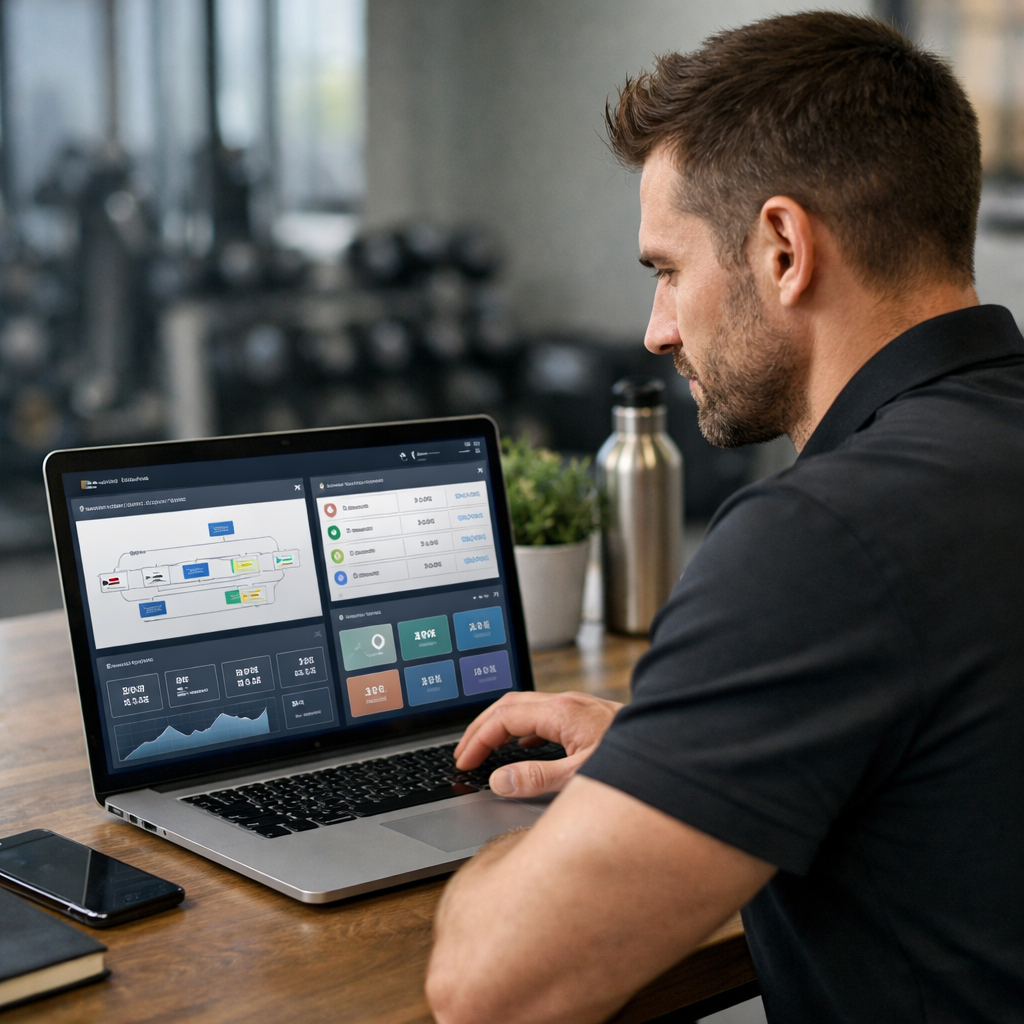
Takeaway: Start with the one workflow that maps to your largest pain point, instrument the right trigger, and set a strict escalation to human support. Invisible automation is not about hiding conversations; it is about removing busy work while preserving the moments that require judgment.
How to Measure Invisible Automation Success
Measure outcomes, not impressions. Invisible automation succeeds when it changes behavior or business economics, reduced churn, faster conversions, fewer staff hours, not when an email gets opened.
Define a simple measurement framework
Start with one primary business metric, two supporting metrics, and a baseline. Primary choices for fitness and service SMBs are churn rate, conversion from lead to paid, or revenue per member. Supporting metrics should explain how the primary moves, for example, time to second visit and staff hours spent on outreach.
- Pick the North Star metric: Choose the one metric that, if improved, justifies the automation effort.
- Establish baseline windows: Use 30/90/180 day cohorts depending on the behavior you’re changing; churn needs 90+ days, onboarding can show results in 30.
- Segment and cohort: Measure by acquisition source and membership type so changes are not masked by mixed populations.
- Run journey-level experiments: Randomize at the lead or member level and compare cohorts rather than split-testing individual messages.
- Track operational impact: Log staff time saved and reallocated, this is real cost reduction even if revenue changes lag.
Practical trade-off: Short A/B tests are tempting, but invisible automation often works by changing downstream behavior across weeks. Small, fast tests can give false negatives. Accept longer test windows for outcomes like retention and LTV.
Metrics, how to calculate them, and what to watch for
| Metric | How to measure | Why it matters | Common pitfall |
| Churn rate | Percentage of members who cancel or do not renew in a 90-day cohort | Direct signal of retention impact | Seasonality and promotions distort short windows |
| Conversion rate (lead to paid) | Leads that become paid members within 30/90 days | Shows effectiveness of qualification and follow up | Mixing trial and free leads masks true lift |
| Time to second visit | Median days between signup and second attended session | Early engagement predictor for retention | Requires reliable attendance data from booking system |
| Staff hours saved | Manual outreach hours before vs after automation (timesheets or time tracking) | Realized operational cost savings | Hard to attribute if staff take on different tasks |
| Revenue per member | Total revenue divided by active members over 90 days | Captures pricing and upsell impacts | Promotional offers can inflate short-term revenue |
Concrete example: A boutique gym randomized new signups into two cohorts: standard manual onboarding and invisible onboarding automation that nudged members after their first booked class. Over 90 days the automated cohort reached the second visit faster and converted to paid at a higher rate. The gym also tracked staff time and found two hours per week freed on customer outreach, which they repurposed to sales calls.
A real-world measurement judgment: prioritize cohort-based comparisons and cohort-exposed attribution. Trying to stitch multi-touch attribution across background automation and manual outreach usually overfits and creates noise. If you must attribute, measure contribution via cohort lift rather than attempting exact touch-level credit.
Dashboard checklist: a cohort chart for your primary metric, time-to-event curves (like time to second visit), a table of operational hours saved, and simple A/B cohort comparison with p-values or confidence intervals.
If you want a short how-to: set the baseline, pick cohorts, run the automation against a randomized group, collect 30/90/180 day results depending on the outcome, and review both business and operational metrics together.

Next consideration: after the first valid lift, tighten governance: document the metric definitions, lock the cohorts, and operationalize weekly reviews so small regressions are detected before they become business problems.
30-90-180 Day Implementation Roadmap for SMBs
Start small, move deliberately. A staged 30-90-180 plan prevents classic SMB mistakes: launching broad automation without clean data, then blaming automation when member experience degrades. This roadmap prioritizes immediate operating value, repeatable tests, and governance so invisible automation scales without creating churn.
First 30 days – stabilize and prove value
- Objective: establish reliable signals and baseline metrics so every automation has a measurable purpose.
- Deliverables: deduplicated contact list, consent flags standardized, three pilot flows (welcome, booking reminder, no show follow up) and a dashboard with baseline KPIs.
- Owner: assign a single automation owner – usually operations or head coach – with 2 to 4 hours weekly to monitor.
- Data rule: implement simple identity resolution rules – match on email plus phone – before building flows.
- Measurement: record time to second visit, booking confirmation rate, and staff minutes spent on manual follow up as baselines.
Practical tradeoff: prioritize reliable triggers over complex personalization. Do not wait for perfect data models to start; a predictable trigger with correct consent is worth more than a fancy but brittle ML model.
30 to 90 days – scale and tighten
- Objective: expand automation where ROI is visible and reduce manual triage.
- Deliverables: lead scoring rules, two-step onboarding journey, reengagement sequence for 30 day inactivity, integration of booking and payments into the event stream.
- Owner: automation owner plus a cross functional reviewer from sales and coaching; set a weekly 30 minute review to triage false positives and message tone.
- Testing: A B test at the journey level for at least one reengagement offer to measure lift before full rollout.
- Governance: create a message template library and consent audit log for each journey.
Limitation to watch: faster rollouts increase the chance of member friction. At this stage, monitor reply rates and direct complaints. If negative signals rise, pause and adjust message cadence before scaling.
90 to 180 days – optimize with intelligence and controls
- Objective: move from deterministic rules to data driven decisioning and full orchestration across channels.
- Deliverables: implement next best action rules for high value members, connect mobile push or app events, add conditional branching based on payment status, and deploy versioned flows with rollback capability.
- Owner: automation owner plus product or technical lead for integrations; legal or compliance reviews templates quarterly.
- Measurement: cohort analysis showing churn change, revenue per member lift, and reduction in staff hours for manual outreach.
- Scale guardrail: limit automated commercial offers to a frequency cap per member and maintain explicit preference choices.
Judgment call: invest in ML only after you have 3 months of clean event data and clear failure modes. Machine learning is useful for prioritization and predicting churn, but it will amplify biases in dirty data and make troubleshooting harder.
Concrete example
Concrete Example: A boutique gym used Gleantap to run this roadmap. In the first 30 days they fixed duplicate phone numbers, launched booking reminders, and cut no shows by 18 percent. By day 90 they had an automated onboarding journey that reduced time to second visit by 22 percent and saved staff four hours per week. At 180 days they layered a prioritized outreach queue for members flagged as high churn risk, which focused human follow up where it mattered most.
Key milestone metrics: 30 days – track baseline and no show reduction; 90 days – measure conversion lift and time saved; 180 days – aim for measurable churn reduction and higher revenue per member. Use these milestones to decide whether to pause, iterate, or accelerate.
Next consideration: schedule a pilot cohort and reserve a sandbox account for testing.
Privacy, Consent, and Customer Trust
Non negotiable foundation: consent and clear privacy practices are the single factor that determines whether invisible automation helps or alienates your members. If automation runs without respect for permission and context it stops being seamless and starts feeling intrusive.
Practical trade off: asking for explicit opt in up front will reduce a small percentage of immediate signups but it preserves deliverability, reduces complaints, and prevents costly legal risk under laws like TCPA and GDPR. Progressive consent is the middle path – ask for essential transactional consent first, then request marketing permissions once a member completes a first class or payment.
Concrete guardrails that actually work
- Capture metadata: store who consented, when, where (signup form, booking widget), what channel (SMS, email), and the exact version of the privacy text.
- Differentiate message types: treat transactional messages (booking confirmations, receipts) separately from marketing messages; ask for marketing consent explicitly.
- One click opt out and global block: implement and honor channel level STOP words and a global do not contact list across all systems.
- Escalation paths for replies: route responses containing complaints or sensitive requests to a human within a defined SLA instead of an automated thread.
- Periodic reconfirmation: require opt in reconfirmation for dormant members after 12 months or when you expand message types.
Legal basics you must track: TCPA requires documented prior express written consent for marketing SMS in the US; GDPR needs a lawful basis and records of consent for EU members. Keep simple records and make them accessible to audits.
Common misjudgment: many operators assume a single checkbox at signup covers every future message. It does not. Consent is contextual and time bound. If you change the nature of messages – for example add promotional offers via SMS where previously you only sent booking reminders – get fresh permission.
Concrete example: a 75 member boutique gym adds an explicit SMS consent toggle on its booking widget. Members who opt in receive class reminders and coach check-ins via Gleantap integrated with Twilio; those who decline receive email reminders only. The studio logs consent metadata and sets an automation rule to pause SMS marketing to anyone who has not visited in 180 days until they reconfirm.
Operational limitation: invisible automation can mask when consent boundaries are crossed. Build monitoring that flags rising complaint rates, unsubscribe spikes, or negative reply sentiment; those are early signs you need to pause and audit the journeys rather than scale them.
Minimum compliance checklist for invisible automation: explicit opt in for marketing, stored consent timestamp and source, separate transactional vs marketing flows, global opt out enforcement, human escalation for negative replies, periodic reconfirmation for inactive members, and versioned automation flows for audits.
Final practical judgment: prioritize member control over convenience when you start. Design invisible automation so that consent is visible and reversible from the member perspective. That preserves trust, keeps deliverability high, and makes the automation genuinely invisible rather than annoyingly intrusive.
Next consideration: lock your consent model before you scale invisible automation. If you automate first and tidy consent later you will pay in complaints, deliverability, or legal exposure.
Organizing People and Processes to Keep Automation Invisible and Helpful
Start with ownership. Invisible automation succeeds or fails because of roles and decision rights, not because of tooling. Assign a single journey owner for each high frequency workflow, a compliance reviewer, and an operations lead who monitors delivery and errors. This prevents a thousand ad hoc message edits that break identity resolution or violate consent rules.
A practical governance model
- Journey owner: accountable for objectives, KPIs, and content changes
- Message approver: compliance or legal reviewer who signs off on SMS and email templates
- Data steward: ensures booking, payment, and membership fields are accurate and mapped
- Ops monitor: owns dashboards, alerts, and rollback procedures
- Feedback loop: coaches and front desk submit automation issues to a triage board weekly
Tradeoff to accept. Centralizing ownership increases consistency and reduces compliance risk but slows iteration. Decentralizing message edits speeds local experimentation but increases fragmentation and deliverability mistakes. In practice, use a hybrid: allow local teams to request templates and A B test within guardrails, while central owners publish final changes and push global updates.
Testing, rollout, and rollback matter more than perfect logic. Test flows against a pilot cohort, validate identity resolution and consent flags, and watch for message loops and churn signals. Keep versioned flows so you can revert quickly when a branch is misfiring. Small failures in invisible automation amplify because they run frequently and invisibly.
Concrete example: A boutique gym automated three high frequency tasks: check in confirmation, missed class follow up, and renewal reminder. After piloting with 200 members, the team reduced manual outreach by 6 hours per week and increased retention among pilot members by 8 percent over 90 days. Coaches used saved time for relationship calls targeting high risk members, improving reconversions.
Operational practices that keep automation helpful
- Document intent and KPIs: every flow must state its objective, owner, and measurement window
- Guardrails for personalization: limit use of sensitive data fields and require explicit consent before behavioral targeting
- Escalation path: build a clear human fallback action when a member responds negatively or requests help
- Weekly review cadence: short standup to review failed messages, consent exceptions, and content performance
- Continuous training: one hour monthly sessions for front desk and coaches on how automation surfaces for members
Common misstep. Teams treat automation as a set and forget project. In reality it is operational work. Expect to spend 20 to 30 percent of your automation owners time on maintenance, monitoring, and small tuning tasks. That workload must be planned and resourced or invisible automation will erode member experience.
Quick governance checklist: assign journey owner, require template approval, pilot with a cohort, version flows, establish rollback, and schedule weekly monitoring. Use these steps before any broad rollout.
If you need a next step. Map three high frequency manual touches your team does this week, assign owners, and pilot automating the simplest one with a 30 day measurement window.
Frequently Asked Questions
Straight answer up front: these are the operational questions you will actually run into when you move invisible automation from pilot to production. Answers focus on what to check, what to measure, and the trade-offs that matter to gym operators and small service businesses.
- What is invisible automation in plain terms and how is it different from regular automation: Invisible automation is event-driven, context-aware automation that acts inside member journeys rather than as one-off campaigns. Instead of scheduled blasts, it triggers actions based on real behaviour, a booking, a no-show, a payment failure, and adapts the path without a staff member hitting send.
- Which CRM features are essential to support invisible automation for a small gym: You need event triggers, a unified member profile, a low-code orchestration layer for branching logic, and reliable multi-channel delivery with two-way messaging. If you want to avoid engineering work, pick platforms with native connectors or easily mapped webhooks.
- How quickly can a fitness business see results: Expect operational wins in 30 days for reminders and welcome flows; real changes in retention and revenue generally take 2 to 4 months once you layer qualification and reengagement. Results depend on data quality and the volume of interactions you automate.
- What privacy rules should be prioritized when automating member messages: Capture explicit opt in, store consent timestamps, and enforce channel-level preferences. Automation does not remove legal risk, keep an audit log and granular preference flags so you can prove compliance for TCPA or GDPR inquiries.
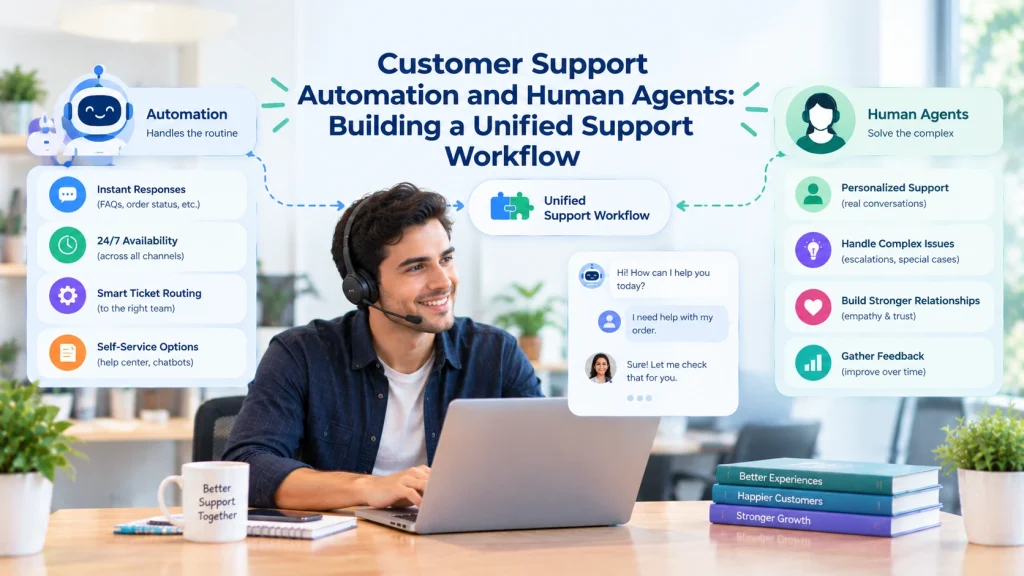
- Can invisible automation replace human staff: No. It reallocates work. Automation should remove repetitive, low-value touches so staff can focus on conversion and relationship work. Always build human escalation paths for disputes, exceptions, or when a member signals frustration.
- What metrics prove ROI from invisible automation: Track outcome metrics first: churn rate, conversion to paid, revenue per member, and hours saved on manual outreach. Complement with operational metrics: automation hit rate, fallback to human, and percent of journeys completed.
- Which tools integrate well without heavy engineering: Look for platforms with low-code workflow builders and prebuilt connectors such as Gleantap, HubSpot, Intercom, Twilio, Braze, and Segment. Prioritize systems that surface errors and let non-technical staff pause flows.
Practical limitation to plan for: invisible automation amplifies bad data. If your booking timestamps, membership status, or phone consent flags are incorrect, automated messages will create friction, not reduce it. Treat a data cleanup sprint as part of any pilot.
Concrete Example: A boutique studio set up an invisible lead-routing flow that scored web signups by booking intent and recent page activity, then automatically assigned hot leads to sales for a one-hour follow up. The studio saw faster response times and fewer missed warm leads because staff only engaged when the system indicated clear intent, the automation handled qualification and routing.
Judgment you won’t get in vendor brochures: start with the single outcome that saves the most staff time or recovers the most revenue and instrument that flows thoroughly. Trying to automate everything at once creates management overhead and hidden failure modes; incremental scope reduces risk and surfaces the real ROI.
Pilot checklist: 1) Define 1 primary KPI, 2) Choose 3 event triggers, 3) Verify data fields and consent flags, 4) Build a human-fallback path, 5) Run a 30-day pilot with cohort reporting.
Key point: invisible automation is not set-and-forget, it needs monitoring, versioned flows, and a small governance loop to stay helpful rather than noisy.

Ready to Run Successful Marketing Campaigns and Grow Your Business?
Gleantap helps you unify customer data, track behavior patterns, and automate personalized campaigns, so you can increase repeat purchases and grow your business.
Ready to Run Successful Marketing Campaigns and Grow Your Business?
Gleantap helps you unify customer data, track behavior patterns, and automate personalized campaigns, so you can increase repeat purchases and grow your business.