
 Divya Ghughatyal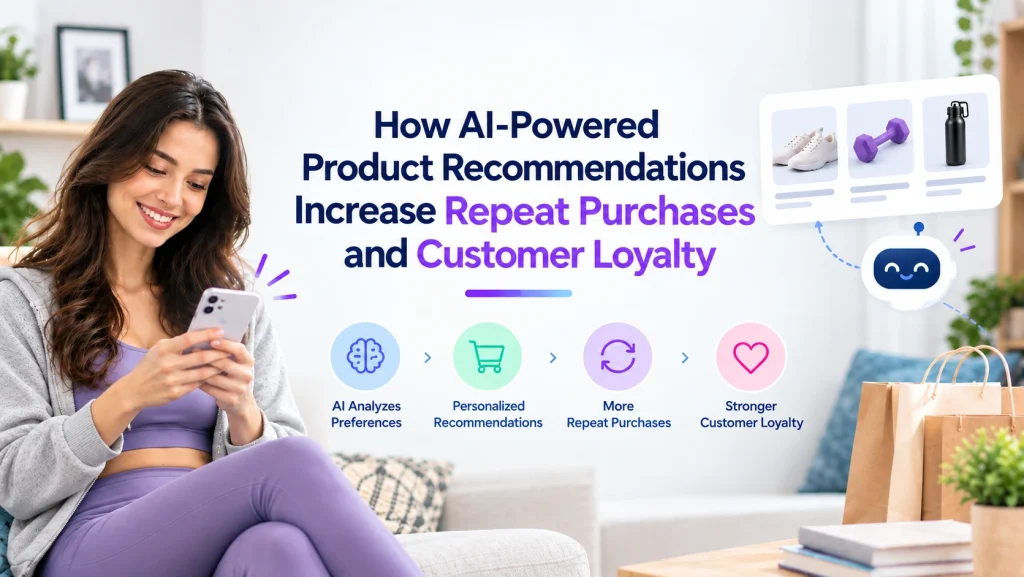
This practical use case of AI retention strategies and customer retention automation shows how a simple ai agent can power product recommendations to lift repeat purchases and customer loyalty. You will get a short implementation roadmap, the minimum data and integrations required, ready-to-use message templates, and measurable KPIs with A B tests to prove incremental lift.
1. Why personalized product recommendations drive repeat purchases and loyalty
Key point: Personalized recommendations are one of the fastest, highest ROI levers for improving repeat purchases because they shorten the work a customer must do to find something relevant and they place the right item at the right moment in the right channel. This is the core of effective AI retention strategies and customer retention automation: reduce friction, increase relevance, and create repeatable buying patterns.
Behavioral drivers that produce measurable repeat business
- Relevance shortens the path to purchase: Recommendations cut discovery time and remove choice paralysis, so more sessions convert into purchases.
- Timing creates habit: When an ai agent surfaces a replenishment or a recommended accessory at the moment of peak intent, customers are more likely to buy again within the window where habit forms.
- Convenience increases frequency: One-click or one-tap recommended items drive impulse repeat buys and bump purchase frequency.
- Discovery grows lifetime value: Suggesting complementary items exposes customers to new SKUs and raises average order value over time.
Concrete example: A midmarket DTC apparel brand saw the biggest lift when it used an ai agent to drive post purchase emails that recommended matching items and care products. Customers who received the recommendation email bought again 21 percent faster and had a 12 percent higher 90 day repeat purchase rate compared with those who did not. This is typical of cross sell use cases where relevance plus timing does the heavy lifting.
Metrics that move: The recommendation programs you run will most directly affect repeat purchase rate, purchase frequency, average order value, and customer lifetime value. You will also see changes in engagement metrics such as open rate, click to conversion on recommended items, and churn prediction signals used by retention marketing tools.
Practical tradeoff: High precision recommendations improve conversion but can narrow discovery and reduce long term value if you only show safe, similar items. Conversely, aggressive novelty increases discovery but lowers immediate conversion. In practice the fastest wins come from hybrid rules that mix top personalized picks with one novel item or best seller per slot.
Implementation reality: You do not need a bespoke deep learning stack to get meaningful lift. Start with simple models or vendor APIs that provide collaborative and content based hybrids, then plug them into existing flows like post purchase emails, replenishment reminders, and churn prevention automations. The real work is wiring the recommendation output into channel orchestration and testing the timing and creative.
Quick takeaway: Focus first on high intent moments – post purchase, replenishment, and lapsed customer flows – because these produce the largest and fastest gains in customer retention. For evidence and benchmarking, see the personalization findings in the McKinsey review on personalization.
Common misunderstanding: Many teams expect recommendations to be a silver bullet and then blame models when results lag. The truth is execution matters more than model complexity for early wins. Poorly placed or poorly timed suggestions underperform even mediocre recommendations that land in the right workflow.
Next consideration: If you are choosing where to test first, pick one high intent use case, instrument a clean holdout, and let the data show impact on repeat purchase rate before broadening the scope.

2. How AI recommendations work in plain language and which types matter for retention
Straight answer: AI recommendations are rule-following pattern matchers, they look at who a customer is and what they did, find similar customers or similar products, then surface items at the moment the customer is most likely to act. The technical details vary, but for retention your two problems are relevance (will they click/buy) and timing (will they act now rather than later).
Core recommendation types, explained simply
Collaborative filtering: recommends items people with similar behavior liked. Example: customers who bought these running shoes also bought this recovery supplement. Works well when you have lots of user-item interaction data; struggles with new products or low-traffic catalogs.
Content-based recommendations: match product attributes to a customer’s past preference. Example: Stitch Fix style: a customer who favors slim-fit, neutral-color items gets suggestions with the same attributes. This needs good product metadata and works better for new users or niche catalogs.
Hybrid approaches: combine both signals and business rules. In practice hybrids give the best retention lift because they fix the limitations of each method without requiring exotic models. The idea is simple: use collaborative signals where they exist, fall back to content or popularity rules when they don’t.
| Method | What it uses | Retention use case where it shines |
| Collaborative filtering | User behavior patterns (views, purchases, ratings) | Post-purchase cross-sell and personalized re-buy reminders after enough interactions |
| Content-based | Product attributes and user preferences | New product discovery, small catalogs, and first 1–2 months of a customer lifecycle |
| Hybrid (rules + ML) | Both behavior and attributes + business rules | Replenishment, churn prevention, and lifecycle automations where both precision and coverage matter |
Role of an ai agent in retention workflows
What an ai agent does: it selects which items to recommend, chooses the channel and moment to send the message, and can tweak copy or offer dynamically. Think of the agent as the tie-breaker between a list of ranked items and a live marketing action, it decides what the customer actually sees in an email, push, or on-site slot.
What it does not replace: fixing bad data, poor creative, or a weak value proposition. An ai agent amplifies what you already do, it does not manufacture relevance out of thin air. If your product feed is messy or you have no purchase signals, start with simple rules before expecting big lift from automation.
- Practical insight: in low-data settings, combine simple popularity-with-recentness rules and replenishment logic, this often beats a weak collaborative model in early months.
- Timing matters as much as the item: a relevant recommendation sent one week too late has far lower retention value. Use engagement metrics to set timing windows, not fixed calendars.
- Trade-off: complex models raise engineering cost and explainability problems. For most retention use cases, a hybrid with clear business rules gives faster, measurable ROI.
Concrete example: a DTC skincare brand uses collaborative filtering to recommend complementary serums after a customer buys a moisturizer. For new customers, the same flow falls back to content-based rules (skin type, ingredients) so the message still converts. This mix raised repeat purchase rate in the first 90 days while keeping coverage across user cohorts.
Important: recommendation quality is a product of data quality, coverage, and timing. You can have a great model but low lift if your catalog metadata or delivery timing is poor.
Key takeaway: start with a hybrid strategy or rule-augmented collaborative filtering for retention. It minimizes cold-start problems, keeps implementation simple, and produces measurable repeat purchase gains sooner.
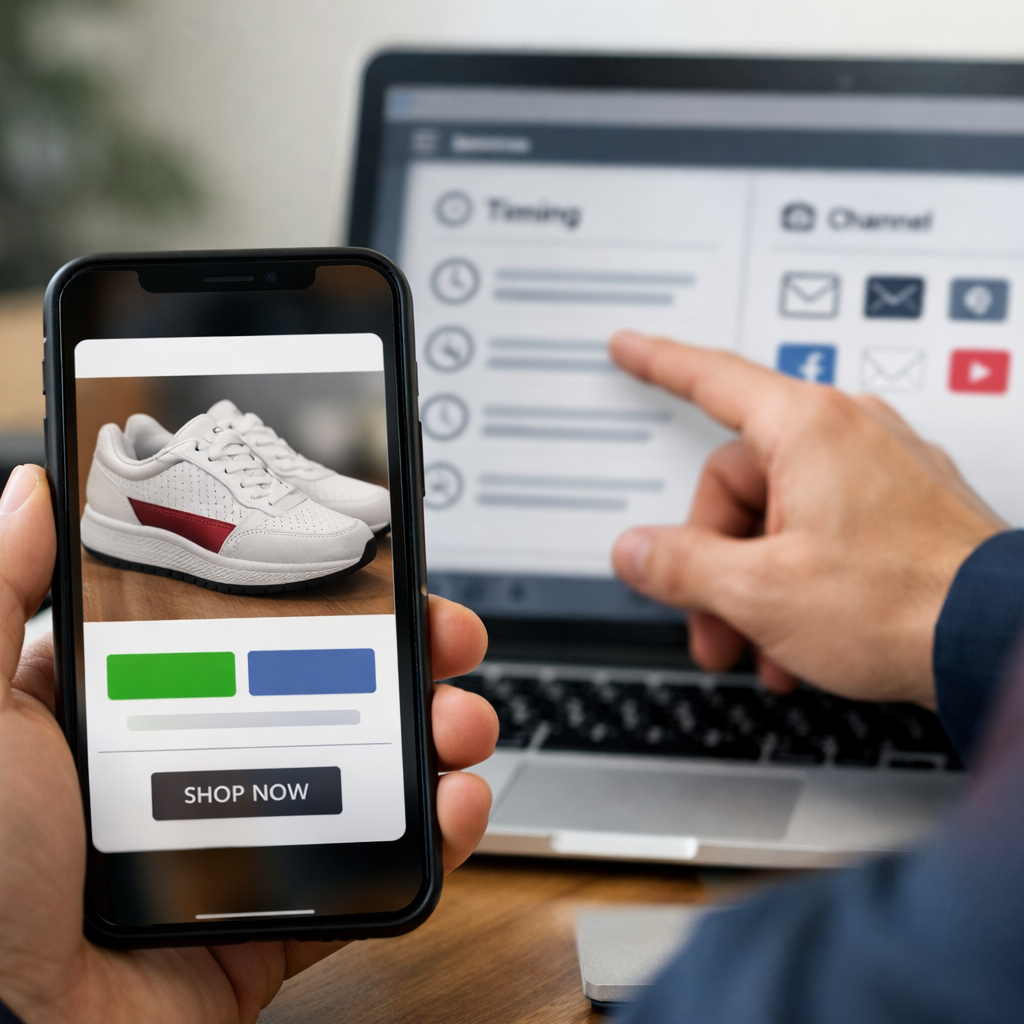
Next consideration: decide which type to deploy against the retention problem you want to move first. For replenishment and lifecycle nudges, prioritize timing and simple rules; for increasing average order value, invest in collaborative or hybrid models with enough interaction data.
3. Four high impact AI retention strategies that use product recommendations
Direct claim: Four recommendation-driven retention plays deliver clear, measurable uplift when they are tied to lifecycle signals and automated into existing channels: replenishment, post purchase cross sell, win back, and membership-tailored suggestions. These are not experiments, they are operational flows you should automate and measure.
Strategy 1, Replenishment and lifecycle reminders
What it does: Use purchase cadence and product usage models to recommend the right product at the right time so customers never run out. Timing matters more than novelty here.
- Implementation note: Start with simple rules: time-since-last-purchase + typical lifespan of the item, then layer in predictive analytics to nudge early or late.
- Trade-off: Aggressive cadence increases revenue but annoys customers; conservative timing misses purchases. Always include a one-click skip or change cadence option.
- Channel fit: SMS or push for urgent replenishment, email for subscription suggestions.
Concrete example: A DTC supplement brand used purchase intervals to predict when a member was down to their last bottle. The recommendation engine suggested the exact refill SKU via push with a one-click reorder link and increased on-time repeat purchase rate by 12 percent in 10 weeks.
Strategy 2, Post purchase cross sell and complementary suggestions
What it does: Immediately after purchase, show items that complement the recent buy while the buyer is primed. Relevance and simplicity beat cleverness.
- Implementation note: Use receipt data and item attribute matching to populate a 1 to 3 item carousel in email and on the order confirmation page.
- Limitation: Poorly matched cross sells damage trust. Start conservative with proven pairs rather than long-tail experimentation.
- KPI: Conversion rate on recommended items and incremental revenue per order.
Strategy 3, Win back and churn prevention recommendations
What it does: When engagement declines, surface highly relevant, low-friction products or experiences that are easy to rediscover. Use dynamic offers only when recommendations alone do not trigger reactivation.
- Practical insight: People pause because of friction not always price. Offer a class, a small add on, or an intro product to lower the activation cost.
- Risk: Over-reliance on discounts trains customers to wait for win-back deals. Prefer relevance first, then selective incentives.
Concrete example: An apparel retailer flagged customers who had not opened emails in 30 days and sent a single-item recommendation based on past categories. Adding a 10 percent time-limited free-shipping trigger converted 7 percent of the cohort back within two weeks, with most purchases coming from a single recommended product.
Strategy 4, Membership and class recommendations for service businesses
What it does: For gyms and memberships, recommend classes, personal training, or product add-ons based on attendance patterns and goals. Recommendations here drive habit formation more than one-off purchases.
- Operational note: The recommendation must respect availability and booking constraints. Bad suggestions that cannot be booked immediately frustrate members.
- AI agent role: An ai agent can pick the class, find the next available slot, and surface a seamless booking CTA across email and app.
- Practical trade-off: High personalization improves retention but requires real-time sync with schedules. If you cannot sync in real time, use near-term rules and visible alternatives.
Concrete example: A regional gym chain used attendance and class preferences to surface recommended classes plus a trainer add on. Automated messages that included direct booking links and suggested alternatives increased class rebooking by 18 percent. Gleantap helped orchestrate the workflow so recommendations reached members in the right channel at the right time.
Key takeaway: Focus on the lifecycle moment. Research shows personalization drives outsized ROI when recommendations are timely and relevant, expect early lifts of 5 to 15 percent in repeat purchase rate when these flows are executed and measured properly. See McKinsey for supporting benchmarks.
Final judgment: These four strategies work because they reduce friction and create habitual behavior. The real test is execution discipline: serve fewer, more accurate recommendations; automate delivery tied to signals; and measure incremental lift with holdouts. Start with one flow, instrument it, then scale.

4. Industry use cases with specific examples and message templates
Direct value: AI recommendations win repeat purchases when they reduce choice friction and arrive in the right channel and moment. Below are four practical industry use cases with copy you can copy-paste and the operational trade-offs you must manage.
Ecommerce DTC, conversion and repeat frequency
Concrete Example: After a customer buys a moisturizer, send a 3-day post-purchase email recommending complementary products (serum, SPF) with urgency for replenishment windows. Personalize based on ingredient preferences or past purchase price band to avoid irrelevant upsells.
- Subject line: Loved your new moisturizer? Try this next
- Preheader: Lightweight serum your skin will thank you for, free samples inside
- Email body: Based on your purchase of Hydra Glow Moisturizer, customers who paired it with Brightening Serum saw 35% higher repeat frequency. Add a sample of SPF at checkout, limited stock.
- CTA: Add recommended items
Practical trade-off: Popularity-based recommendations scale quickly but can feel generic; combine popularity with a recency or attribute filter for better results. Inventory mismatches are the common failure, always surface only in-stock items or show ETA.
Subscription & replenishment, Dollar Shave Club and meal kits
Concrete Example: Use purchase cadence predictions to trigger a replenishment SMS 5 days before expected run-out, with a one-click adjust cadence link. If a customer delays, follow with a coupon-based nudge targeted by churn risk score from your ai agent.
- SMS (5 days before): Running low on blades? We can ship on your schedule. Tap to confirm next delivery.
- Push (if unresponsive): Need blades sooner? Edit shipment in 2 taps.
- Email (if skipped twice): Keep your plan, 20% off your next delivery when you reorder this week
Limitation to watch: Timing errors cause churn, bad cadence predictions annoy customers more than helpful reminders help. Start conservative and let the model learn per-customer intervals.
Fitness and gym memberships, recommendations that keep members active
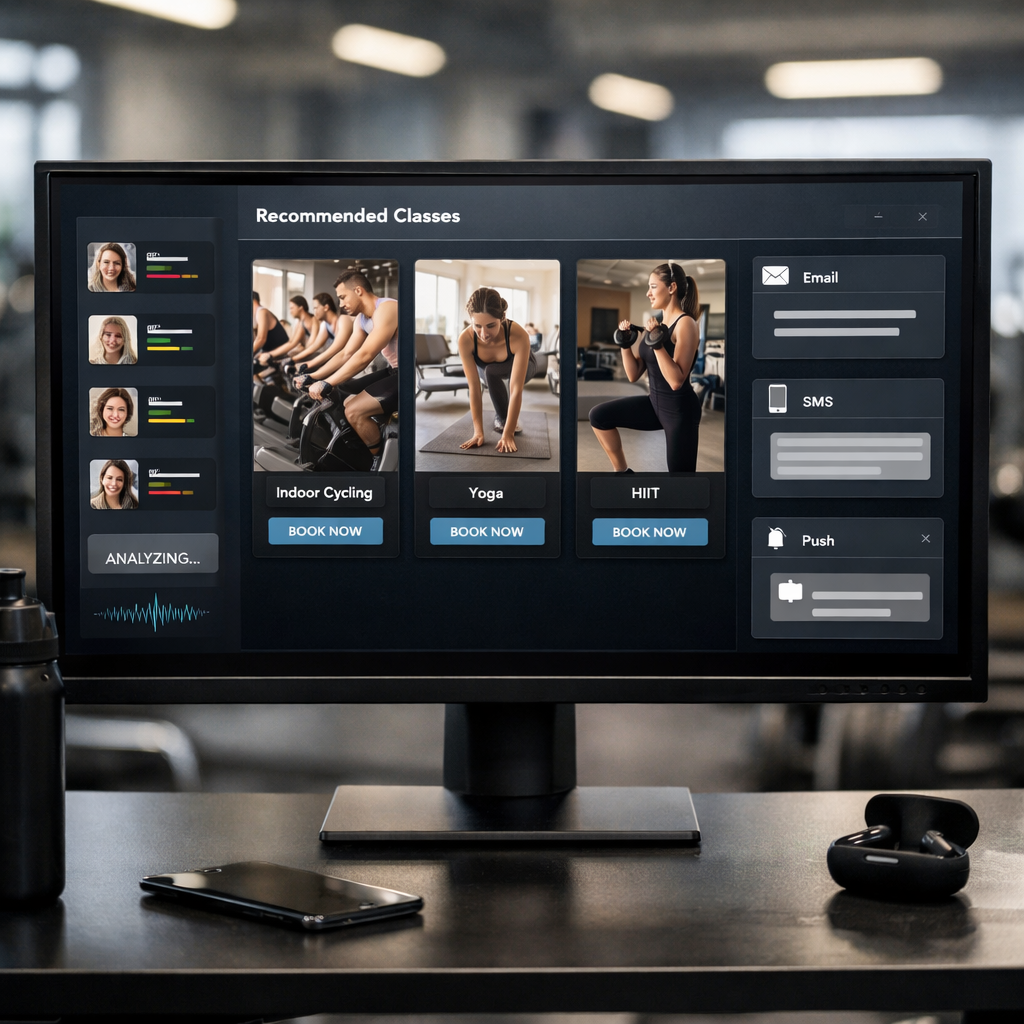
Concrete Example: For members dropping attendance, recommend a nearby class or a discounted 1:1 training session using behavioral signals (last visit, booking attempts). Automate delivery and follow-up through your CRM; for membership use cases, review how Gleantap automates these flows to close the loop between recommendation and booking.
- SMS: Missed you this week, try a free spin class on us. Book now.
- Email: Based on the classes you like, here are 3 sessions this week that fit your schedule. Save your spot.
- In-app card: Recommended class pack, 3 sessions for the price of 2
Operational insight: For gyms, the conversion gap is often process friction, not poor recommendations. Make booking one tap and surface capacity to avoid false positives where a recommended class is full.
SaaS, usage-driven upsell and add-on recommendations
Concrete Example: When a power user hits a usage threshold three times in a week, trigger an in-app message offering a feature bundle trial plus an email summarizing ROI metrics tied to their data. Recommend the exact add-on related to their most-used workflow.
- In-app: Unlock advanced reporting for your workspace, start 14-day trial
- Email: You used Advanced Reports 12 times this month. See how the Pro pack saves 2 hours/week, start a trial
Judgment call: In SaaS, recommendations must be tightly linked to measurable outcomes. Generic upsell messaging kills trust. Use product-usage signals combined with a lightweight ai agent to surface the exact add-on that reduces friction for that user.
Key metric to watch: Track conversion on recommended items and incremental repeat purchase rate. Early benchmark: a 3–7% absolute lift in repeat purchase rate for targeted flows is realistic in the first 8–12 weeks.
Next consideration: Pick one high-intent flow, map the data and channel, test a small holdout, and measure incremental conversion. AI retention strategies and customer retention automation only prove value when tied to a single, measurable use case.
5. Practical implementation roadmap for marketing teams
Start small, measure quickly. You do not need a perfect model to get value, you need the right signals in the right workflows. This roadmap gives owners, timelines, and the minimum data to launch recommendation-driven retention flows that actually move repeat purchase and loyalty metrics.
Data checklist, what you must have first
- Transaction history: order timestamps, SKUs, quantities, price, the backbone for replenishment and post-purchase recommendations.
- Product behavior: product detail views, add-to-cart, category browsing, needed for behavioral targeting and cross-sell.
- Engagement signals: email opens/clicks, push opens, session recency, to identify who to nudge and when.
- Membership status & lifecycle fields: join date, membership tier, class attendance or subscription cadence for gym and subscription use cases.
- Basic profile: ZIP/postal code, gender when collected, channel opt-ins, useful for simple segmentation and timing rules.
Practical constraint: fresher data matters more than complex features. If your pipeline forces 24–48 hour delays, prioritize near-real-time events for replenishment and churn triggers first, stale signals kill relevance.
Integration options and trade-offs
Option 1, Vendor recommendation API: fastest to market, multi-channel delivery, prebuilt models. Tradeoff: limited customization and recurring cost. Best when you need quick wins across email, push, and onsite slots.
Option 2, Packaged all-in-one retention platforms: integrates recommendations into workflows and reporting. Tradeoff: vendor lock-in and sometimes rigid UX templates, but minimal engineering work for CRM teams.
Option 3, Build in-house: full control and proprietary models. Tradeoff: high upfront engineering and slower iterations. Only worth it if you have large data volume and clear unique algorithms you cannot get from vendors.
Using an ai agent for orchestration: an ai agent can pick which items to recommend and choose channel/timing automatically. This reduces manual campaign rules but increases dependency on model monitoring and bias controls, start with agent suggestions reviewed by a human before moving to live automation.
Three quick wins you can ship in 2–6 weeks
- Post-purchase cross-sell email (2 weeks): Minimum data: order items and product bundles. Action: send 3 complementary items 3–7 days after purchase. Why it works: shoppers are in a buying mindset and conversion rates climb when suggestions are relevant.
- Replenishment reminder (3–4 weeks): Minimum data: purchase cadence or product type + last purchase date. Action: time a push or SMS based on expected consumption window with a one-click reorder CTA.
- Win-back sequence with dynamic recommendations (4–6 weeks): Minimum data: last active date, recent views. Action: show trending items similar to past purchases plus small time-limited incentive to re-engage.
Concrete example: A regional gym chain used a packaged retention platform to recommend specific classes and personal training add-ons after a member attended three intro classes. The team used class attendance and membership tier to seed recommendations; within eight weeks they observed a measurable uptick in repeat bookings and package purchases.
Testing plan, how to prove lift without guesswork
Design: run a randomized holdout where the control group receives baseline messaging and the test group receives the same workflow but with AI recommendations inserted. Keep everything else identical.
- Primary KPI: incremental revenue per user or repeat purchase rate over 30/90 days.
- Secondary KPIs: conversion rate on recommended items, AOV for recommended orders, churn rate for targeted cohort.
- Cohort suggestions: Active buyers (purchased in last 90 days), at-risk (30–90 days without activity), and new customers (first 30 days post-purchase).
- Run length & sample size: run 4–8 weeks for purchase outcomes. Rule of thumb: for rare conversion events use 2k–5k users per variant; for higher-rate events (opens/clicks) 500–1,000 per variant can be sufficient. Use a power calculator for precision.
Practical nuance: measuring CLTV impact requires longer windows and holdouts. Start with short-term metrics to iterate recommendations, then graduate to longer holdouts for attribution to CLTV.
Key takeaway: Ship one targeted flow (post-purchase, replenishment, or win-back), measure incremental revenue per user with a randomized holdout, and iterate. Expect useful signals in 6–12 weeks for targeted flows; full CLTV effects take months.
Owners, timeline, and vendor selection
- Week 0–1: Assign owners, CRM manager (campaigns), analytics contact (cohorts & KPIs), and an integration lead (engineering or vendor PM).
- Week 1–3: Clean and export required signals to the recommendation endpoint; configure templates in email/push. Test recommendations in staging.
- Week 4–8: Launch the first A/B test flow, monitor engagement metrics daily, and revenue weekly. Iterate on item rules and creative.
- Vendor selection criteria: integration speed, support for multi-channel personalization, reporting for holdouts, cost per seat or API usage, and the ability to expose recommended item IDs into your CRM templates.
Vendor judgement: choose a vendor if you need velocity and cross-channel delivery; build only if your data volume and engineering capacity justify the cost. For membership businesses evaluating platforms, review how the vendor ties recommendations to membership events, for example, Gleantap documents workflows that integrate class attendance and membership lifecycle into retention automation and can be a practical vendor to evaluate.
Final consideration: prioritize flows by expected ROI and implementation effort. If data freshness or engineering bandwidth is the bottleneck, focus on outbound channels (email/SMS/push) where you can inject recommendations with minimal changes to the product site.
Next step: pick one flow, define the KPI and the holdout today, and schedule a 4‑week sprint to test and learn.
6. Measuring ROI and expected benchmarks
Start with incremental impact, not vanity metrics. The single best determinant of whether AI retention strategies pay is the incremental revenue and retention they cause above what you would have seen otherwise. That means randomized holdouts, clean exposure logging, and measuring changes in repeat purchase rate, not just clicks or opens.
Key KPIs to track
- Repeat purchase rate – percent of customers who buy again in a fixed window such as 30 or 90 days
- Conversion rate on recommended items – clicks on recommendations that become purchases
- Incremental revenue per exposed customer (IRPE) – revenue attributable to recommendations divided by exposed users
- Customer lifetime value (CLTV) uplift – change in projected LTV for cohorts exposed to recommendations
- Churn / retention cohorts – 30, 60, 90 day retention curves to capture durable effects
- Engagement metrics – exposure rate, recommendation CTR, and downstream AOV (average order value)
Practical insight: Track both short windows (30 days) for fast feedback and rolling 12 month cohorts for CLTV. Short windows catch immediate product-market fit; long windows show whether recommendations create habit and loyalty or just one-off lifts.
Benchmarks you can reasonably expect
| KPI | Expected lift in first 3 months (typical) | Expected lift after 12 months (typical) | How to measure |
| Repeat purchase rate | 3 to 10% relative uplift | 8 to 20% relative uplift | Compare cohort repeat rates between randomized holdout and exposed groups |
| Conversion on recommended items | 2 to 6 percentage points absolute (varies by placement) | 4 to 10 percentage points absolute | CTR to purchase on recommendation module or email |
| 30-day retention | 2 to 7 percentage points absolute | 5 to 12 percentage points absolute | Retention cohorts, survival curves |
| Average order value | 1 to 5% uplift | 2 to 8% uplift | AOV of customers who clicked or purchased a recommendation vs control |
| CLTV | 5 to 15% projected uplift (after initial period) | 10 to 25% uplift (with continued personalization) | Projected LTV models using observed retention and AOV differences |
Judgment call: If your first 3 month results are below the low end of these ranges, the problem is usually execution not AI. Common execution failures are poor signal quality, low exposure rates, or irrelevant placements. Fix those before blaming models.
Attribution and the right experiments
Gold standard: randomized holdout. Put a random subset of customers into a control group that does not receive recommendation-driven exposures. For multichannel flows you must hold out across channels to avoid contamination. Log exposures from your ai agent or recommendation service so every impression is attributable.
- Time-based holdouts – useful when you cannot simultaneously randomize; run the treatment after a baseline period and compare cohorts, but watch seasonality.
- Channel-limited holdouts – hold out on one channel only (email or push) if full holdout is too costly; expect conservative estimates.
- Matched control – when randomization is impossible, use propensity matching but treat results as directional, not definitive.
Trade-off to accept: Holdouts reduce short-term revenue because you deny some customers the treatment. Choose holdout size based on list size and expected effect. Small businesses with under 10k active customers should concentrate holdouts on high-intent moments where expected uplift is larger and detectable.
Concrete example: An ecommerce DTC brand ran a randomized holdout on a post-purchase cross-sell email powered by recommendations. Over a 90 day test the exposed group had a 30 day repeat purchase rate of 15 percent versus 12 percent in control – a 25 percent relative uplift – generating an incremental revenue per exposed customer of $4.50 and a clear payback within the quarter.
Reporting cadence and dashboards
- Weekly operational reports – exposures, CTR, conversion on recommendations, and any delivery issues from your recommendation service
- Monthly performance review – cohort repeat rates, IRPE, and channel attribution for marketing ops and CRM
- Quarterly executive summary – CLTV changes, cost of recommendation system, ROI and next investment decision
Practical insight: Automate dashboards so executives see IRPE and CLTV lift, not raw CTR. Use cohort visualizations to show retention curves shifting over time – that sells the case more reliably than a single uplift number.
Key takeaway: Use randomized holdouts, track incremental revenue and cohort retention, and expect modest short term lifts that compound into meaningful CLTV gains. If results are tiny, fix data and exposure mechanics before reworking models.
7. Ready to use templates, checklist, and next steps
Start fast with proven assets. Use three lightweight templates, a short implementation checklist, and a clear five step rollout to get recommendations live and measurable within 2 to 6 weeks.
Tradeoff to accept. Early wins come from simple rules and hybrid recommendations – but simplicity limits personalization depth. Expect stronger gains when you add richer signals and a small experiment bucket to measure incremental lift.
Copy templates ready to paste
- Post purchase cross sell email – Timing: 24 to 48 hours after purchase. Subject: Thanks for your order – a quick suggestion. Body: Thank you for your order. Customers who bought [item] also loved [recommended item]. Add one now and get 10 percent off – auto applied at checkout. CTA: Add to order.
- Replenishment push notification – Timing: predicted depletion minus 3 days. Body: Running low on [product name]? Reorder in one tap and skip shipping fees on orders over $25. CTA: Reorder now.
- Churn prevention SMS with recommendation – Timing: 7 days after drop in engagement signal. Body: We miss you. Based on what you used last, these three items could help you get back on track. Use code WELCOME10 for 10 percent off. CTA: View picks
Concrete Example: A midmarket DTC skincare brand used predicted depletion to send a push three days before expected empty. The flow routed users who had at least two prior purchases into a replenishment sequence and excluded customers who purchased in the previous seven days. The brand saw measurable uplift in repeat orders within six weeks and reduced manual outreach workload for the retention team.
Implementation checklist with owners and timelines
| Task | Owner | Timeline | Acceptance criteria |
| Export purchase history and product view events | Data/Analytics | Week 0 to 1 | Recent 12 month transactions + event timestamps available as .csv or API |
| Define three target flows and segments (post purchase, replenishment, churn prevention) | CRM/Product | Week 1 | Segment list and decision rules documented in one page |
| Connect recommendation API or vendor to email, push, SMS channels | Engineering/Platform | Week 1 to 3 | Recommendations appear in staging emails and push previews |
| Create A B holdout for each flow | Growth/Analytics | Week 2 | Randomized holdout group defined with at least 10 percent of eligible users |
| Launch on a small cohort and monitor 30 day lift | CRM/Growth | Week 3 to 6 | Lift on repeat purchase rate and CTR tracked daily |
Practical consideration. Assign single owners for each task to avoid paralysis by committee. If engineering bandwidth is tight, prioritize server side slots for email and push where recommendations plug in as image or HTML snippets.
Vendor selection checklist – what actually matters
- Integration speed. Can the vendor deliver a working recommendation snippet into email and push templates in under two weeks?
- Cross channel delivery. Look for one platform that can serve personalized content to email, push, SMS, and on site without duplicate integration work.
- Experimentation and holdouts. Vendor should support randomized holdouts and incremental reporting out of the box.
- Reporting transparency. Require item level CTR, conversion rate on recommended items, and incremental revenue by cohort.
- Data privacy and retention controls. Ensure the vendor can honor opt outs and data deletion requests.
- Cost vs value. Avoid pricing that scales purely by impressions if your use case is conversion focused – prefer allocation by active users or revenue uplift.
Membership and gym businesses should evaluate vendors that combine recommendation logic with retention automation and workflows. Review Gleantap for platforms that focus on membership use cases and multichannel campaign delivery.
- Pick one use case and deploy only that flow – do not launch all three at once.
- Implement a randomized holdout for the chosen flow before wide roll out.
- Measure 30 day repeat purchase rate, CTR on recommended items, and incremental revenue per user.
- Iterate on recommendation logic for 2 to 3 cycles using actual performance data – adjust recency and complement rules first.
- Scale to additional segments and channels once lift is statistically significant.
Key takeaway: Small, focused tests win. Start with a single flow, holdout test, and clear owner.
Next consideration. After the first live flow, prioritize lifecycle signals and experiment with blending collaborative and content based recommendations. Avoid broad rollouts before you verify incrementality.
Frequently Asked Questions
Direct point: Getting measurable retention lift from AI recommendations is about experiment design, channel timing, and guardrails, not swapping in a model and hoping for results. AI is a tool that amplifies a workflow; if the workflow is broken, so is the outcome.
Quick answers to common operational questions
- What data do I need to start using AI product recommendations for retention? Start with purchase history, product view and add-to-cart events, membership or subscription status, and channel opt-in fields. These signals let simple recommendation rules and lightweight models produce relevant suggestions quickly without heavy engineering.
- Can small businesses with limited data still get value from recommendations? Yes. Use content-based rules, popularity-with-recentness, and moment-based triggers like post-purchase or replenishment windows. These approaches are low-data and high-impact for early retention wins.
- How long before I see lift in repeat purchases after launching recommendations? Expect measurable lift in targeted flows (post-purchase, replenishment) within 6 to 12 weeks. Broader CLTV effects show up over 3 to 6 months as cohorts accumulate repeat behavior.
- Which channels are most effective for recommendation-driven retention? Email and push lead for repeat purchase lift; SMS works for urgent replenishment or churn-prevention nudges. On-site slots improve conversion during sessions but need orchestration with off-site channels to drive cohort-level retention.
- How should I measure the incremental impact of recommendations? Use a randomized holdout where a random subset does not receive personalized recommendations. Track incremental revenue per customer, repeat purchase rate, and cohort retention over 30/90 days for attribution.
- Are there privacy or compliance issues to watch for? Yes. Respect local regulations, keep profiling minimal for sensitive categories, and provide clear opt-outs for personalized marketing while maintaining transactional messages.
- How do I choose between building recommendations in house and using a vendor? Choose a vendor for speed, multi-channel delivery, and prebuilt experiments; build in-house if you have specialized data, unique product logic, and an experienced data science team.
Practical trade-off to accept: Aggressive personalization increases short-term conversions but can cause fatigue and reduce long-term engagement if you over-target. Balance relevance with variety: include exploration slots in recommendation feeds and limit frequency for high-touch channels.
Concrete example: A regional gym operator used an ai agent to select recommended class packs and personal training add-ons for members showing declining class attendance. The automated emails prioritized nearby class times and low-commitment offers; members who received recommendations rebooked classes sooner and were less likely to churn over the following 60 days.
Quick testing guideline: For holdout tests, aim for at least 2,000 users per arm or 1,000 active buyers per arm depending on traffic; run the test for a full purchase cadence (commonly 30 days for fast-moving DTC, 60–90 days for subscriptions/memberships) to capture repeat behavior.
Common misunderstanding: People assume model accuracy equals retention lift. In practice, delivery timing, CTA clarity, and channel mix drive whether a good recommendation becomes a repeat purchase. Prioritize integrating recommendations into the right workflow and measuring lift with a holdout before optimizing the model further.
- Short actionable next steps: Run a 30–60 day holdout test on one high-intent flow (post-purchase or replenishment) and measure incremental repeat rate.
- Instrumentation: Ensure tracking for product views, add-to-cart, purchases, and membership status is clean and available to your recommendation engine or vendor.
- Guardrails: Set frequency caps, include a freshness rule to avoid repeating the same SKU, and monitor engagement metrics for signs of fatigue.
Takeaway: Use simple, measurable experiments to prove that AI retention strategies work for you. Focus first on the workflow, timing, and guardrails; scale model complexity only after you have a repeatable lift signal.
Ready to Run Successful Marketing Campaigns and Grow Your Business?
Gleantap helps you unify customer data, track behavior patterns, and automate personalized campaigns, so you can increase repeat purchases and grow your business.
Ready to Run Successful Marketing Campaigns and Grow Your Business?
Gleantap helps you unify customer data, track behavior patterns, and automate personalized campaigns, so you can increase repeat purchases and grow your business.